
Mira Murati’s case for human-in-the-loop interaction models
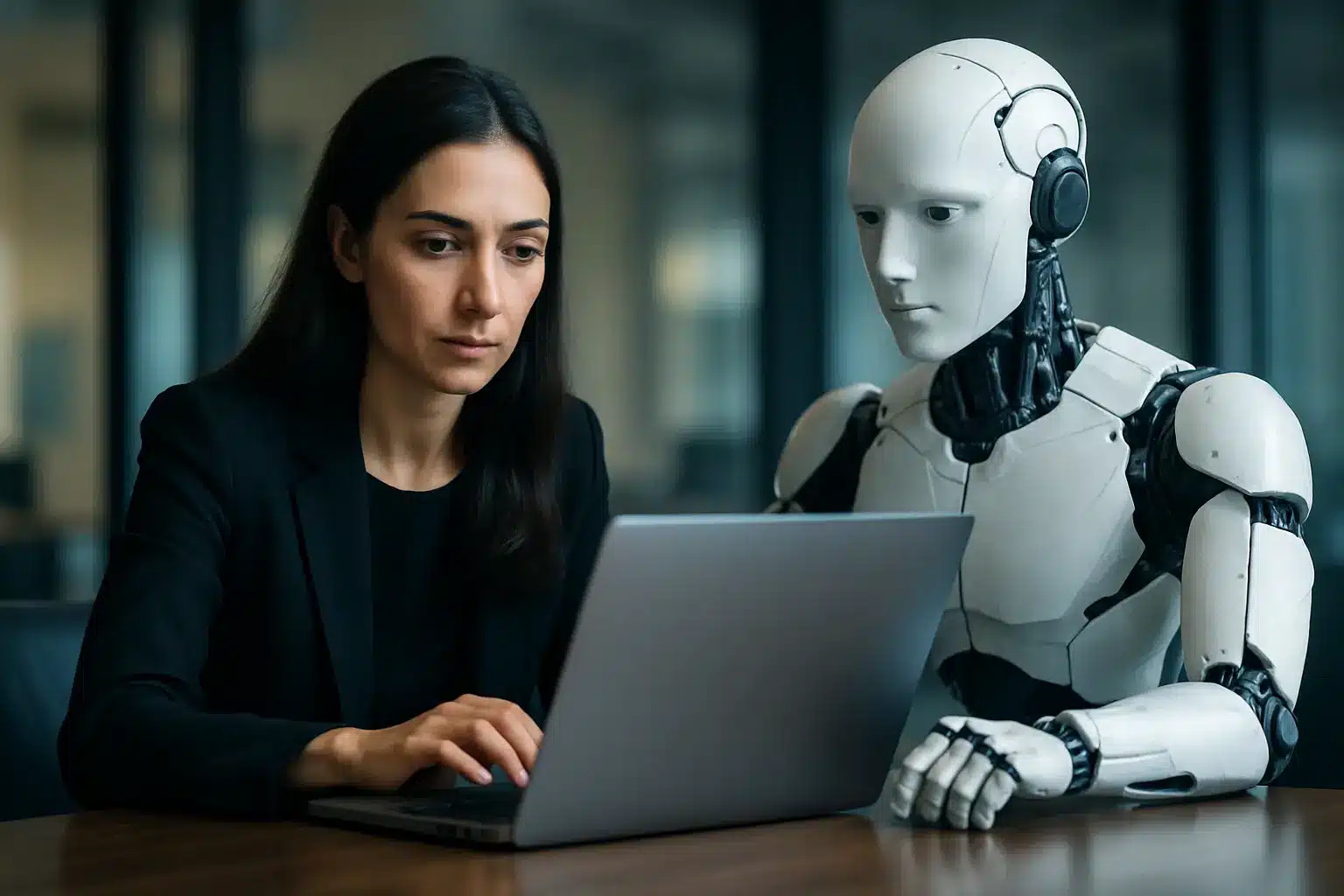
Mira Murati, former OpenAI CTO and brief interim CEO, has founded Thinking Machines Lab to develop systems that collaborate closely with people. Her pitch centers on human-in-the-loop interaction models that process audio, video, and text continuously and act in real time so users remain in charge of goals, values, and final decisions [1][2][3].
What are interaction models? How they differ from chatbots and LLMs
Thinking Machines describes “interaction models” as multimodal systems that continuously perceive and respond across audio, video, and text, operating more like a real-time AI teammate than a turn-based chatbot that waits for inputs [1][2][3]. The focus is on responsive, ongoing collaboration instead of request–response exchanges, with tools that let users adapt behavior to their own domains and preferences [1][2]. This approach aims to make models efficient, adaptable, and easier to steer in practical settings where context shifts rapidly [1][2].
Why human-in-the-loop interaction models matter: augmentation vs automation
Murati positions her company in the augmentation camp, where AI advises or executes under human oversight rather than fully automating judgment. She frames the goal as keeping people in control of objectives and values while the system assists in real time [1][2]. Academic work similarly distinguishes between automation and augmentation as different modes of human–AI collaboration and explores how to allocate tasks between them across the future of work [6].
In applied settings like marketing, this division already shows up at scale. Teams define strategy and narratives while AI handles repetitive, data-intensive tasks such as analysis, execution, and experimentation. Humans then interpret results and adjust strategy, keeping authority with the team [4][5]. These patterns map cleanly to interaction models that can monitor signals, suggest actions, and run tests while people set direction and make final calls [4][5].
Business use cases: marketing, operations, and frontline teams
Marketing workflows highlight where continuous, multimodal interaction can help. Examples include campaign experimentation, scaling content variations with human review, and coordinating multichannel operations. In each case, the system runs analysis and busywork while humans enforce brand standards, interpret outcomes, and decide next steps [4][5].
Beyond marketing, customizable domain-specific AI could support frontline operators and coordinators by handling monitoring, summarization, and follow-ups while leaving key decisions to people. Thinking Machines emphasizes giving users tools to adapt models to their own workflows, which makes this style of adoption more attainable across varied domains [1][2]. These are natural fits for human-in-the-loop interaction models that keep teams engaged with the system rather than replaced by it [1][2].
Implementing interaction models responsibly: customization and governance
Murati argues that practical know-how about training and steering frontier systems is overly concentrated in a few large labs, and her company aims to broaden access to effective tools and methods [1][2]. That makes governance and customization central to implementation. A pragmatic playbook includes:
- Define goals, values, and non-negotiables up front, then encode them in prompts, policies, and workflows [1][2][6].
- Set review points where humans approve outputs or decisions and ensure clear escalation paths [4][5][6].
- Establish feedback loops so users can correct behavior and adapt the model to domain norms over time [1][2][6].
- Start with narrower, high-ROI tasks and expand as oversight practices mature [4][5][6].
For broader guidance on operationalizing oversight, see the NIST AI Risk Management Framework (external). For playbooks on adoption, you can also explore AI tools and playbooks.
Risks and limits: concentration and stewardship
Murati has criticized the concentration of frontier training knowledge among a small number of incumbent labs and wants to make advanced capabilities more accessible while keeping users in control [1][2]. That raises trade-offs. Broadening access can expand innovation and customization, yet it also requires careful model stewardship and safety practices to maintain oversight without ceding authority to full automation [1][2][6]. The promise of human-in-the-loop interaction models rests on getting this balance right in real deployments [1][2][6].
How to evaluate vendors and early pilots
When assessing tools designed as a real-time AI teammate, look for:
- Multimodal interaction that continuously processes audio, video, and text, not only chat [1][2][3].
- Strong customization tooling to shape behavior for your domain and brand standards [1][2].
- Clear auditability and human approval gates for material decisions [4][5][6].
- Sensible defaults for safety and escalation that reinforce human authority [4][5][6].
Finally, measure pilots against team-defined objectives and ensure the workflow embeds human-in-the-loop interaction models at the decision points that matter most [1][2][6].
Conclusion: a practical roadmap for teams
Murati’s vision aligns with where many operators already see results: keep humans accountable for objectives, use AI to scale analysis and execution, and tune models to fit domain nuances. For teams evaluating this path, start small, codify decision authority, and treat customization and oversight as first-class product requirements, not add-ons [1][2][4][5][6].
Sources
[1] Here’s what Mira Murati’s AI company is up to | The Verge
https://www.theverge.com/ai-artificial-intelligence/928309/mira-murati-thinking-machines-ai-interaction-model
[2] Inside Thinking Machines Lab, Mira Murati’s New AI Startup | Built In
https://builtin.com/articles/what-is-thinking-machines-lab
[3] Here’s what Mira Murati’s AI company is up to | The Tech Buzz
https://www.techbuzz.ai/articles/here-8217-s-what-mira-murati-8217-s-ai-company-is-up-to
[4] Human-in-the-Loop AI: The New Marketing Playbook
https://www.smartly.io/resources/the-future-of-marketing-ai-automation-with-human-oversight
[5] How AI-Powered Collaboration Transforms Marketing Workflows
https://www.unboundb2b.com/cmo-playbook/ai-powered-collaboration-marketing-workflows/
[6] Roles of Artificial Intelligence in Collaboration with Humans: Automation, Augmentation, and the Future of Work
https://pubsonline.informs.org/doi/10.1287/mnsc.2024.05684
