
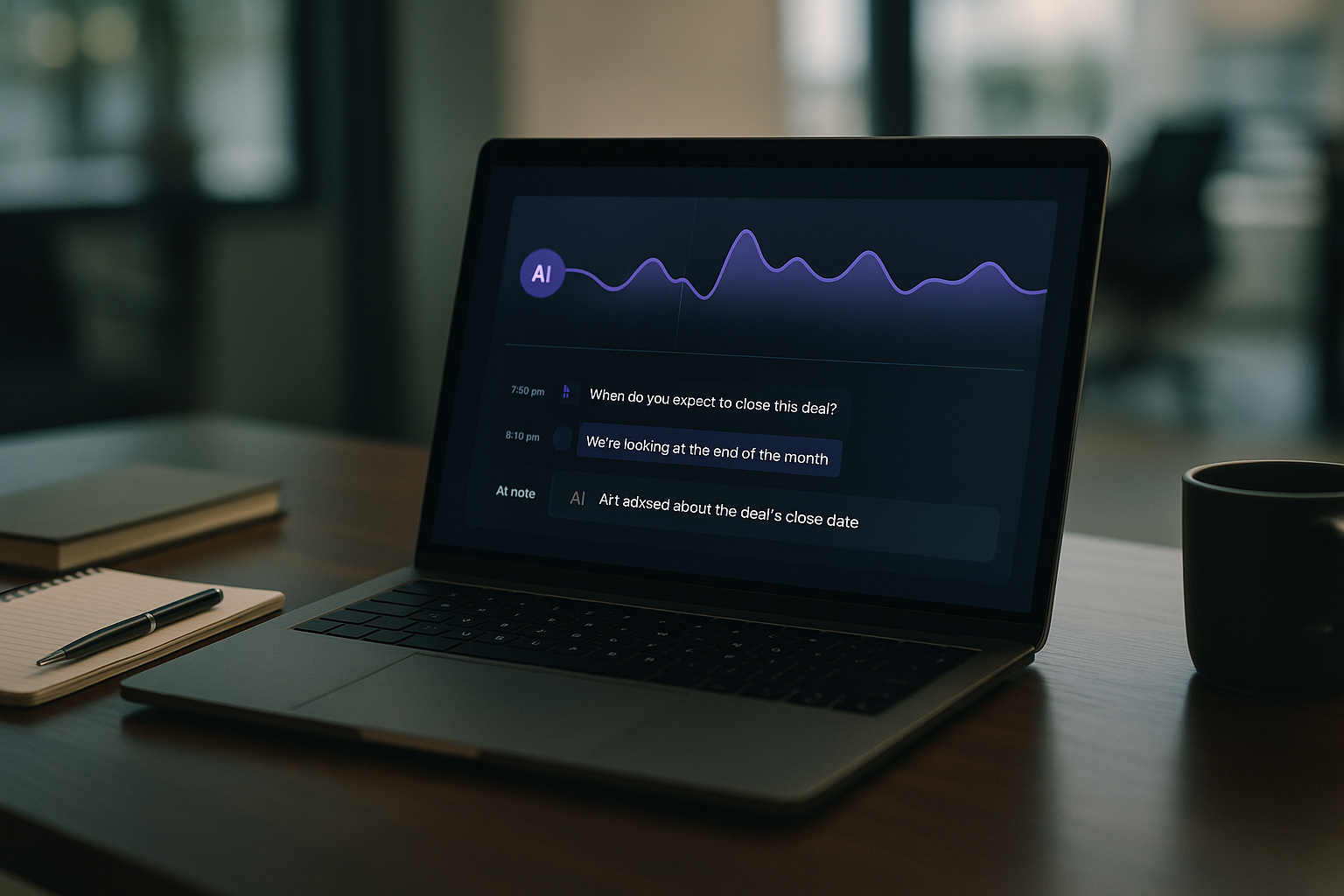
Gong AI review: revenue intelligence for sales coaching and forecasting
Sales teams today collect huge amounts of call recordings, meeting notes, and CRM data—but most of it never gets turned into consistent coaching, reliable forecasts, or clear visibility into deals. That’s the gap revenue intelligence tools aim to close.
In this Gong review, we look at how Gong AI approaches that problem for modern sales organizations. Gong AI is a revenue intelligence platform that analyzes sales conversations and other data to provide coaching insights, forecasting, and deal intelligence. It primarily targets revenue teams such as sales organizations looking to improve win rates and forecasting accuracy.
This ToolScopeAI review is focused on practical fit, pricing dynamics, and workflows—not hype—so you can decide if Gong belongs in your revenue stack.
What Gong AI is and how it works
Gong AI is a revenue intelligence platform that analyzes sales conversations and other data to provide coaching insights, forecasting, and deal intelligence. In practice, that means it takes the calls and meetings your reps are already having and surfaces patterns, risks, and opportunities across your pipeline and team.
Instead of relying only on manual notes or gut feel, sales leaders can use Gong’s AI-driven analytics to see what’s happening in deals, where reps need coaching, and how those patterns impact forecast accuracy. This is aimed at solving common problems like inconsistent coaching, poor visibility into late-stage deals, and forecasts that don’t match reality.
Who Gong AI is for
Gong is designed first and foremost for larger, more complex sales organizations. It is ideal for mid-market to enterprise sales organizations seeking data-driven coaching, deal visibility, and revenue forecasting across large teams.
If you run or support a sizable sales org—with multiple reps, managers, and a structured pipeline—and need a more objective, data-backed view of performance, Gong AI is likely a fit. If you’re a very small team with a handful of deals, the depth of revenue intelligence and forecasting may be more than you need.
Core use cases
- Improve forecast accuracy and coaching quality: For sales leaders who want to improve forecast accuracy and coaching quality, Gong AI provides analytics and insights based on actual sales conversations and deal activity. This helps leaders understand which deals are truly healthy and where coaching can move the needle, tying directly into Gong revenue intelligence value.
- Turn recorded calls into actionable insights: For revenue teams needing actionable insights from recorded calls and meetings, Gong’s AI-driven analysis can highlight trends and patterns that aren’t obvious from raw recordings. This is useful for spotting common objections, buyer signals, and gaps in messaging.
- Scale best practices across reps: For sales managers aiming to identify best practices and replicate them across reps, Gong can help surface which behaviors or talk tracks correlate with better outcomes. That makes it easier to coach consistently and build repeatable playbooks.
- Align messaging across marketing and enablement: For marketing or enablement teams seeking to align messaging based on observed rep performance, Gong’s visibility into conversations helps teams see what’s actually being said to customers. This supports more realistic enablement materials and better alignment between campaigns and real-world conversations.
- Evaluate tools with Gong review and pricing in mind: Teams evaluating revenue intelligence platforms can use Gong review and pricing research to decide whether Gong AI’s feature depth in coaching, forecasting, and engagement modules is worth exploring versus simpler alternatives.
Strengths and advantages
- Scales with team size via per-user plus platform pricing: Gong uses per-user licensing with a platform fee model that scales with team size (as described by Gong pricing). This structure can make it easier for larger organizations to budget based on how many reps and teams they plan to onboard.
- Integrates with existing CRM and collaboration tools: Gong integrates with CRM and collaboration tools to sync data and insights, helping keep revenue intelligence connected to your existing systems of record. That reduces manual data entry and lets managers see Gong insights alongside pipeline data.
- AI-driven analytics and coaching: Gong offers AI-driven analytics and coaching capabilities, as described by its positioning. This allows leaders and managers to move beyond subjective opinions and use data-backed insights to guide coaching conversations and strategy.
- Modules for forecasting and engagement: Gong offers modules and features related to forecasting and engagement (as indicated by pricing discussions). These modules are geared toward giving leaders better visibility into deal health and customer engagement, which can improve how forecasts are built and managed.
Limitations and trade-offs
- Opaque, quote-based pricing: Pricing is not publicly listed and is quote-based, with platform fees and per-user costs that vary by contract and modules. If you’re looking for simple, transparent Gong AI pricing online, you won’t find exact numbers without talking to sales.
- No public free trial: No public free trial is listed; access typically requires a demo or proposal. This makes it harder for small teams to “self-serve” test Gong compared to tools with instant sign-ups.
- Bundling can increase total cost: Bundling of features and module pricing can lead to higher total costs for some teams, especially if you want multiple modules like forecasting and engagement. Smaller organizations with tight budgets may find this challenging.
- Lack of transparent, fixed pricing page: Publicly available pricing pages emphasize customization and quotes rather than transparent, fixed prices. Concrete pricing details are therefore not available from public sources and require direct contact with Gong.
Competitors and alternatives
When evaluating Gong alternatives, it’s natural to look at other well-known players in the space. Here’s a high-level view of Gong AI vs competitors mentioned in public discussions.
- Gong AI vs Chorus.ai: Chorus.ai is a named competitor in the same general category. Both target sales teams and recorded sales conversations, but this Gong vs Chorus perspective is typically about which platform better fits your coaching, analytics, and workflow needs. Detailed feature differences are not available from the information provided here.
- Gong AI vs Salesloft: Salesloft appears as another competitor. While Gong is positioned as a revenue intelligence platform focused on analyzing conversations and forecasting, Salesloft is generally viewed as operating in a related revenue and sales technology space. Exact positioning differences beyond that are not specified in the available data.
- Gong AI vs Clari: Clari is also listed as a competitor. Gong vs Clari comparisons typically revolve around revenue intelligence and forecasting. Based on the input, both serve revenue teams, but we don’t have granular information on how features compare, so you would need to review each vendor directly.
Because detailed competitive breakdowns are not provided in the available data, teams should treat this as a starting point for a shortlist and run a deeper evaluation based on their own requirements.
Pricing and accessibility
Gong pricing is not publicly listed in detail. Instead, Gong AI pricing is quote-based and combines a platform fee with per-user licensing. Costs vary depending on contract terms, team size, and the specific modules (such as forecasting and engagement) that you choose.
There is no indication of a public free trial; accessing the platform typically requires a demo and a proposal process. Concrete numbers, plan names, or tiers are not disclosed in the information available here, so you should plan to speak directly with Gong’s sales team or visit the official Gong website for current details.
How Gong AI fits into a real workflow
Even though Gong is geared more toward mid-market and enterprise organizations, many of the workflows apply to growing SMBs with active sales teams.
- Sales leadership for forecasting and pipeline reviews: Sales leaders can use Gong’s forecasting-related modules and analytics to inform weekly pipeline reviews. Instead of relying purely on rep updates, leaders can use insights from recorded conversations and engagement signals to adjust forecasts.
- Sales managers for structured coaching: Sales managers can analyze calls to identify best practices and performance gaps, then run 1:1s anchored in Gong insights. This supports consistent coaching across a growing team, helping newer reps ramp faster.
- Revenue operations for deal visibility: RevOps or revenue teams can use Gong’s deal intelligence to spot at-risk deals earlier and coordinate with managers and reps on next steps. This ties into the platform’s broader revenue intelligence positioning.
- Marketing and enablement for message alignment: Marketing and enablement teams can review conversation trends to see how messaging, positioning, and offers land with prospects. They can then refine sales decks, scripts, and enablement content based on what high-performing reps actually say.
- Executive visibility into sales performance: For leadership teams, aggregated Gong insights can serve as an additional lens on sales performance and pipeline health, complementing CRM dashboards with conversation-level context.
Implementation tips for teams
Because Gong is a powerful platform built for larger revenue organizations, a thoughtful rollout matters.
- Start with a focused use case: Choose one primary goal—such as improving forecast accuracy or building a consistent coaching motion—so you can evaluate impact without overcomplicating the rollout.
- Pilot with a subset of reps: Begin with a small group of sales reps and one or two managers. This lets you gather feedback, refine expectations, and build internal champions before expanding to the whole team.
- Align on what to measure: Define a few clear metrics that Gong should help improve (e.g., forecast accuracy, win rates, ramp time for new reps). Use these to judge whether the platform is delivering value against its cost.
- Set coaching expectations: Make sure reps know how Gong will be used—primarily to support coaching and improvement, not micromanagement. Clear communication helps with adoption.
- Review and iterate regularly: After the initial rollout, have leaders and managers review how they’re using Gong insights in their workflows and adjust processes to maximize value from the forecasting and engagement modules.
Verdict: is Gong AI right for you?
Gong AI is best suited for mid-market to enterprise sales organizations that want data-driven coaching, clearer deal visibility, and more accurate revenue forecasting across large teams. Its strengths lie in AI-driven analysis of sales conversations, integrations with CRM and collaboration tools, and modules tailored to forecasting and engagement—all backed by a per-user plus platform fee model that can scale with team size.
It’s especially strong when you have enough reps and call volume to benefit from deep revenue intelligence and when leadership is committed to building a coaching culture. The main trade-offs are the lack of transparent pricing, the need to go through a demo and quote process, and the potential for higher total costs due to bundled modules.
If you fit this profile and the trade-offs make sense, Gong AI is worth testing with a small pilot before a wider rollout.
