
Anthropic supply‑chain risk designation: what the Pentagon move means for AI vendors and contractors
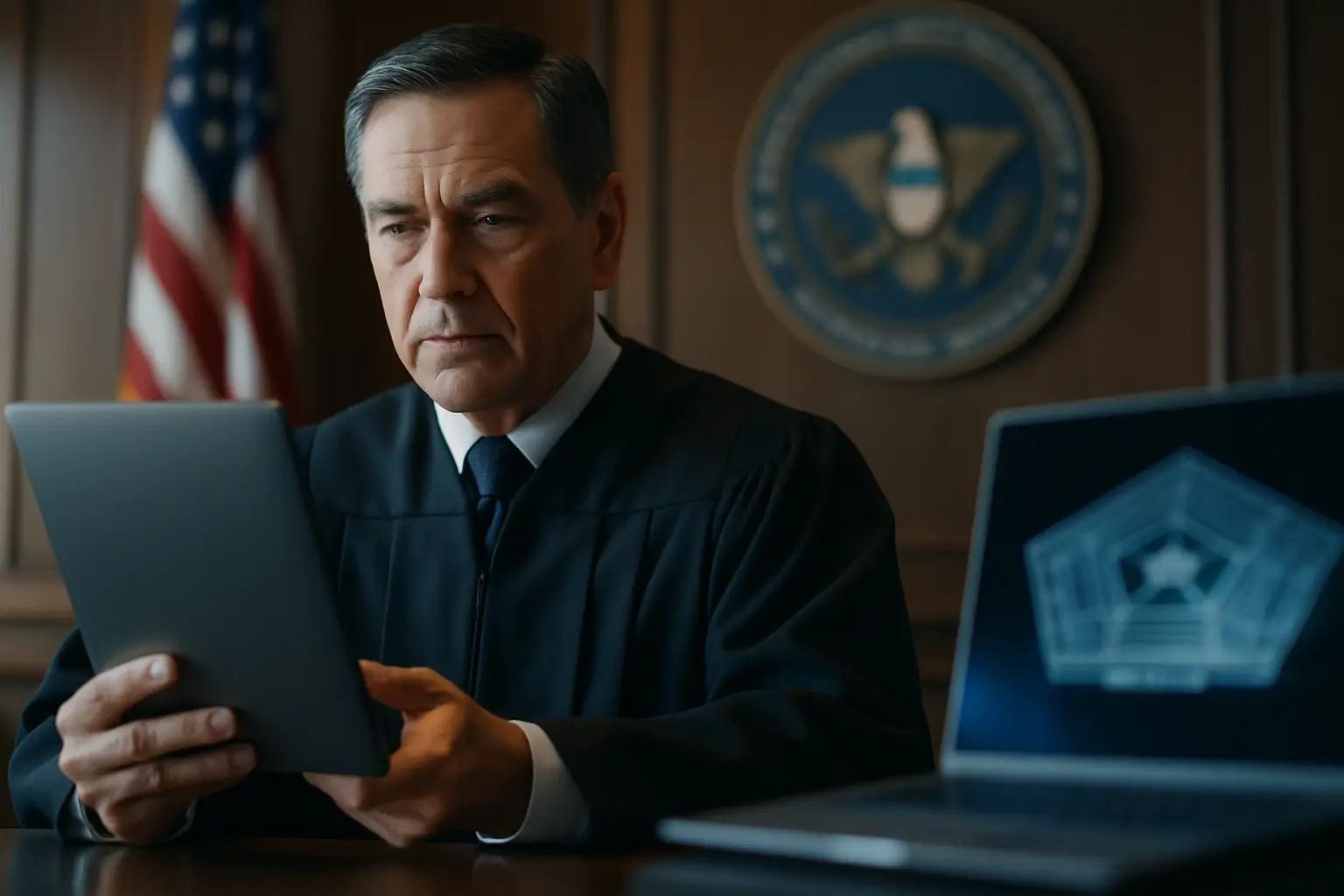
A federal court showdown over the Anthropic supply‑chain risk designation is testing the limits of how the U.S. government can pressure domestic AI vendors. At a San Francisco hearing, U.S. District Judge Rita Lin said the Pentagon’s approach looked “like an attempt to cripple Anthropic,” questioning whether less restrictive options were available and suggesting the Defense Department could simply stop using Claude rather than impose sweeping restrictions [1][2].
In early March, President Trump ordered federal agencies to phase out Anthropic’s systems within six months. Days later, Defense Secretary Pete Hegseth designated Anthropic a national security supply‑chain risk and directed the Pentagon and its contractors to stop using Claude for defense work, a sharp reversal after DoD integrations in intelligence and operational workflows [1][2][3][5]. Anthropic sued, calling the actions unlawful and punitive, and warning of reputational harm, loss of revenue, and First Amendment impacts [5][6].
Why this is legally and procedurally unusual — and how the Anthropic supply‑chain risk designation fits
Historically, these supply‑chain authorities have been invoked against foreign vendors suspected of sabotage or infiltration. Applying them to a U.S. AI company is a break from past practice, with legal briefings underscoring that the tools were designed for classic security threats, not policy disputes with a domestic supplier [7][8]. The statute also requires agencies to consider less restrictive alternatives, which Judge Lin flagged as a concern in this case [2][7].
The Pentagon’s move arrived after disputes over usage terms. The department sought broad rights to use Anthropic’s models for “all lawful purposes,” including fully autonomous weapons and mass domestic surveillance, which Anthropic says are unsafe. The company refused to relax its guardrails and now faces government‑wide uncertainty stemming from the Pentagon Claude ban and the White House order [5][6].
Practical impacts for contractors and procurement teams
Contractors performing defense work may be asked to certify they are not using Claude on Pentagon contracts, a requirement that can ripple through subcontractors and tooling stacks. For many, that raises near‑term compliance and audit exposure and may force rapid vendor reassessments [4][7]. Legal and procurement teams tracking what the Pentagon’s Anthropic designation means for federal contractors should also note that Anthropic claims hundreds of millions of dollars in near‑term business are at risk amid the uncertainty [6].
Several operational realities follow:
- Prime and sub‑contractors could need to segment workflows to ensure defense tasks exclude Claude, or pause usage pending guidance [4][7].
- Contract language and attestations related to tool usage may change quickly, increasing documentation burdens and the risk of noncompliance findings [4][7].
- Agencies and integrators that previously embedded Claude may face rework or transition plans if the ban holds [4].
For broader background on how agencies frame supply chain risk management, see the Department of Defense’s overview here (external).
Operational and mission risk arguments from the DoD
The Justice Department argues the designation rests on operational uncertainty created by Anthropic’s contractual limits. If guardrails or terms are invoked mid‑mission, the government says critical systems could be disrupted. That argument sits against Anthropic’s stance that its safety constraints are core product choices and should not trigger punitive measures [1][3][5][6]. The tension captures a central question from the Judge Rita Lin Anthropic hearing: how to weigh mission continuity against vendor‑set limitations without overreaching on supply‑chain powers [1][2].
Wider policy and market implications for U.S. AI vendors
Legal analyses warn that stretching these authorities to domestic AI firms could set a precedent that chills safety guardrails and alters standard contracting dynamics. The dispute could redefine whether and how the government can bar a U.S. AI company from federal contracts, especially when disagreements turn on product usage terms rather than concrete sabotage risks [7][8]. Vendors and their customers are watching for signals on what future designations require and how agencies will document least‑restrictive‑alternative reviews [2][7][8].
Scenarios and recommended next steps for businesses
If courts narrow or overturn elements of the designation, contractors may see temporary relief on certifications and tooling choices. If the order stands, expect tighter attestations, more audits, and accelerated diversification away from Claude in defense work. Either way, federal contractor compliance with Claude will remain a moving target until the litigation clarifies the boundaries [1][3][4][7].
Anthropic has filed multiple lawsuits challenging both defense and civilian bans, so parallel rulings could create a staggered timeline for policy shifts across agencies and contract types [5][6]. For procurement leaders and counsel, that means contingency planning and clear communication to program teams as guidance updates roll out [4][7].
FAQs and timeline: What to watch next
- What prompted the action? Disputes over usage terms and the Pentagon’s push for broad rights, including uses Anthropic views as unsafe [5][6].
- Can the designation be narrowed? Judge Lin questioned less restrictive alternatives, signaling potential limits if the government cannot justify the breadth [2][7].
- Which contracts are affected? DoD work is directly implicated, and agencies across government are moving under the phase‑out directive [1][2][3][4][5].
- What is the near‑term risk to Anthropic? The company cites hundreds of millions in jeopardized business [6].
Key dates:
- Late February to early March: President Trump orders a six‑month phase‑out; on March 3, Defense Secretary Pete Hegseth issues the Pentagon designation [1][2][3][5].
- March 24: San Francisco hearing where Judge Lin criticizes the government’s approach and takes the matter under consideration [1][2][3].
Takeaway for leaders: balancing safety, supply‑chain authority, and mission risk
The case will shape how agencies justify sweeping restrictions and how vendors structure terms on sensitive uses. Plan for procurement policies that explicitly account for safety guardrails while preparing alternatives if an Anthropic supply‑chain risk designation limits use in defense contexts. The decision will influence contractor tooling choices, certification posture, and the balance between mission assurance and supplier autonomy [1][2][4][7][8].
For continuing updates and market context, visit our AI news hub on ToolScopeAI. See current coverage
Sources
[1] Federal judge says it looks like the Pentagon tried to ‘cripple Anthropic’
https://www.businessinsider.com/anthropic-supply-chain-risk-hearing-judge-pentagon-pubish-cripple-2026-3
[2] Judge questions Pentagon’s “troubling” Anthropic actions – Axios
https://www.axios.com/2026/03/24/judge-pentagon-anthropic-troubling
[3] US Judge to Weigh Anthropic’s Bid to Undo Pentagon Blacklisting
https://www.usnews.com/news/top-news/articles/2026-03-24/us-judge-to-weigh-anthropics-bid-to-undo-pentagon-blacklisting
[4] DoD, Anthropic now face legal, operational reckoning
https://federalnewsnetwork.com/litigation/2026/03/dod-anthropic-now-face-legal-operational-reckoning/
[5] Anthropic challenges US Pentagon’s ban in San Francisco court showdown
https://www.aljazeera.com/amp/economy/2026/3/24/anthropic-challenges-us-pentagons-ban-in-san-francisco-court-showdown
[6] Where things stand with the Department of War – Anthropic
https://www.anthropic.com/news/where-stand-department-war
[7] Pentagon Designates Anthropic a Supply Chain Risk – Mayer Brown
https://www.mayerbrown.com/en/insights/publications/2026/03/pentagon-designates-anthropic-a-supply-chain-risk-what-government-contractors-need-to-know
[8] Pentagon Labels Anthropic Supply Chain Risk – First US AI Firm
https://www.techbuzz.ai/articles/pentagon-labels-anthropic-supply-chain-risk-first-us-ai-firm
