
The future of machine intelligence: why architecture and hardware will decide what comes next
Recent discussions from research labs and practitioners converge on a sober view: the future of machine intelligence will be shaped less by making today’s models bigger and more by rethinking architectures, memory, learning, and hardware. That matters for teams betting on AI roadmaps over multi-year horizons, because the capabilities and costs they plan around could change as new designs emerge [1][2][3][4].
Introduction: What do we mean by “machine intelligence”?
Most analyses treat intelligence as a spectrum of capabilities rather than a single threshold. Interviews and explainers from Microsoft Research and others stress that while large transformer models show impressive skills, many researchers doubt that scaling alone will reach general intelligence. They point to gaps in continual learning, brittle adaptation, and limits in long, structured reasoning [1][3][4]. For leaders assessing strategy, this reframes expectations and timelines around what current systems can reliably do.
Where current models excel: the transformer story
Transformers have driven rapid progress across language, coding, and reasoning-like tasks. Their success rides on scale, data, and the fact that attention and dense matrix operations map efficiently to GPUs, reinforcing the dominance of this architecture in current AI practice [1][2][4]. For companies, this has translated into practical tools for content generation, summarization, code assistance, and analytics workflows, albeit with caveats around reliability and control [1][4].
Key technical gaps: continual learning, memory, and robust reasoning
Multiple analyses highlight persistent transformer limitations. Models struggle with continual learning in AI, often failing to update gracefully without retraining, and they can be brittle when adapting to new contexts or data distributions. Their working memory for multi-step, structured reasoning is constrained, and bolt-on fixes like retrieval or simply extending context windows do not fully address the core architectural issues. Proposals instead call for memory-centric AI that integrates explicit, addressable memory and algorithmic reasoning into the core system rather than treating memory as an external add-on [3][4].
What neuroscience teaches us: brains vs. transformers
Neuroscience-informed views emphasize how biological brains learn continuously, rewire connections over time, and rely on sparse, context-dependent activity. These properties differ from static transformer parameters and dense, fixed computational graphs, suggesting that more brain-inspired AI could be both more data-efficient and more adaptable in principle [3]. Complementary work on neuron–astrocyte networks shows that transformer-like attention mechanisms can, in principle, be implemented biologically using approximations to achieve similar functional outcomes, while also underscoring the mismatches and compromises required for biological plausibility [5]. These comparisons point to potential gains from architectures that better reflect biological constraints without copying them wholesale [3][5].
Hardware matters: how GPUs shaped architecture choices
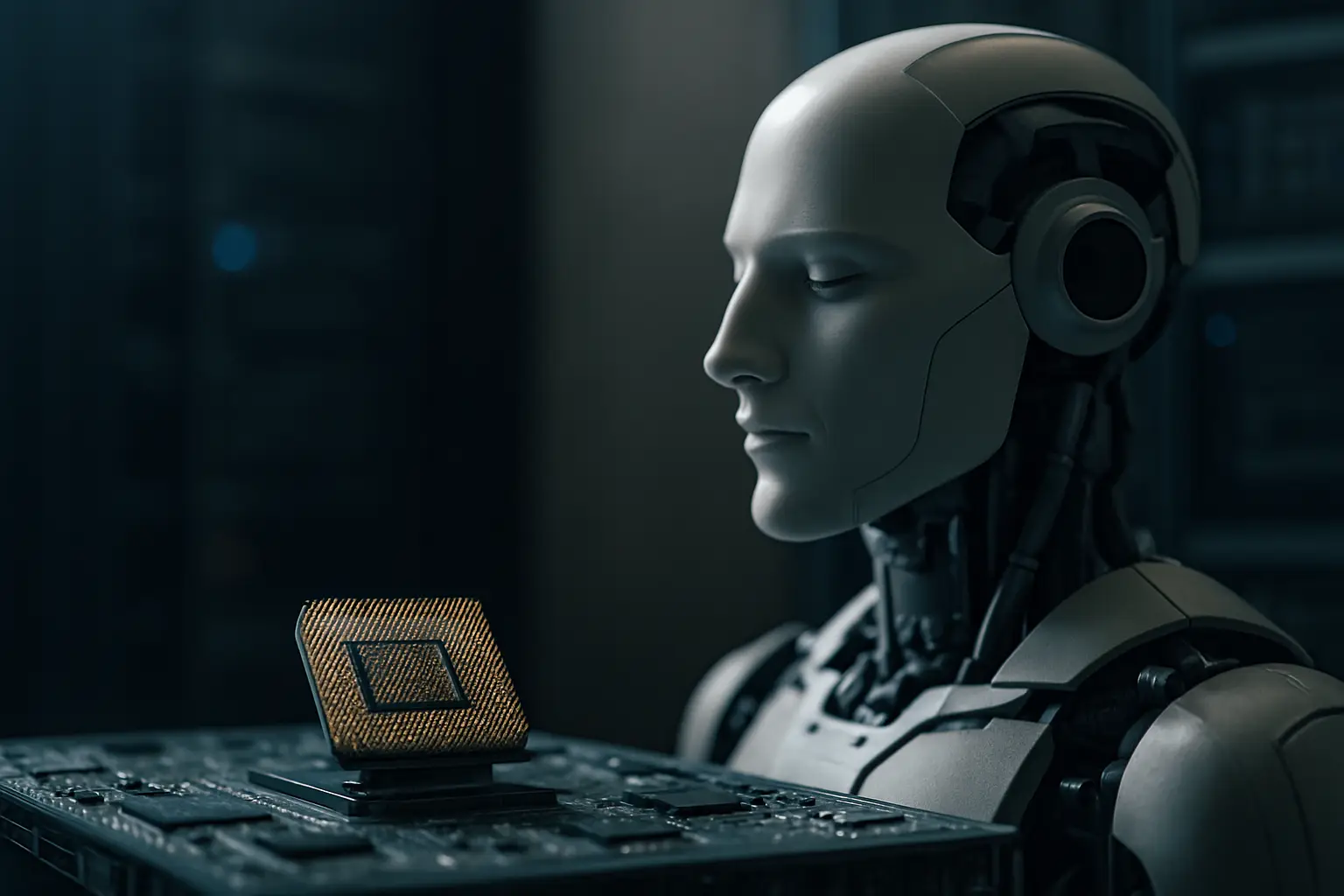
The field’s trajectory is tied to hardware realities. Researchers note that transformers prospered partly because they align well with current GPUs, creating a hardware bias in AI architectures that can sideline alternatives with stronger theoretical appeal but weaker near-term performance on today’s accelerators [1][2]. This feedback loop suggests that breakthroughs in architecture may require or spur changes in underlying compute, including more brainlike or memory-centric designs that are not easily expressed as dense matrix multiplications [2]. For additional background on GPU programming, see the NVIDIA CUDA documentation (external).
Architectural paths beyond scaling: memory, algorithms, and hybrids
Forward-looking proposals emphasize tightly integrated, differentiable memory, addressable storage, and explicit algorithmic reasoning. Rather than relying on retrieval or longer contexts, these directions aim to weave memory into the model’s core computation and training dynamics. Hybrid designs that borrow from neuroscience while embracing modern optimization may open routes past current transformer limitations [4][5]. Microsoft Research overviews echo this bigger picture, arguing that long-term progress likely depends on new models and systems, not just larger versions of what we have today [1]. These are central themes in the future of machine intelligence and will shape competitiveness and capability over time [1][4].
What this means for businesses and technologists
- Expect uneven gains from pure scaling and monitor research on memory-centric AI and continual learning to improve reliability and adaptation [3][4].
- Evaluate hardware roadmaps with an eye on architectural flexibility. GPU-first stacks are powerful, but track emerging compute paradigms that could unlock different models [1][2].
- Build teams that can integrate retrieval, tools, and emerging memory modules while maintaining rigorous evaluation and governance [1][4].
- Follow neuroscience-informed work, including neuron–astrocyte models, as a signal for functionally aligned but more efficient designs [5].
For hands-on resources and implementation guides, Explore AI tools and playbooks.
FAQs and common misconceptions
- Will scaling transformers yield AGI on its own? Analyses and interviews are skeptical, citing gaps in continual learning, adaptation, and structured reasoning that likely require architectural changes [3][4].
- Are transformers biologically plausible? Some transformer-like computations appear implementable with neuron–astrocyte networks using approximations, suggesting overlap in function alongside important differences in mechanisms and constraints [5].
- What should teams watch next in the future of machine intelligence? Signs include integrated memory systems, better continual learning, and hardware shifts that enable new model classes [1][2][4][5].
Conclusion: realistic expectations and next milestones
The path ahead looks less like straight-line scaling and more like a shift toward new architectures, richer memory, and possibly new hardware. Microsoft Research voices, practitioner commentary, and biological modeling together indicate that progress toward more general capabilities will hinge on breaking today’s architectural bottlenecks and hardware lock-ins [1][2][4][5]. For now, plan for steady improvements from transformers while keeping a close eye on designs that move core computation closer to how information is stored, retrieved, and adapted in natural systems. That balance will define the future of machine intelligence over the coming years [1][3][4].
Sources
[1] The Shape of Things to Come – Microsoft Research
https://www.microsoft.com/en-us/research/story/the-shape-of-things-to-come/
[2] AI’s future: a profound question on transformer efficiency – LinkedIn
https://www.linkedin.com/posts/dcburger_more-brainlike-computers-could-change-ai-activity-7301340061353029632-Wj6o
[3] Will machines ever be intelligent? – Microsoft Research
https://www.microsoft.com/en-us/research/podcast/will-machines-ever-be-intelligent/
[4] The Road to AGI: Current State, Challenges, and the Path Beyond …
https://medium.com/@josefsosa/the-road-to-agi-current-state-challenges-and-the-path-beyond-transformers-6a72ac100e69
[5] AI models are powerful, but are they biologically plausible? | MIT News
https://news.mit.edu/2023/ai-models-astrocytes-role-brain-0815
[6] [PDF] Understanding and Supporting Human Decision Making through Text
https://knowledge.uchicago.edu/record/13598/files/PhD_Thesis%20%281%29.pdf
