
Siemens and NVIDIA Expand Partnership to Build the Industrial AI Operating System: The Industrial AI Tech Stack
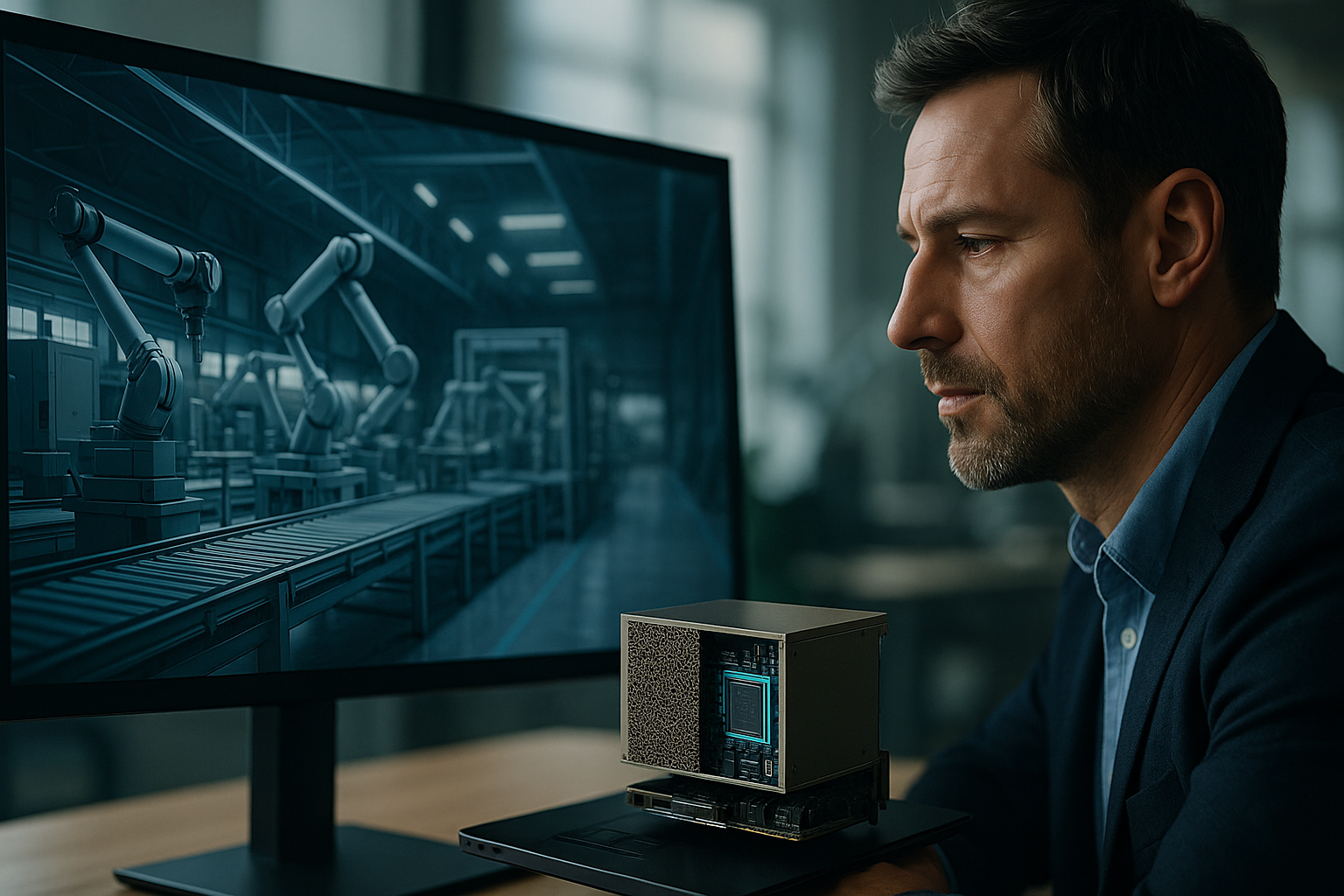
Manufacturers are getting a clearer picture of what end‑to‑end AI infrastructure could look like on the factory floor. Siemens and NVIDIA are expanding a multi‑year collaboration to deliver an industrial AI tech stack that unifies design, engineering, simulation, real‑time operations, and data centers—promising faster innovation, higher productivity, and more sustainable operations for the “factory of the future” [1].
Why Siemens and NVIDIA’s expanded partnership matters for industry
The companies are connecting Siemens’ Xcelerator portfolio, industrial automation footprint, and digital twin expertise with NVIDIA’s Omniverse, AI, and accelerated computing to build an integrated “industrial tech stack.” Key elements include embedding Omniverse into Siemens Teamcenter and introducing the Teamcenter Digital Reality Viewer for live 3D data in PLM; using Siemens Industrial Copilot at the factory edge to keep sensitive production data local; and accelerating inference with NVIDIA NIM microservices on industrial PCs. Strategically, the stack is positioned to speed product development, streamline factory operations, and improve resource efficiency across the lifecycle [1].
Siemens and NVIDIA are also targeting energy‑efficient factories and industrial AI data centers as a combined infrastructure layer, with cybersecurity AI and real‑time operations woven into the architecture. The joint system is framed as foundational for the Industrial Metaverse, spanning planning, simulation, runtime control, and security from edge to cloud [2].
What the industrial AI tech stack includes (Xcelerator + Omniverse + NIM)
At its core, the collaboration connects an industrial digital twin platform with NVIDIA’s visualization and AI compute. Siemens Xcelerator and automation systems link to NVIDIA Omniverse to enable photorealistic, physically accurate digital twins, bringing virtual design and production models closer to the behavior of real‑world assets and processes. This alignment is designed to let engineering teams and operators move more seamlessly between product design, simulation, and shop‑floor execution [3].
Teamcenter Digital Reality Viewer: live 3D and PLM workflows
A central workflow upgrade is the Teamcenter Digital Reality Viewer, which embeds Omniverse visualization so engineers can access and manipulate live 3D data and digital twins directly inside PLM. By keeping visualization and collaboration native to Teamcenter, organizations can reduce context switching and improve change management across complex, multi‑disciplinary programs [5].
Edge‑first approach: Siemens Industrial Copilot and on‑prem AI
For production environments with strict data locality, Siemens Industrial Copilot runs on‑premises at the factory edge. The approach favors optimized small language models and task‑specific AI over generic cloud LLMs, preserving IP and process data within the plant while meeting latency and reliability needs typical of industrial control. NVIDIA NIM microservices complement this model by improving inference efficiency on industrial PCs equipped with NVIDIA GPUs and software stacks [2].
Optimizing inference at the edge with NVIDIA NIM microservices
Architecturally, NIM introduces containerized, model‑serving microservices that streamline deployment and scaling of AI capabilities at the edge. By standardizing how models are packaged, accelerated, and monitored, teams can reduce integration overhead and keep production‑critical inference close to machines and lines. This ties directly into the broader industrial AI tech stack vision, where simulation, digital twins, and runtime intelligence operate in concert on factory networks.
For engineering use cases, Siemens applies NVIDIA technologies across tools such as Simcenter STAR‑CCM+ to connect simulation with digital twins and accelerate iterative design. Coupled with Omniverse visualization, these capabilities aim to shrink design cycles and provide richer feedback loops between engineering and operations [4].
Industrial AI data centers and sustainability benefits
Beyond the plant floor, Siemens and NVIDIA position the joint stack for energy‑efficient industrial AI data centers, treating factory systems and compute infrastructure as a unified layer. By using digital twins and simulation throughout planning and operations, the companies claim manufacturers can design more efficient products, optimize production lines, and improve resource utilization—all part of a broader push for sustainable manufacturing AI [2].
Security and governance: cybersecurity AI for industrial automation
With more AI running at the edge and across data centers, the collaboration highlights cybersecurity AI alongside Siemens’ automation footprint. The intent is to strengthen defenses across Industrial Automation DataCenters while maintaining real‑time performance and availability requirements inherent to production systems [2].
What manufacturers should consider when evaluating this tech stack
- Fit with existing PLM and MES workflows—especially Teamcenter Omniverse integration and live 3D collaboration in the Digital Reality Viewer.
- Edge architecture and data governance—on‑prem industrial copilot vs. cloud LLMs, and how NIM microservices standardize and optimize local inference.
- Hardware and acceleration—GPU capacity at the edge, network constraints, and lifecycle management between factory assets and industrial AI data centers.
- Outcomes and metrics—tie digital twin and simulation investments to throughput, quality, energy consumption, and sustainability targets.
For a broader perspective on industrial platforms, see NVIDIA’s Omniverse overview (external) for visualization and collaboration capabilities that complement PLM and simulation workflows. To plan pilots and skills development, you can also explore AI tools and playbooks.
Case examples and next steps
Siemens emphasizes that using Omniverse within Teamcenter enables engineers to engage with live 3D digital twins directly in PLM. Combined with simulation tools like Simcenter, this is intended to accelerate validation and support AI‑driven production optimization over time. Early adopters can prioritize high‑value lines, define security and sustainability KPIs, and scale into the Industrial Metaverse roadmap as capabilities mature [5][6].
Conclusion: long‑term implications for the Industrial Metaverse and factory modernization
As industrial firms seek practical paths to AI at scale, the Siemens‑NVIDIA approach presents a coherent industrial AI tech stack from edge to data center. The emphasis on digital twins, on‑prem AI, and standardized inference via NIM suggests a playbook that balances innovation with security and sustainability—while laying groundwork for more immersive, interoperable Industrial Metaverse infrastructure [6].
Sources
[1] Siemens and NVIDIA Preview Industrial Tech Stack for AI-Era Manufacturing (Global press release)
https://press.siemens.com/global/en/pressrelease/siemens-and-nvidia-preview-industrial-tech-stack-ai-era-manufacturing
[2] Siemens and NVIDIA Preview Industrial Tech Stack for AI-Era Manufacturing (US news)
https://news.siemens.com/en-us/siemens-and-nvidia-preview-industrial-tech-stack-for-ai-era-manufacturing/
[3] Siemens and NVIDIA
https://www.sw.siemens.com/en-US/partners/find-a-partner/nvidia/
[4] Siemens Accelerates Innovation With Omniverse and AI – NVIDIA
https://www.nvidia.com/en-sg/customer-stories/siemens-accelerates-product-development-and-innovation-with-industrial-ai/
[5] Siemens unveils breakthrough innovations in industrial AI and digital twin technology – CES
https://press.siemens.com/global/en/pressrelease/siemens-unveils-breakthrough-innovations-industrial-ai-and-digital-twin-technology-ces
[6] Siemens & NVIDIA Innovation: AI in Future Factories – LinkedIn
https://www.linkedin.com/pulse/teaming-up-factory-future-siemens-rfzsf
