
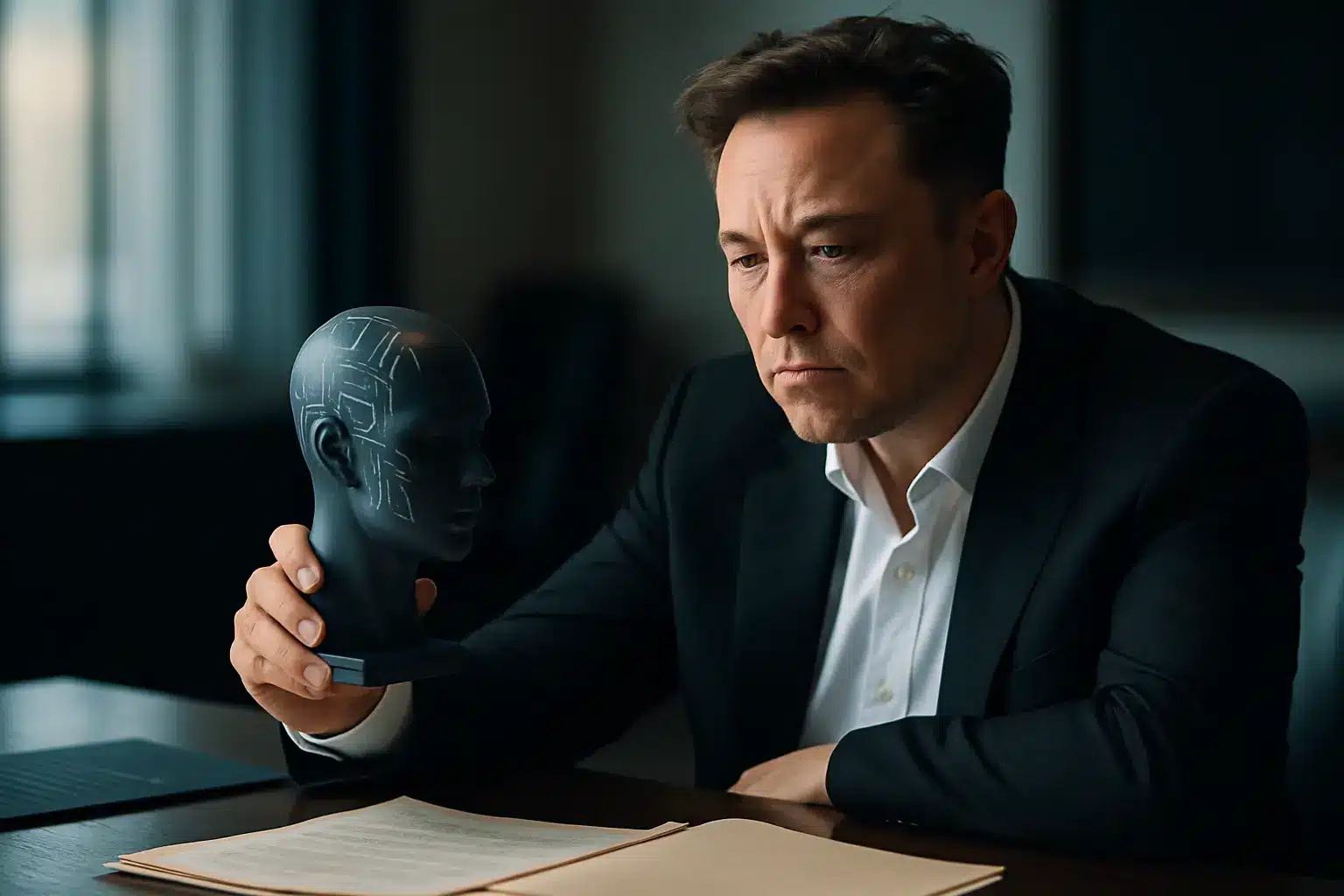
Musk attempts to control OpenAI: what the trial evidence shows
The Musk v. Altman trial is surfacing a rare paper trail of how elite AI labs are steered through private negotiations and personal networks. The records detail Musk attempts to control OpenAI, including proposals for tighter ownership and talent shifts to Tesla, with implications for how frontier AI gets built and governed [1][2].
Headline and lede: What the trial exhibits reveal
Reporting on the exhibits shows Musk initially framed OpenAI as an existential-safety effort and even floated the name “Freemind” to distinguish it from DeepMind [1]. As OpenAI gained momentum under Sam Altman and moved toward a powerful, commercially aligned structure, Musk pushed for more control. OpenAI says he sought to fold the lab into Tesla or gain majority ownership around 2017, a bid that failed before he left OpenAI and concentrated on AI at Tesla [1][2].
Musk attempts to control OpenAI: what the exhibits show
The Verge’s exhibit roundup includes Musk’s messages to confidante Shivon Zilis indicating Tesla would try to recruit key OpenAI personnel. He argued OpenAI would have little chance to be a “serious force” if he focused Tesla’s AI efforts [1]. Zilis served as a back-channel to OpenAI leadership and sentiment, flagging which senior researchers might be open to a move. She reported that Ilya Sutskever was “visibly devastated” after a meeting with Musk and potentially recruitable [1][3].
These details sit inside a broader dispute over mission and control. The Conversation notes Musk’s claim that OpenAI abandoned its nonprofit charter and aligned too closely with Microsoft, while OpenAI counters that his maneuvers were efforts to secure personal control or move assets and talent under Tesla [2]. WIRED’s coverage of testimony and cross-examination adds more context on how closely the parties sparred over control, risk, and influence [4].
Quick timeline: Musk, OpenAI and the move toward Tesla
- Early phase: Musk contributes time and resources to an open-safety vision for the lab, suggesting “Freemind” to emphasize accessible digital intelligence [1].
- Circa 2017: OpenAI alleges Musk explored folding the lab into Tesla or obtaining majority control, which did not happen [1][2].
- After the split: Musk pivots to positioning Tesla as his primary vehicle for frontier AI in autonomy and robotics, while monitoring OpenAI’s leadership dynamics and talent [1][2][3].
- Trial coverage: Exhibits detail messages about Tesla hiring OpenAI staff and underline Zilis’s role in channeling internal sentiment from OpenAI to Musk [1][3].
Who’s who: Musk, Altman, Zilis, Sutskever, Microsoft
- Elon Musk: Early OpenAI backer who later focused on AI at Tesla and pursued recruitment of OpenAI talent. He argues the lab strayed from its nonprofit mission [1][2].
- Sam Altman: CEO leading OpenAI’s ascent and commercialization. The legal fight with Musk could shape governance norms across AI [2][5].
- Shivon Zilis: Operated as Musk’s informal conduit to OpenAI leadership and relayed sentiment and recruitment possibilities [1][3].
- Ilya Sutskever: Identified in messages as “visibly devastated” and potentially recruitable after an interaction with Musk [1][3].
- Microsoft: Central to the alignment concerns raised in the lawsuit narrative, with critics arguing OpenAI grew too close to the tech giant [2][4].
Business implications: talent risk, competitive strategy, and acquisitions
The exhibits underscore how hiring campaigns and acqui-hire style tactics can shift an AI lab’s trajectory. Plans resembling Tesla hiring OpenAI staff introduce retention risk and can pull critical research momentum across organizational lines [1]. For leaders, the lesson is direct: talent movement shapes competitive edges as much as product roadmaps.
- Expect strategic recruiting in waves. Once one or two senior researchers move, others may follow, amplifying disruption [1].
- Prepare response playbooks. Counteroffers, mission clarity, and visible governance can reduce flight risk.
- Evaluate partnership exposure. Close ties with a single platform provider invite scrutiny and can become litigation flashpoints, as seen in arguments about OpenAI Microsoft alignment [2][4].
As the trial proceeds, more examples may refine how companies structure incentives to prevent cascading departures. These dynamics are core to how Musk attempts to control OpenAI became entangled with Tesla’s AI ambitions [1][2].
Governance and legal implications for AI labs and enterprises
The case highlights personality-driven governance and opaque decision-making channels. Zilis’s role as a back-channel shows how influence can flow outside formal boards, raising questions about oversight in high-stakes labs [1][3]. The Conversation frames the legal stakes as potentially influential for AI governance norms, with claims about nonprofit mission drift on one side and allegations of personal control bids on the other [2].
Organizations should pressure test governance basics: documentation of mission commitments, board independence, conflict-of-interest controls, and clear protocols for talent solicitation. Broader best practices from international bodies can help executives benchmark oversight standards, for example the OECD AI Principles (external).
These issues are not isolated. They mirror how Musk attempts to control OpenAI became a legal and reputational test, with spillover implications for investors, partners, and talent markets [1][2][4].
Practical recommendations for business leaders
- Clarify and communicate mission and risk posture. Researchers stay when goals and guardrails are credible [2][4].
- Fortify retention. Build multi-year incentives aligned to research milestones, with proactive manager check-ins during industry volatility [1][2].
- Hardening governance. Formalize information flows and reduce reliance on informal back-channels [1][3].
- Vendor and partner diversification. Stress-test dependencies that could become litigation or reputation risks, a theme in the OpenAI governance lawsuit narrative [2][4].
For implementation playbooks and templates, see our internal guides in Explore AI tools and playbooks.
What to watch next
Coverage points to ongoing testimony and document releases that could reshape how boards police alignment, partnerships, and talent strategies. Outcomes may influence how aggressively competitors pursue teams and whether Musk attempts to control OpenAI continue through recruiting and product competition at Tesla [2][4][5].
Sources
[1] All the evidence revealed so far in Musk v. Altman
https://www.theverge.com/ai-artificial-intelligence/920775/evidence-exhibits-elon-musk-sam-altman-openai-trial
[2] Elon Musk vs Sam Altman: how the legal battle of the tech billionaires could shape the future of AI
https://theconversation.com/elon-musk-vs-sam-altman-how-the-legal-battle-of-the-tech-billionaires-could-shape-the-future-of-ai-281732
[3] How Shivon Zilis Operated as Elon Musk’s OpenAI Insider
https://www.techbuzz.ai/articles/how-shivon-zilis-operated-as-elon-musk-s-openai-insider
[4] How Elon Musk Squeezed OpenAI: They ‘Are Gonna Want to Kill Me’
https://www.wired.com/story/model-behavior-elon-musk-cross-examined-sam-altman/
[5] Tesla CEO Elon Musk takes stand in trial vs. OpenAI CEO Sam Altman that could reshape AI’s future – ABC7 Los Angeles
https://abc7.com/post/tesla-ceo-elon-musk-takes-stand-trial-openai-sam-altman-could-reshape-artificial-intelligence-future/18990312/
