
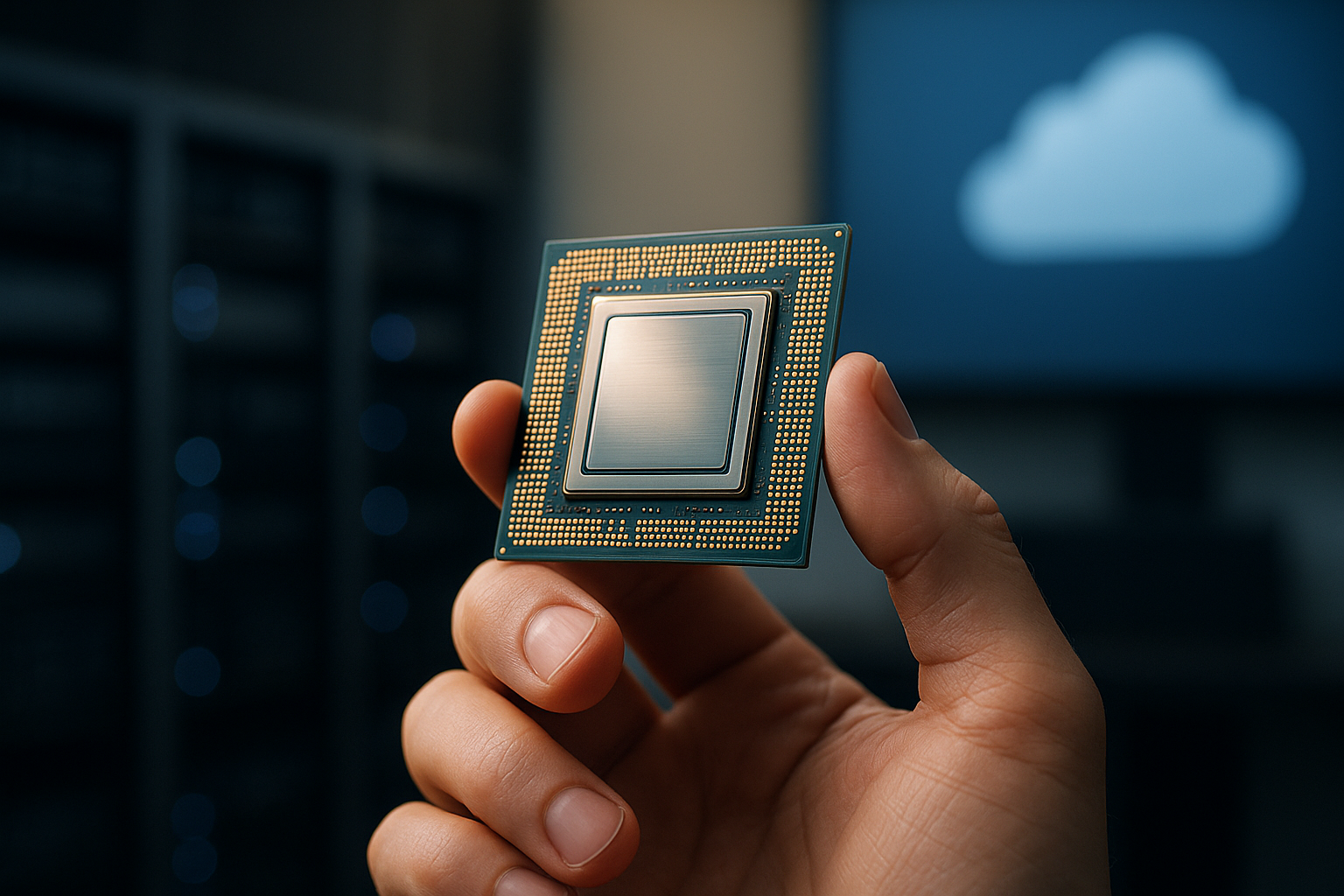
Maia 200 inference chip: Microsoft’s high-bandwidth accelerator
Enterprises running large language models on Azure have a new option: Microsoft’s second-generation accelerator is built expressly for high-throughput inference, not training. The Maia 200 inference chip targets production serving where bandwidth, low-precision tensor math, and cost-per-token dominate decisions, and it’s rolling out first to US customers through Azure services [1].
Why the Maia 200 inference chip matters now
Maia 200 is fabricated on TSMC’s 3 nm process and is described by Microsoft as its most efficient inference platform to date. The design leans into native FP8 and FP4 tensor cores and an aggressive memory subsystem to keep quantized LLMs fed at scale. Microsoft positions it for cost-sensitive, high-volume inference workloads in Azure, with integration into the existing software stack and services such as Azure OpenAI [1].
Key specs that matter for inference
For production LLM serving, memory bandwidth and low-precision throughput are paramount. Maia 200 centers on:
- HBM3e at extreme bandwidth: 21 stacks of 6 GB each, delivering roughly 7 TB/s of external bandwidth.
- On-chip capacity where it counts: 272 MB on-die memory.
- Native support for FP8 and FP4 tensor operations designed for quantized inference.
- Dedicated data movement engines to prefetch and shard large model parameters efficiently.
Together, these choices aim to maximize utilization and reduce serving costs for large models in Azure [1].
How Maia 200 handles quantized LLM inference (FP4/FP8)
Quantized formats are a cornerstone of cost-efficient inference. By integrating native FP8 and FP4 tensor cores, the chip targets the sweet spot where weights and activations can be reduced in precision while preserving model quality for production use. The architecture’s data movement engines and sizable on‑chip memory are intended to keep those cores continuously supplied, with efficient prefetching and sharding to mitigate memory stalls on large parameter sets [1].
Performance and cost claims (comparison overview)
Microsoft frames Maia 200’s comparative positioning clearly: the company claims roughly three times the FP4 performance of Amazon’s third‑generation Trainium and higher FP8 throughput than Google’s seventh‑generation TPU. Microsoft also cites about 30% better cost performance than existing Azure AI systems. As with any vendor-provided figures, enterprises should validate with their own workloads and cost models in the target Azure regions [1].
Maia 200 vs. Maia 100 — what changed
The prior-generation Maia 100 targeted both training and inference and was built on TSMC’s 5 nm (N5) process. It uses HBM2E memory and scales out over Ethernet in custom Azure hardware. Maia 200 shifts decisively toward inference-first design on TSMC 3 nm, with far higher memory bandwidth via HBM3e and native FP8/FP4 performance aimed at production serving. Maia 100 remains a workhorse for mixed workloads, while Maia 200 takes a more specialized path for large-scale, cost-sensitive inference [1][2][3].
Availability and Azure integration
Microsoft is initially deploying Maia 200 in the US Central Azure region, with US West 3 (near Phoenix, Arizona) next. The company has not announced a broader global timeline. The accelerator is exposed through Azure’s software stack, including services such as Azure OpenAI, and packaged into custom boards, racks, and networking infrastructure aligned with Maia 100’s Ethernet-based scale-out philosophy [1]. For Azure context, see Microsoft’s site Azure overview (external).
Practical implications for businesses and operators
- When to consider it: Large LLM serving, cost-sensitive inference, and high-traffic production endpoints in Azure.
- What to test: FP4/FP8 quantization behavior on your models; throughput at target sequence lengths; end-to-end cost-per-inference.
- Where it’s available: Start with US Central; plan capacity for US West 3 next and monitor for additional regions.
If your workload profile maps to quantized inference and your deployment is pinned to supported US regions, the Maia 200 inference chip could align with both performance and cost objectives on Azure [1].
Next steps and how to evaluate Maia 200 for your workloads
- Benchmark representative prompts and sequence lengths on FP8 and FP4.
- Validate model quality under quantization against production acceptance criteria.
- Confirm region capacity (US Central, then US West 3) and compare cost-per-inference against existing Azure systems or alternative accelerators.
For ongoing guidance on tools and implementation patterns, Explore AI tools and playbooks.
Sources
[1] Microsoft introduces AI accelerator for US Azure customers
https://www.computerweekly.com/news/366637622/Microsoft-introduces-AI-accelerator-for-US-Azure-customers
[2] Inside Maia 100: Revolutionizing AI Workloads with Microsoft’s custom AI accelerator
https://techcommunity.microsoft.com/blog/azureinfrastructureblog/inside-maia-100-revolutionizing-ai-workloads-with-microsofts-custom-ai-accelerat/4229118
[3] Microsoft Unveils New Details on Maia 100, Its First Custom AI Chip
https://www.techpowerup.com/326105/microsoft-unveils-new-details-on-maia-100-its-first-custom-ai-chip
