
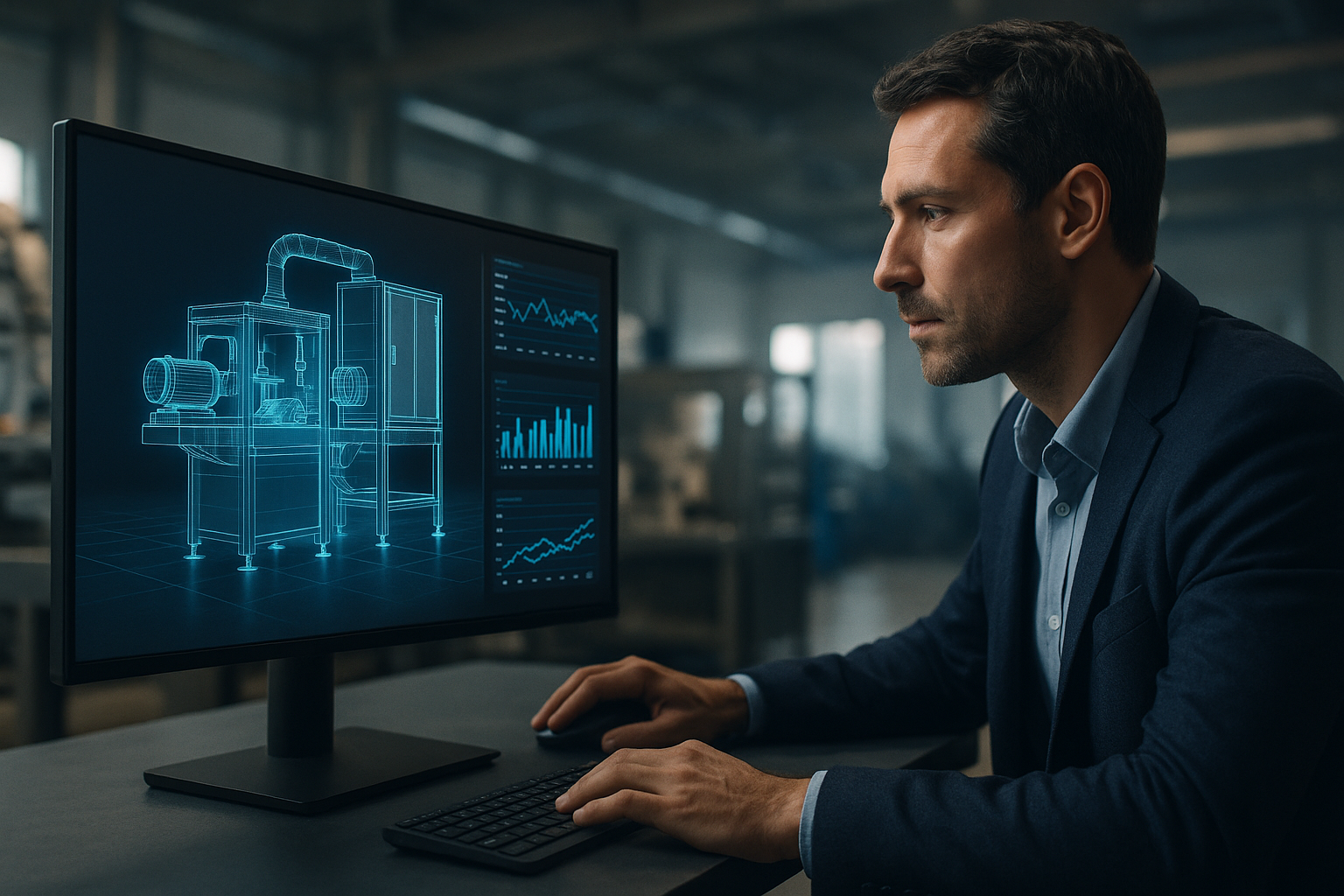
Into the Omniverse: Industrial digital twins for manufacturing
The race to modernize manufacturing is accelerating as platforms from Siemens and NVIDIA bring industrial AI, simulation, and real‑time data together. Leaders are turning to industrial digital twins for manufacturing to shorten design cycles, validate changes virtually, and de‑risk commissioning across lines and plants [2][3][1].
What the industrial metaverse means for factories
Vendors are converging physics‑based 3D models, IT/OT data, and AI into shared, persistent environments often described as an industrial metaverse. Platforms such as Siemens’ Digital Twin capabilities and NVIDIA’s Omniverse enable operationally accurate replicas of machines, cells, and entire plants, continuously updated with sensor and enterprise data to mirror real‑world behavior [2][3][1]. These immersive environments give multi‑disciplinary teams a common canvas for design, engineering, and production planning [2][3].
Where industrial digital twins for manufacturing fit in the stack
Enterprises are pairing visualization and simulation platforms with industrial software backbones to create continuous, high‑fidelity twins. By connecting PLM, MES, and automation systems, teams can synchronize product, process, and performance data—then simulate how changes ripple through equipment, lines, and workflows before touching physical assets [2][3][1]. Siemens’ tooling, combined with ecosystem platforms, is positioned to help build these operationally accurate twins that capture machines, conveyors, pallets, and operator paths for detailed flow analysis [2][3][1].
How AI agents supercharge simulation and validation
AI and generative techniques now run inside twins to explore design, layout, and control alternatives at scale. Instead of trial‑and‑error on the floor, virtual agents can run massive experiments—testing thousands of scenarios across scheduling, throughput, and automation logic—so teams surface optimal configurations earlier and with greater confidence [2][3][1]. This approach boosts first‑time‑right engineering and supports advanced applications such as autonomous cells and collaborative robotics—often framed as Physical AI—by validating behaviors in a safe, simulated environment before deployment [1].
Practical use cases and business outcomes
- Perform virtual validation of new line configurations, automation sequences, and safety logic, cutting rework and accelerating design cycles [2][3][1].
- Reduce commissioning risk by identifying most issues upfront, minimizing downtime and delays when changes go live [2][3][1].
- Reveal hidden capacity and improve throughput using data‑driven scenario testing—lowering capital expenditure by better utilizing existing assets [1][2].
- Build toward predictive maintenance and more autonomous operations by continuously synchronizing twins with real‑time data [1][2][3].
These outcomes are central to the promise of industrial digital twins for manufacturing, where continuous learning closes the loop from design to production to in‑field operation [1][2][3].
Case study snapshot: PepsiCo + Siemens + Omniverse
Real‑world deployments highlight the impact. By using Siemens’ tools alongside NVIDIA Omniverse, organizations have reported higher throughput, near‑complete design validation before deployment, and reduced CapEx through better use of existing capacity—demonstrating how virtual commissioning and scenario testing translate into measurable gains [2][3][1]. This pattern exemplifies how industrial digital twins for manufacturing can move beyond static models to actively guide decisions on the factory floor [1][2][3].
Implementation roadmap: from pilot to scale
Leaders moving from proof‑of‑concept to enterprise twins can follow a pragmatic path grounded in domain models and AI frameworks:
- Data readiness: Connect PLM, MES, and OT sources to establish a reliable backbone for a continuously synchronized twin [2][3][1].
- Model fidelity: Prioritize physics‑based detail where it changes outcomes (e.g., flow, collisions, cycle times), balancing accuracy and performance [2][3][1].
- Platform selection: Evaluate Siemens’ digital twin tooling and ecosystem platforms like NVIDIA Omniverse for collaborative, multi‑disciplinary workflows [2][3][1].
- Pilot KPIs: Target a focused line or cell with clear metrics—throughput, changeover time, or commissioning hours avoided [1][2][3].
- Scale with governance: Standardize models, data interfaces, and validation methods so successes can be replicated across sites [1].
For practical playbooks on adopting AI and simulation in operations, see our guide: Explore AI tools and playbooks.
Operational considerations and common challenges
- Integration complexity: Harmonize PLM, MES, and shop‑floor data to avoid twin drift and ensure decisions reflect current conditions [2][3][1].
- Fidelity vs. complexity: Model only the physics and behaviors that impact decisions to keep simulations performant and usable [2][3][1].
- Security and lifecycle: Treat twins as living systems that require ongoing maintenance, data governance, and secure IT/OT connectivity [1][2][3].
- Skills and collaboration: Pair simulation and controls expertise with AI and systems integration skills inside shared, immersive environments [2][3][1].
Future trends: Physical AI and the evolving twin
As twins become persistent intelligence systems, factories can advance toward more autonomous, collaborative robotics and adaptive cells. This trajectory—described as Physical AI—relies on twins that continuously learn from operations and feed optimized decisions back to the real world, extending across plants and supply chains for resilience and speed [1][2][3]. For an overview of the platform ecosystem, see NVIDIA Omniverse (external).
Conclusion: An ROI checklist for leaders
- Target a bottlenecked line where virtual validation can cut rework and commissioning hours [2][3][1].
- Quantify hidden capacity before buying new equipment to lower CapEx [1][2].
- Embed AI agents to compare layouts, schedules, and control logic at scale [2][3][1].
- Standardize data integration (PLM/MES/OT) to sustain a continuous, high‑fidelity twin [2][3][1].
Done right, industrial digital twins for manufacturing become an active decision engine—accelerating innovation cycles and building more resilient operations from concept to in‑field performance [1][2][3].
Sources
[1] Physical AI and Industrial Automation with Digital Twin Technology
https://www.wipro.com/blogs/asif-kazi/unlock-the-next-era-of-physical-ai-and-industrial-automation-in-manufacturing/
[2] Siemens unveils technologies to accelerate the industrial AI …
https://press.siemens.com/global/en/pressrelease/siemens-unveils-technologies-accelerate-industrial-ai-revolution-ces-2026
[3] Siemens unveils industrial AI innovations at CES 2026
https://news.siemens.com/en-us/siemens-unveils-technologies-to-accelerate-the-industrial-ai-revolution-at-ces-2026
