
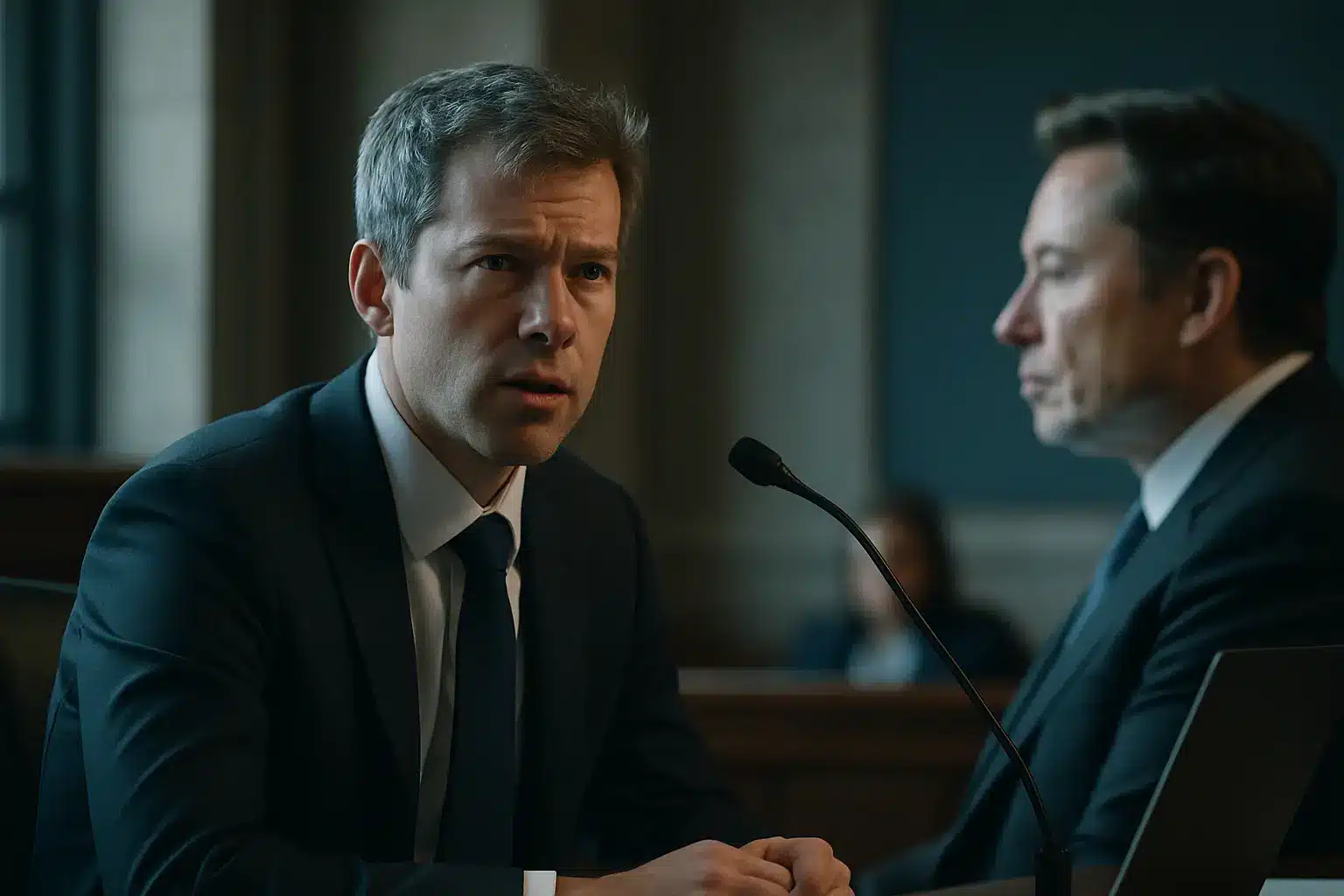
Greg Brockman testimony about Elon Musk: What the Trial Reveals About OpenAI’s Governance
A federal trial in Oakland has put OpenAI’s origin story and governance under scrutiny, with Greg Brockman testimony about Elon Musk at the center. Brockman, OpenAI’s cofounder and president, described a breakdown with Musk during 2017–2018 negotiations over OpenAI’s funding structure and control, framing the stakes for investors, boards, and anyone tracking the OpenAI vs Elon Musk trial [2][3].
Background: How the For‑Profit Pivot Sparked a Fight
OpenAI’s move to consider a for‑profit structure set the stage for today’s litigation. Musk’s lawsuit argues the company abandoned its founding charitable mission by pivoting to a for‑profit model, and seeks up to $150 billion in damages along with structural changes to OpenAI [2][3]. The case is being heard in federal court in Oakland within the U.S. District Court for the Northern District of California (external).
What the Greg Brockman testimony about Elon Musk adds to the case
Brockman recounted that as OpenAI explored a for‑profit structure to fund large‑scale AI research, Musk initially supported the idea. He even hosted a celebratory gathering at a Bay Area “haunted mansion” he owned, where the mood was upbeat and he spoke enthusiastically about OpenAI’s commercial potential [2][3].
That tone shifted when negotiations turned to equity and leadership. According to Brockman, Musk demanded majority ownership, insisted on being CEO, and threatened to withhold funding when cofounders resisted [2][3]. In one fiery meeting, Brockman said Musk’s temperament changed so sharply that he “thought he was going to hit me” [1][3]. He testified that Musk framed his demand for control partly around personal wealth needed for long‑term goals, including a claimed $80 billion target to help build a city on Mars [2][3].
Brockman also described attempts to deepen personal ties with key OpenAI figures. He said Musk gifted Teslas to him and to Ilya Sutskever, and invited staff to social events at the mansion, which Brockman interpreted as efforts to create a sense of obligation among founders [2]. He discussed former OpenAI board member Shivon Zilis, who was trusted to manage Musk‑related conflicts at the time; he later learned from media reports that she had twins with Musk, and that she described the arrangement to him as IVF‑based and “entirely platonic.” Zilis left OpenAI’s board in 2023 as Musk prepared his competing AI venture, xAI [2].
Legal and Financial Stakes
Musk’s complaint centers on the claim that OpenAI violated its nonprofit, open‑source mission by shifting to a for‑profit structure. He is seeking damages up to $150 billion and changes to OpenAI’s structure, outcomes that could reshape how major AI labs balance mission, capital, and control [2][3]. For investors and partners, the case underscores how governance design can become a legal flashpoint when ambitions and ownership expectations diverge.
The Greg Brockman testimony about Elon Musk also highlights the practical risk of concentrated power during structural transitions. When a lead backer presses for majority control and the CEO role, boards must be prepared with clear authority, conflict protocols, and contingency financing strategies [2][3].
Governance Lessons for AI Companies and Boards
- Define board composition and decision rights early. Clarity on who controls structural shifts, fundraising, and leadership appointments reduces room for deadlock [4].
- Put conflict‑of‑interest policies to work. Document how gifts, personal relationships, and dual roles will be disclosed and managed, and who adjudicates disputes [4][6].
- Separate donor influence from investor rights. Charitable commitments should not quietly morph into control expectations without formal processes and board oversight [5][6].
- Prepare for escalation. Establish pathways from mediation to independent review, and document how threats to funding or control will be handled to protect continuity [4][6].
For practical frameworks, teams can also explore AI tools and playbooks.
Operational Risks: Founder Influence, Gifts, and Culture
Brockman’s account of Tesla gifts and social events points to softer, but material, risks. Perceived obligation or blurred boundaries can erode trust, create uneven influence, and strain retention when strategies diverge. Codifying how leadership engages with major backers can reduce ambiguity and help avoid the kind of OpenAI governance dispute now under the microscope [2][4][6].
Timeline: 2017–2018 Negotiations and Board Changes
A concise view of what Greg Brockman said about Elon Musk at Oakland trial, plus related events:
- 2017–2018: OpenAI leaders consider a for‑profit structure to fund large‑scale AI research. Musk initially supports the idea and hosts a celebratory gathering at a Bay Area “haunted mansion” [2][3].
- Negotiations intensify: Musk demands majority ownership and the CEO role; he threatens to withhold funding as cofounders refuse. Brockman describes a “fiery” meeting where he feared Musk might hit him [1][2][3].
- Rationale for control: Brockman testifies that Musk cited personal wealth needs, including a claimed $80 billion target for a city on Mars [2][3].
- Gifts and relationships: Brockman says Musk gifted Teslas to him and Ilya Sutskever, and that Shivon Zilis was trusted to manage Musk‑related conflicts; she later left OpenAI’s board in 2023 as Musk prepared xAI [2].
Takeaways for Leaders
The Greg Brockman testimony about Elon Musk, combined with the OpenAI for‑profit pivot controversy, shows how fast governance gaps can become existential risks. Boards should stress‑test control assumptions, document conflict paths, and ensure funding plans are not dependent on a single party’s leverage [2][4][6].
Sources
[1] OpenAI’s Brockman details wild meeting with Elon Musk
https://nypost.com/2026/05/05/business/openais-brockman-details-wild-meeting-with-elon-musk-i-thought-he-was-going-to-physically-attack-me/
[2] OpenAI Founder Details Partying With Elon Musk Before Parting Ways – Business Insider
https://www.businessinsider.com/openai-greg-brockman-testifies-elon-musk-haunted-mansion-amber-heard-2026-5
[3] ‘I thought he was going to hit me’ OpenAI co-founder says of Musk
https://www.bbc.com/news/articles/cn7pg8ymgezo
[4] Bridging Boardroom Divides: Conflict to Consensus
https://www.3one4capital.com/blogs/signals-bridging-boardroom-divides-conflict-to-consensus
[5] Case Studies in Bad Governance: Boeing and Wirecard | Martyn Fiddler
https://www.martynfiddler.com/case-studies-in-bad-governance-boeing-and-wirecard/
[6] Boardroom damage control: 5 times directors faced executive fails
https://www.thecorporategovernanceinstitute.com/insights/news-analysis/boardroom-damage-control-five-times-directors-dealt-with-executive-blunders/?srsltid=AfmBOorli9mvLnt_RrhQ8K4gPmwPKl0zEWoNPEVvyawn8EDkJdXhjb5N
