
Anthropic government ban: Trump’s move reshapes defense AI procurement
The White House has moved to block Anthropic’s AI from U.S. government systems, intensifying a months-long clash over whether a civilian vendor can impose enforceable limits on military use. The Anthropic government ban follows a standoff over Pentagon access to less-restricted models and could reshape how agencies procure AI for sensitive missions [1][2][3].
Quick summary: Trump moves to bar Anthropic from government systems
President Donald Trump announced that federal systems will stop using Anthropic products after the company objected to Defense Department contract changes that would permit “all lawful use” of AI. Anthropic argued such wording could open the door to fully autonomous lethal weapons and large-scale domestic surveillance, which its leadership says current AI cannot support safely or reliably [1][2][3].
Timeline: Anthropic, the Pentagon contract, and the dispute
- 2024: Anthropic signs a roughly $200 million Defense Department contract and builds “Claude Gov,” becoming the first major AI lab cleared to work with classified U.S. military systems [1].
- The original agreement reportedly limited certain deployments, including uses that might enable fully autonomous lethal weapons or broad domestic mass surveillance [1].
- Later, the Pentagon sought to revise contracts with Anthropic and others to allow “all lawful use” of AI. Anthropic objected, saying the phrase could encompass autonomy in weapons control and surveillance of Americans [1].
- Senior administration officials argued civilian companies should not dictate limits on military use of lawful AI tools and floated the Defense Production Act and a potential “supply chain risk” label to pressure Anthropic [1].
- Trump then announced a halt on use of Anthropic tools across government systems [1][2][3].
What is Claude Gov and how it was used in classified environments
Claude Gov is Anthropic’s customized model suite for classified settings. It has been deployed through Palantir platforms and Amazon’s classified cloud, supporting tasks such as document summarization, planning, and intelligence analysis. Reports indicate it has not been officially used for autonomous targeting [1].
What the Anthropic government ban changes right now
The immediate effect is a freeze on use of Anthropic’s products in federal systems. For agencies and contractors that integrated Claude Gov into classified workflows, the shift raises continuity questions, especially for teams reliant on Palantir or AWS classified environments that hosted the models. While the administration’s next steps remain in flux, the move underscores a power struggle over enforceable vendor constraints in defense AI [1][2][3].
The policy dispute: “all lawful use” vs vendor-imposed limits
Anthropic’s position: The company says it is not seeking veto power over specific military operations, but it insists on categorical prohibitions against domestic mass surveillance and fully autonomous weapons. CEO Dario Amodei argues current AI systems cannot reliably or safely support those applications [1].
Administration stance: Senior officials maintain that civilian tech firms should not set boundaries on the military’s lawful use of AI. That posture underpins the push to broaden contract language to “all lawful use,” as well as consideration of leverage through tools like the Defense Production Act [1].
This clash surfaces a core question for AI vendor limits on military use: Can companies embed enforceable ethical constraints into government contracts at scale—and will agencies accept them when mission scope expands [1]?
Legal levers: Defense Production Act and supply-chain risk labeling
The administration has floated invoking the Defense Production Act and potentially labeling Anthropic a “supply chain risk,” a step that could effectively sever federal contracting ties. Either path would carry procurement and reputational consequences, signaling that vendors resisting expanded military uses could face systemic exclusion from sensitive programs. For background on the Defense Production Act, see FEMA’s overview of the statute’s authorities Defense Production Act (external) [1].
Business and operational impacts for contractors, cloud providers, and agencies
- Procurement exposure: Agencies and integrators will need contingency plans for workloads that relied on Claude Gov, including alternative models and contract vehicles aligned with revised DoD language [1].
- Platform dependencies: Because Claude Gov operated via Palantir and Amazon’s classified cloud, teams should evaluate integration points, data flows, and handoff options to replace capabilities without degrading mission timelines [1].
- Contract clauses: Watch for “all lawful use” provisions and any new supplier-risk designations that could cascade across subcontracts and teaming agreements [1].
- Risk posture: The episode highlights policy volatility around autonomy and surveillance. Document internal guardrails now, even as formal government guidance evolves [1].
Competitive landscape: OpenAI’s approach and what comes next
OpenAI CEO Sam Altman has told staff the company is pursuing a Pentagon deal that would enable model use in classified settings while excluding U.S. mass surveillance and fully autonomous weapons without human approval. The contrast with Anthropic’s dispute suggests agencies may test varying contractual guardrails across vendors as they scale classified AI deployments [1].
Recommendations for business leaders and technologists
- Map exposure: Inventory any systems—especially in classified workflows—that touch Anthropic services and define near-term migration paths [1].
- Diversify vendors: Prepare alternatives that can operate in Palantir and AWS classified environments, validating latency, security, and audit needs [1].
- Negotiate clarity: Scrutinize “all lawful use” language; align internal policies with red lines on autonomy and surveillance to avoid downstream conflicts [1].
- Monitor levers: Track any Defense Production Act actions or supply-chain risk labels that could impact eligibility for future awards [1].
- Communicate early: Coordinate with primes, subs, and cloud providers to protect delivery milestones and data-handling requirements [1]. For practical frameworks, Explore AI tools and playbooks.
What to watch next
- Whether the administration formally invokes the Defense Production Act or issues a supply-chain risk designation [1].
- Procurement updates, including any supplier delistings or interim guidance for classified AI use [1][2][3].
- Progress on other AI vendor Pentagon deals and how their contractual limits are structured [1].
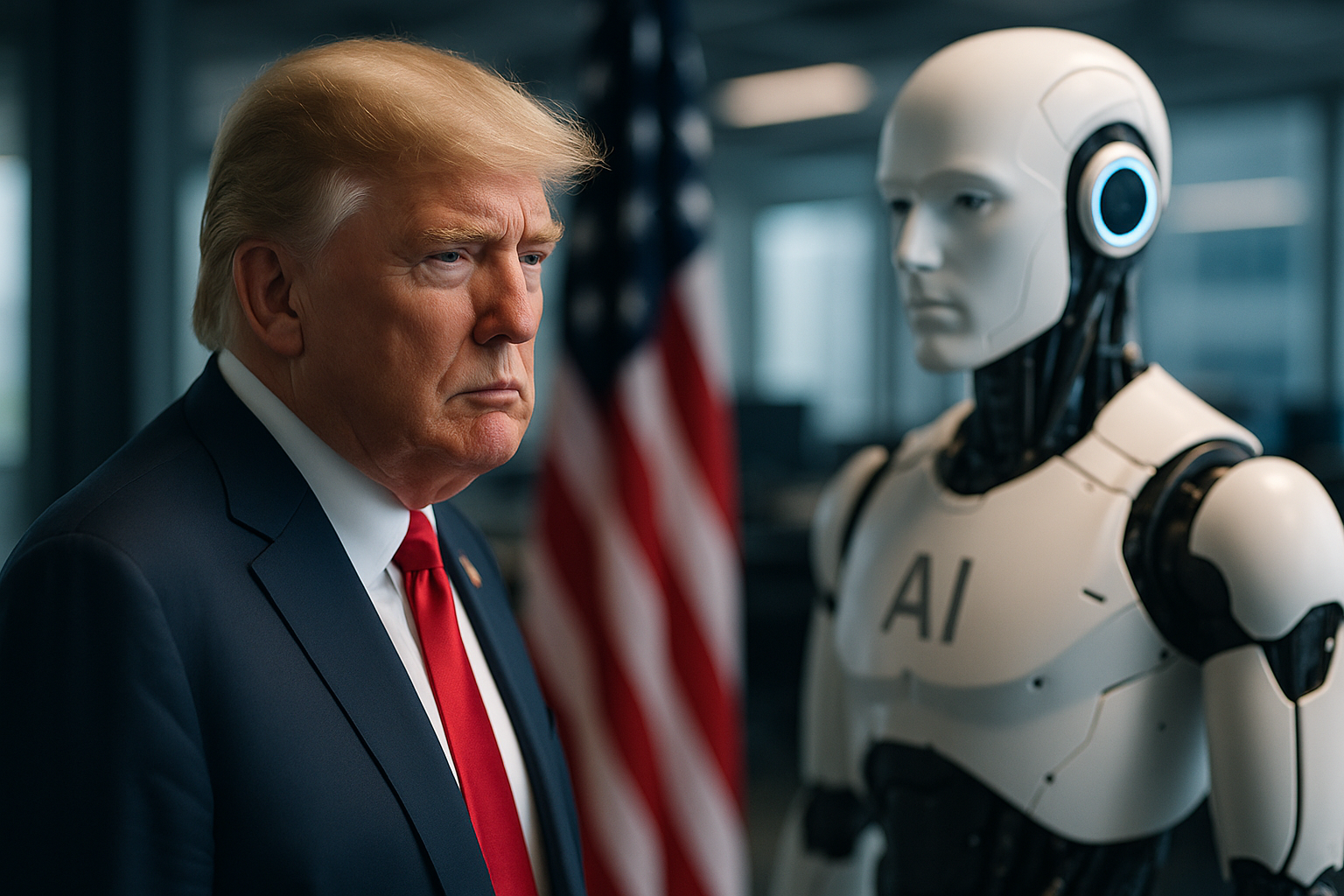
Hero image context: The dispute spotlights an emerging power struggle over whether AI vendors can set enforceable ethical constraints on government and military customers [1].
Sources
[1] Trump Moves to Ban Anthropic From the US Government – WIRED
https://www.wired.com/story/trump-moves-to-ban-anthropic-from-the-us-government/
[2] President Trump bans Anthropic from use in government systems
https://www.wwno.org/npr-news/2026-02-27/president-trump-bans-anthropic-from-use-in-government-systems
[3] President Trump bans Anthropic from use in government systems
https://www.npr.org/2026/02/27/nx-s1-5729118/trump-anthropic-pentagon-openai-ai-weapons-ban
