
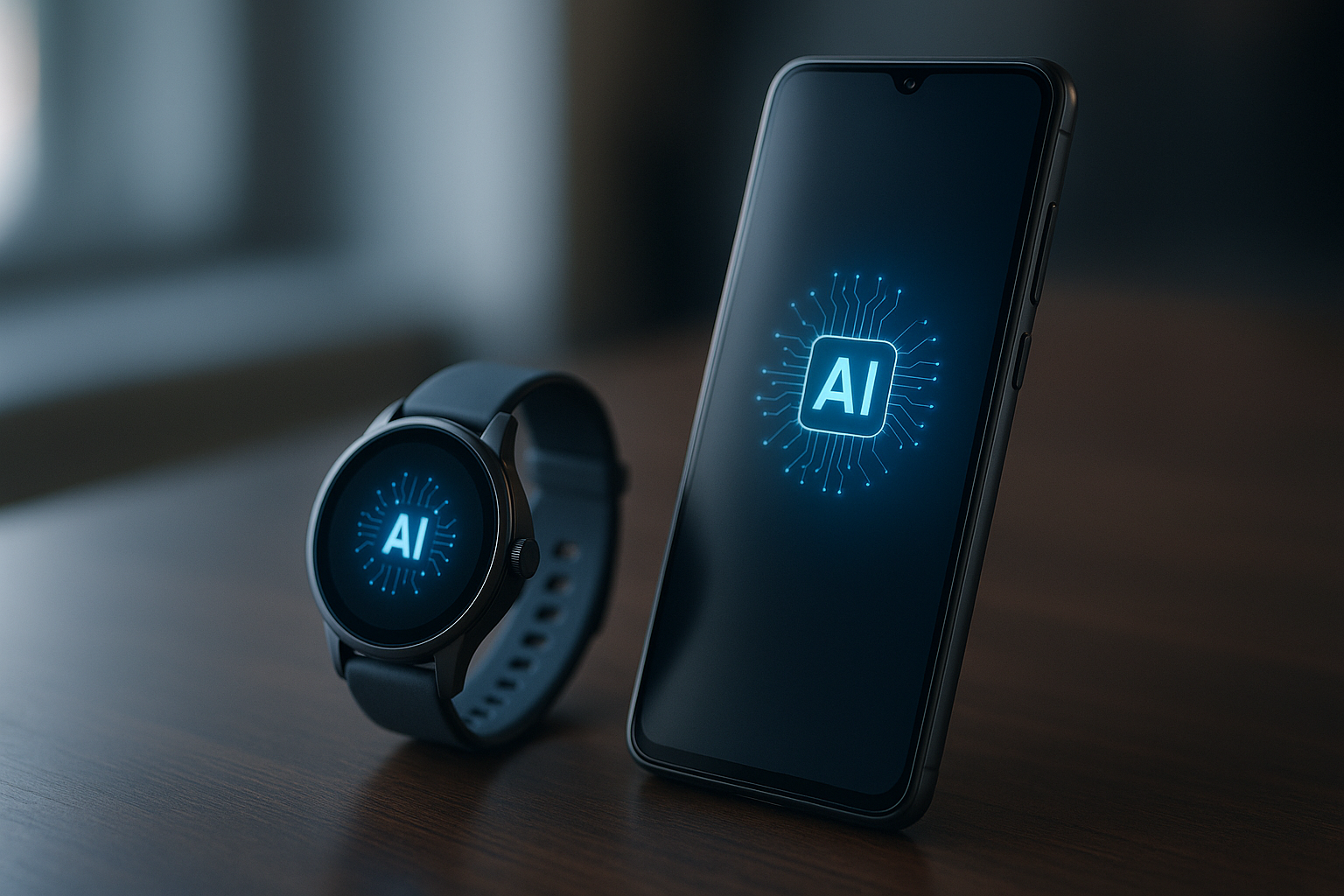
Gear News: AI wearables and multi-OS smartphones reshape the mobile playbook
This week’s gear headlines point to a decisive shift: Asus is stepping back from phones as top players bet on new device categories and hybrid computing models. For organizations weighing device procurement and platform strategy, AI wearables and multi-OS smartphones are no longer fringe experiments—they’re becoming an R&D priority with near-term implications for support, security, and user experience [1][2][3][4][5].
TL;DR — This week’s key gear shifts
- Asus exits the smartphone roadmap with an “indefinite” pause on new Zenfone and ROG Phone models, redirecting talent to AI servers and physical AI devices [1][2][3][4].
- NexDeck’s tri-boot handset surfaces as a multi-OS proof point, reportedly able to run Android 16, Linux, and Windows 11 on one phone [1].
- OpenAI is prioritizing a Jony Ive–designed wearable over deeper Apple integration, indicating a push toward AI-first hardware form factors [5].
What Asus announced and why it matters
Asus confirmed it will stop making new Android smartphones, effectively halting future Zenfone and ROG Phone releases. Leadership framed the move as a response to an AI-led paradigm shift, reallocating engineering and R&D toward commercial PCs, AI servers, and “physical AI” hardware such as robotics and smart glasses [1][2][3][4]. The company described the change as an “indefinite” pause, leaving some ambiguity, but coverage broadly interprets it as an exit from phones [2][4].
Strategically, Asus’ AI server business has accelerated and is now a major growth engine, supporting a pivot away from a crowded, lower-margin handset market [1][3]. The company says existing phones will continue to receive software updates, maintenance, and warranty support—important for current fleet owners and channel partners [1][3][4]. For stakeholders tracking supply risk, this is a textbook example of vendor concentration in the mobile space and the rising opportunity in AI infrastructure.
The rise of ‘physical AI’ — robotics, servers, and wearables
Asus is orienting toward physical AI devices—think robotics and smart glasses—alongside its AI server investments [1][3]. The rationale is straightforward: AI functionality is moving closer to the user and the edge, creating demand for specialized form factors rather than undifferentiated smartphones [1][3][4]. For enterprise buyers, this suggests a portfolio shift over time from generalized handsets to purpose-built devices that integrate on-device inference, sensors, and domain-specific UX.
Case study: NexDeck and the tri-boot phone trend
A standout example of experimentation is NexDeck’s reported tri-boot phone, which can run Android 16, Linux, and Windows 11 on a single handset—positioning smartphones as general-purpose, multi-OS computers [1]. Beyond novelty, potential use cases include:
- Developer workflows: rapid OS switching for test and validation.
- Edge compute pilots: leveraging Linux for containerized workloads while maintaining Android for standard mobile apps.
- Compatibility bridging: access to Windows tooling when needed.
Organizations evaluating a multi-OS phone boot Windows Linux Android scenario should assess device management policies, security isolation between OS environments, and support expectations across stacks. For background on the desktop OS side, see Microsoft’s Windows 11 overview (external).
AI wearables and multi-OS smartphones in focus
OpenAI’s decision to prioritize a Jony Ive–designed wearable over deeper Apple integration reinforces the idea that AI-first wearables could emerge alongside—or even instead of—traditional smartphones [5]. For hardware teams, that puts AI wearables and multi-OS smartphones at the center of near-term prototyping and partner conversations. Marketers and product leaders should expect new interaction models (ambient, glanceable, voice-first) as the category matures [5].
OpenAI, Jony Ive, and the emerging AI wearable category
Reporting indicates OpenAI chose to focus on a Jony Ive–designed device rather than pursue deeper ties to Apple’s ecosystem, elevating hardware ambitions that align with a wearable, AI-centric direction [5]. That shift may reshape partnership patterns—less emphasis on piggybacking within existing smartphone platforms, more emphasis on dedicated AI-first devices.
What this shift means for businesses and marketers
- Procurement: If your fleet includes Asus devices, plan for continuity via promised updates, maintenance, and warranties, and begin evaluating alternative vendors to mitigate longer-term portfolio risk [1][3][4].
- Infrastructure: Reassess AI server capacity and edge strategies as more workflows move toward on-device intelligence and physical AI devices [1][3].
- Pilots: Test AI wearables in narrow, high-ROI workflows (field service, training, guided operations) to validate UX and data flows [5].
- Messaging: Prepare for new UX patterns around hands-free, contextual interactions that differ from traditional smartphone app funnels [5]. For implementation frameworks, explore AI tools and playbooks.
Technical and operational considerations
Enterprises weighing AI wearables and multi-OS smartphones should update device governance for:
- Security: Define policy boundaries across OS environments (e.g., Android vs. Linux) and clarify data handling and attestation requirements [1].
- Lifecycle: Validate vendor commitments on updates and warranties when hardware strategies pivot, as seen with Asus [1][3][4].
- Support: Ensure help desk playbooks account for mixed-OS scenarios, driver dependencies, and image management.
Recommendations for product and hardware strategy teams
- Monitor vendor roadmaps for signs of renewed or reduced smartphone investment—and track reallocations toward AI servers and physical AI devices [1][3][4].
- Prioritize edge-aligned experiments where AI wearables and multi-OS smartphones create measurable productivity gains [1][5].
- Align infrastructure plans with server-side AI growth while preserving optionality for emerging device categories [1][3].
Sources
[1] Asus exits smartphone business, and the reason is AI – Times of India
https://timesofindia.indiatimes.com/technology/mobiles-tabs/asus-exits-smartphone-business-and-the-reason-is-ai/articleshow/126685541.cms
[2] Confirmed: Asus is exiting the smartphone market – GSMArena.com
https://www.gsmarena.com/confirmed_asus_is_exiting_the_smartphone_market_-news-71158.php
[3] Asus confirms it will stop making Android smartphones in AI shift
https://9to5google.com/2026/01/19/asus-android-smartphones-ai-shift/
[4] Asus confirms its smartphone business is on indefinite hiatus
https://arstechnica.com/gadgets/2026/01/asus-confirms-its-smartphone-business-is-on-indefinite-hiatus/
[5] OpenAI Rejected Apple to Focus on Jony Ive-Designed AI Wearables
https://www.gadgets360.com/ai/news/openai-rejected-apple-to-focus-on-jony-ive-design-ai-powered-hardware-wearables-report-10757644
