
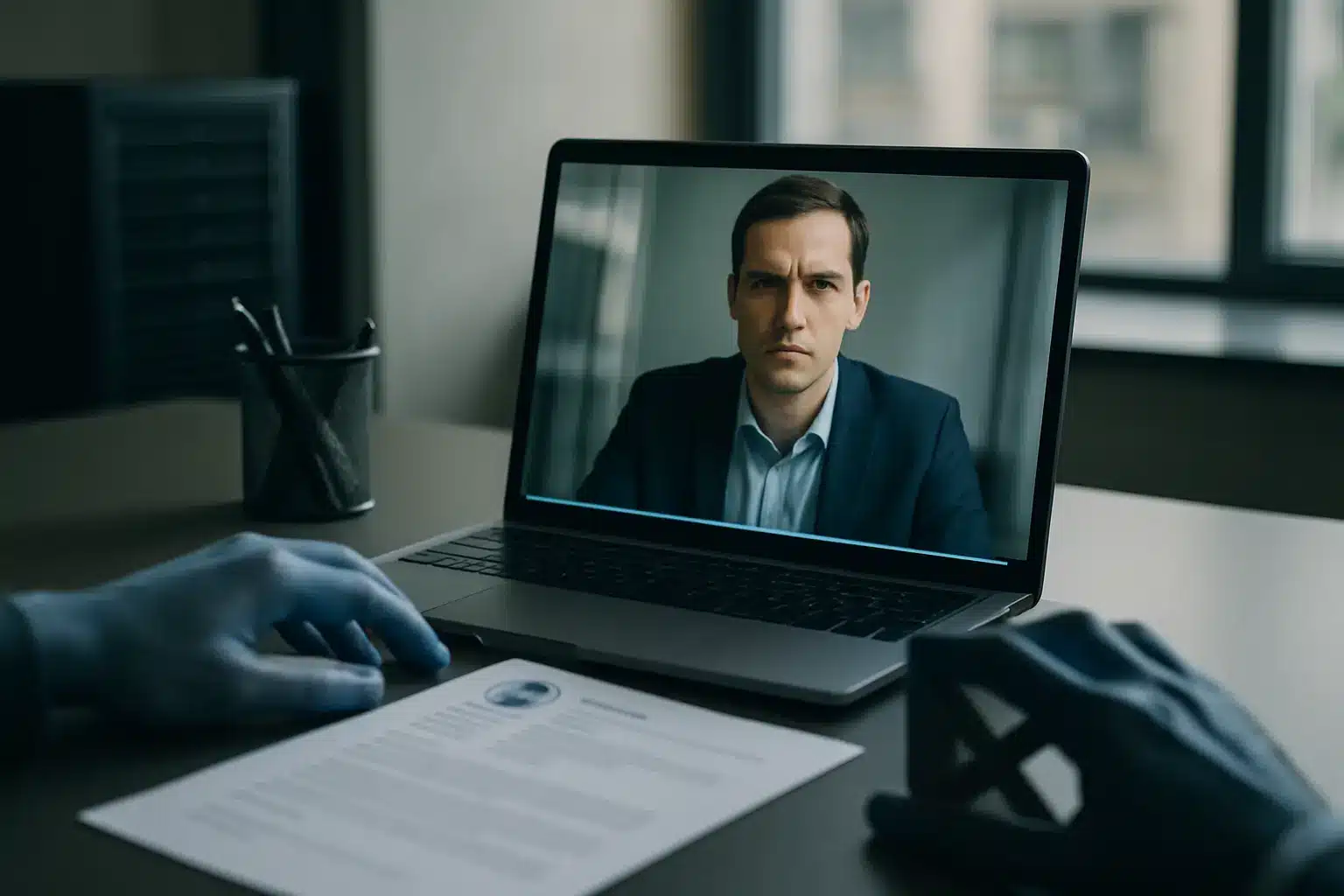
When AI Hiring Bias Blocks Candidates From Interviews
A software developer sent out dozens of applications and never got a call. In many hiring funnels today, that wall can be an algorithm. From résumé filters to video and game-based assessments, automated systems decide which candidates a human ever sees, raising new questions about AI hiring bias and accountability for employers [1].
How modern hiring AI tools actually work
Recruiting stacks now include résumé screening AI, asynchronous video interviews scored by machine learning, game-based tests, and personality assessments. Many rely on opaque models that evaluate signals beyond keywords, such as voice or behavioral patterns, making it hard for both employers and candidates to understand or challenge decisions [1]. Viral posts of botched interviews underscore the fragility of these processes when the technology fails at scale [2].
Where these systems break: validity, proxies, and surprising signals
Investigations have found cases where a system rated a speaker highly even when she spoke nonsense in German, implying the model rewarded tone or appearance rather than job-relevant content. That raises basic construct validity concerns for automated interview tools [1]. Personality algorithms can also produce conflicting profiles depending on the data source, such as LinkedIn versus Twitter, which questions reliability for high-stakes screening [1].
Bias can creep in through the training data and the features models use. When algorithms learn from historical hiring decisions or profiles of past “successful” employees, they can reproduce and scale prior human biases. Even if protected traits are excluded, proxies like name, school, location, or extracurriculars can stand in for race, gender, or socioeconomic status, echoing well-documented disparities in callback rates for applicants with Black-associated names [1]. These failures help explain why qualified applicants can be screened out before any interview.
What research and real-world reports show about candidate perceptions
Research on applicant reactions finds people tend to view AI-mediated hiring as less nuanced, less accurate, and immature as a technology, which can erode trust when rejections arrive without explanation [3]. Public examples of glitchy automated interviews feed that skepticism and create reputational risk for employers relying on opaque tools [2][3].
AI hiring bias: legal responsibility and compliance
Liability does not shift to the vendor when screening is automated. Guidance for employers emphasizes that companies remain responsible for discriminatory outcomes, regardless of whether a human or an algorithm made the decision. Recommended practices include validating that tools measure job-related criteria, auditing outcomes for disparate impact, documenting processes, and maintaining meaningful human oversight [5][6]. Regulators are moving toward audit requirements and transparency around automated tools, which increases the need for explainable criteria and defensible documentation [5][6]. For additional context on federal expectations, see the U.S. Equal Employment Opportunity Commission’s guidance on employment tests and AI-enabled assessments external.
Practical checklist: how employers can reduce risk and improve outcomes
- Vet vendors for validation studies linked to job performance and ask for documentation of features, data sources, and fairness testing [5][6].
- Audit résumé screeners and automated interview tools for disparate impact and proxy signals such as school or location; monitor results over time [5][6].
- Define and publish job-related criteria in plain language; provide candidates with notice when automated tools are used and avenues to request accommodation or human review where feasible [5][6].
- Keep a human in the loop for sensitive decisions and establish an escalation path for contested outcomes [5][6].
- Refresh job postings with debiased language and consistent requirements to narrow noise before it hits the model [4][5][6].
Advice for applicants: what to do if you suspect an algorithm filtered you out
Applicants often perceive AI hiring as less fair and less accurate, especially when decisions are opaque. Practical steps include requesting a human review when available, aligning materials with the stated job criteria, and documenting communications and rejections to understand patterns over time [3][5][6]. While it is hard to prove that a single rejection was caused by an algorithm, tracking details can help surface issues and inform appeals or future applications [3].
When AI helps: contexts where automation can reduce bias
Under controlled conditions, automation can support fairer outcomes. Vendors argue that AI can debias job descriptions and enforce more consistent screening criteria, reducing room for idiosyncratic judgments across recruiters or time. Realizing those gains requires rigorous validation, audits, and transparency throughout the process [4][5][6]. Done well, these controls reduce exposure to AI hiring bias while improving candidate experience and compliance.
Takeaway: AI is a tool — oversight decides if it blocks talent
AI can prevent strong candidates from reaching an interview when systems are poorly designed, deployed without controls, or treated as black boxes. Employers that validate tools, document job-related criteria, and maintain human oversight are better positioned to capture efficiency without amplifying risk [1][5][6]. For hands-on frameworks that turn these principles into practice, explore AI tools and playbooks.
Sources
[1] AI May Not Steal Your Job, but It Could Stop You Getting Hired | WIRED
https://www.wired.com/story/hilke-schellmann-algorithm-book-ai-jobs-hiring/
[2] AI Job Interview Fails Going Viral On TikTok
https://www.buzzfeed.com/meganeliscomb/ai-job-interview-glitches-tiktok
[3] Applicants’ perception of artificial intelligence in the recruitment process
https://www.sciencedirect.com/science/article/pii/S2451958823000362
[4] Reducing Hiring Bias with AI: Best Practices for Companies
https://www.loubby.ai/reducing-hiring-bias-with-ai-best-practices-for-companies/
[5] 7 Best Practices for Employers Using AI Resume Screeners
https://www.fisherphillips.com/en/insights/insights/7-best-practices-for-employers-using-ai-resume-screeners
[6] Using AI in hiring? How to implement best practices and avoid algorithmic bias
https://www.cda.org/newsroom/endorsed-services/using-ai-in-hiring-how-to-implement-best-practices-and-avoid-algorithmic-bias/
