
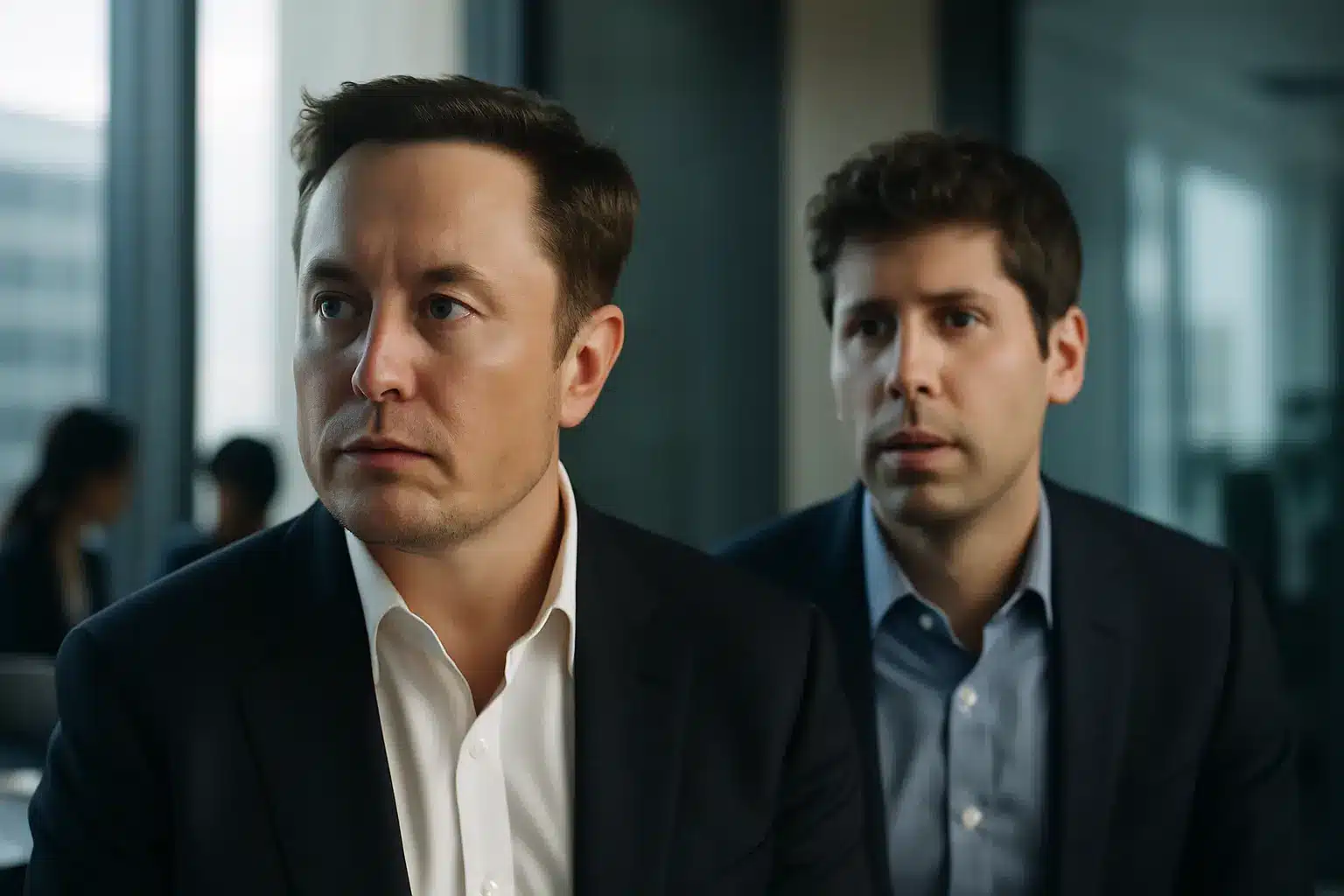
Musk v. Altman Verdict Implications for OpenAI: Business Takeaways and Next Steps
Quick summary: Musk v. Altman verdict and the bottom line
A jury rejected Elon Musk’s remaining claims against OpenAI, Sam Altman, and Greg Brockman, keeping the company’s hybrid nonprofit/for‑profit structure in place. The Musk v. Altman verdict implications for OpenAI include continuity for leadership and commercial partnerships, with no court-ordered breakup or reversion to a pure nonprofit [1][2].
OpenAI prevailed after most of Musk’s original 26 claims were dismissed or dropped, leaving only unjust enrichment and breach of charitable trust for the jury. The court declined remedies that would have removed leaders or unwound the for‑profit conversion [1][2]. For businesses, the immediate impact is stability across OpenAI’s products and API ecosystem [2].
What the jury decided — claims tried and those dismissed
By the time opening arguments began with a nine-person jury, the court had already limited the case. Fraud and false advertising fell away as the dispute narrowed to unjust enrichment and breach of charitable trust [1][2][3]. Trial evidence showed early conversations framed OpenAI as a nonprofit but included talk of startup-like compensation and did not yield a firm, binding agreement on open sourcing models or how to handle IP and excess funds [2].
OpenAI argued Musk never conditioned his donations on a perpetual nonprofit and that his later lawsuit was aimed at a major competitor to xAI. The jury rejected the theory that OpenAI had “stolen a charity,” and the judge declined to unwind the restructuring or force leadership changes [2].
Key facts and timeline businesses should know
- 2015–2017: Musk funded OpenAI with about $38 million and later left the board in 2018 [1].
- 2019: OpenAI restructured into a hybrid setup that included a capped-profit entity under a nonprofit umbrella [1].
- Pre-trial: Most claims were dismissed or dropped, leaving only limited issues for the jury [1][2][3].
- Trial: A nine-person jury was seated, and proceedings focused on unjust enrichment and breach of charitable trust [3][2].
- Verdict: Jury rejected Musk’s remaining claims; court declined to unwind the for‑profit conversion or change leadership [1][2].
Why the verdict preserves OpenAI’s structure and Microsoft stake
The court’s decision leaves OpenAI’s 2019–2025 restructuring and current governance intact, along with Microsoft’s large commercial stake. The outcome avoids immediate disruption to product roadmaps, customer contracts, and partner integrations that depend on OpenAI’s for‑profit operations [1][2]. Amicus filings from former employees critical of mission drift did not change the legal outcome in Musk’s favor [2]. For enterprises and developers, the ruling keeps the current operating model stable.
Musk v. Altman verdict implications for OpenAI in practice
For API customers and partners, the verdict means no forced transition in ownership or governance. Contractual relationships, pricing, and access to the API remain in place. Short term, procurement and engineering teams can continue integrations without a restructuring contingency [2]. That said, organizations should keep routine vendor risk discipline in place given ongoing regulatory and litigation headwinds across the AI sector [2].
Broader implications for AI governance, donors, and nonprofit branding
The case spotlighted tension in nonprofit tech ventures where early donors expect public-interest safeguards, but documents leave room for commercialization. Evidence showed nonprofit framing early on, alongside expectations for startup-like compensation and no clear binding agreement on issues like open sourcing or IP ownership [2]. The verdict signals that ambiguous donor expectations are weak ground for unwinding later-stage structures. For founders and funders, the lesson is to document mission constraints and IP commitments clearly if they are intended to be durable [2].
What this means for competition — xAI and the market landscape
OpenAI’s counsel argued Musk sought control early and later turned litigious after launching xAI, framing the suit as competitive maneuvering. During the trial, Musk also acknowledged that xAI distills OpenAI’s models. The jury’s rejection of his claims reduces immediate legal uncertainty facing a leading incumbent, while the competitive race continues on product and distribution [2][4].
Other legal risks facing OpenAI (copyright, safety, product liability)
This verdict does not resolve other litigation. OpenAI faces separate suits related to alleged safety harms, copyright, and product liability. Businesses should watch these areas for potential compliance or deployment impact, even as today’s ruling stabilizes the governance picture [2]. For general background on jury processes, see the U.S. Courts overview here (external).
Practical checklist for business leaders and product teams
- Confirm contract terms and SLAs with OpenAI and document any service dependencies [2].
- Maintain contingency plans for critical AI workloads in case of future legal or regulatory changes affecting availability [2].
- Review compliance, attribution, and IP guidelines for AI outputs in your products, given ongoing copyright and liability cases [2].
- Track legal updates tied to safety and product liability, and brief governance or risk committees as needed [2].
- For procurement strategy and tool selection, Explore AI tools and playbooks.
Conclusion: what to watch next
Expect further developments across safety, copyright, and liability cases. For now, the verdict secures governance continuity and commercial stability at OpenAI, while policy debates over donor expectations and AI lab missions continue to unfold [1][2].
Sources
[1] Musk v. Altman – Wikipedia
https://en.wikipedia.org/wiki/Musk_v._Altman
[2] The Real Losers of the Musk v. Altman Trial – WIRED
https://www.wired.com/story/musk-v-altman-trial-closing-arguments/
[3] Judge in Musk v. Altman seats nine-person jury. Opening arguments start Tuesday
https://www.cnbc.com/2026/04/27/musk-altman-trial-openai-jury-selection.html
[4] Musk v. Altman week 1: Elon Musk says he was duped, warns AI could kill us all, and admits that xAI distills OpenAI’s models
https://www.technologyreview.com/2026/05/01/1136800/musk-v-altman-week-1-musk-says-he-was-duped-warns-ai-could-kill-us-all-and-admits-that-xai-distills-openais-models/
[5] Musk, Altman lawsuit over OpenAI comes to a contentious finish
https://www.youtube.com/watch?v=4DdAyMyfMj0
