
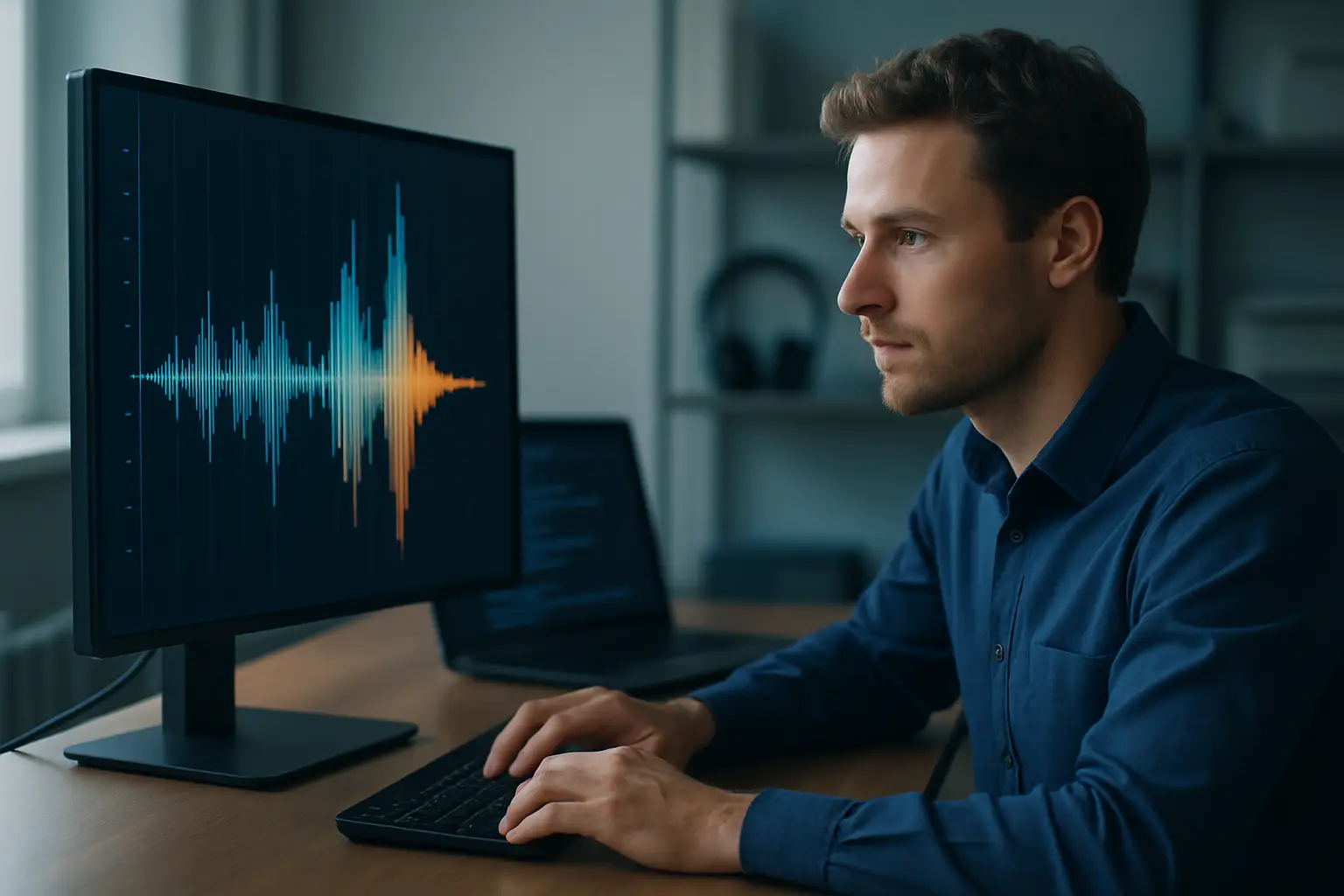
Seeing Sounds: MIT’s New Program Points to AI-driven Sound Visualization
MIT has launched a new graduate program in Music Technology and Computation that treats music as an object of scientific inquiry and engineering practice. Framed around computational approaches to music, the initiative builds the foundations for AI-driven sound visualization, interactive performance, and perceptually grounded systems that link how we hear with how we design tools and interfaces [1][2][3].
MIT’s Music Technology and Computation program — the essentials
The program offers two one-year graduate degrees: a Master of Applied Science that is coursework only and a thesis-based Master of Science. Both focus on computational models of music and real-time interaction and performance systems [2][3]. It is administered jointly by Music and Theater Arts, Electrical Engineering and Computer Science, and the Schwarzman College of Computing [3].
MIT situates music technology as a rigorous scientific field that includes music information retrieval, AI and machine learning, generative algorithms, digital instrument design, perceptual modeling, acoustics, and audio signal processing [2][3]. Research and teaching are supported by specialized facilities in the Edward and Joyce Linde Music Building, designed for advanced music technology and experiments in interactive performance and instrument design [1].
Core tech areas: generative music AI, signal processing, and models for interaction
The curriculum and research span music information retrieval, machine learning for music, generative algorithms, and digital instrument design, alongside perceptual modeling, acoustics, and core audio signal processing [2][3]. This focus enables systems that analyze and structure audio, power generative music AI, and support real-time interaction for performance contexts [2].
On the engineering side, instrument acoustics and physical modeling synthesis provide ways to simulate and control sound, while perceptual modeling and hearing research inform how interfaces should respond to human listeners [2]. Together, these pillars support interactive architectures where audio can be processed, generated, and linked to other modalities for performance and research [2].
Faculty work that enables ‘seeing’ sound (case: Anna Huang)
Assistant professor Anna Huang’s work on generative models and human–computer interaction examines how people learn, understand, and create music, and explores human–AI collaboration in creative workflows [4]. Within the program’s broader technical base, this kind of research informs model design, evaluation of human–AI systems, and the development of tools that can translate musical structure into interactive representations [2][4].
AI-driven sound visualization in context
While the program is centered on computation and performance, its research scope creates pathways for AI-driven sound visualization across interactive systems and performance experiments. The Linde Music Building’s specialized facilities support advanced music technology work that can include experiments with interactive performance and digital instrument design, where real-time audio analysis meets visual or interface feedback [1][2]. With core strengths in audio signal processing, generative algorithms, and perceptual modeling, the program provides the ingredients for cross-modal exploration informed by how people perceive music [2][3]. For an official overview, see MIT’s announcement MIT launches new Music Technology and Computation Graduate Program (external) [1].
Program takeaways for technologists and teams
- Music technology is defined at MIT as a scientific inquiry into computational approaches to music, aligning practical engineering with research in perception and acoustics [2][3].
- The one-year MAS and MS options prioritize computational models and real-time systems, which are relevant to interactive tools and performance workflows [2][3].
- Faculty research spans generative music AI, human–AI creativity, instrument acoustics, physical modeling synthesis, and hearing perception, giving teams exposure to both algorithmic and perceptual foundations [2].
- Facilities in the Linde Music Building support advanced experimentation in performance and digital instruments, a setting well suited to testing cross-modal systems and visualizations of sound [1][2].
For implementation-minded readers evaluating toolchains and workflows, you can Explore AI tools and playbooks for practical frameworks that complement this research-driven perspective.
Where to learn more / resources
- Program news and overview are detailed by MIT, including objectives and facilities [1].
- The graduate program site covers curriculum focus areas and degree structures [2].
- The MIT Course Catalog outlines the interdisciplinary administration and requirements [3].
- Faculty listings highlight research areas and people to follow, including Anna Huang’s work on generative models and human–computer interaction [4].
Sources
[1] MIT launches new Music Technology and Computation Graduate Program
https://mta.mit.edu/news/mit-launches-new-music-technology-and-computation-graduate-program
[2] Music Technology and Computation Graduate Program (MTC)
https://musictech.mit.edu/mtcgp/
[3] Music Technology and Computation | MIT Course Catalog
https://catalog.mit.edu/interdisciplinary/graduate-programs/music-technology-computation/
[4] People – Music Technology at MIT
https://musictech.mit.edu/people/
[5] Massachusetts Institute of Technology | Music and Theater Arts
https://mta.mit.edu/
