
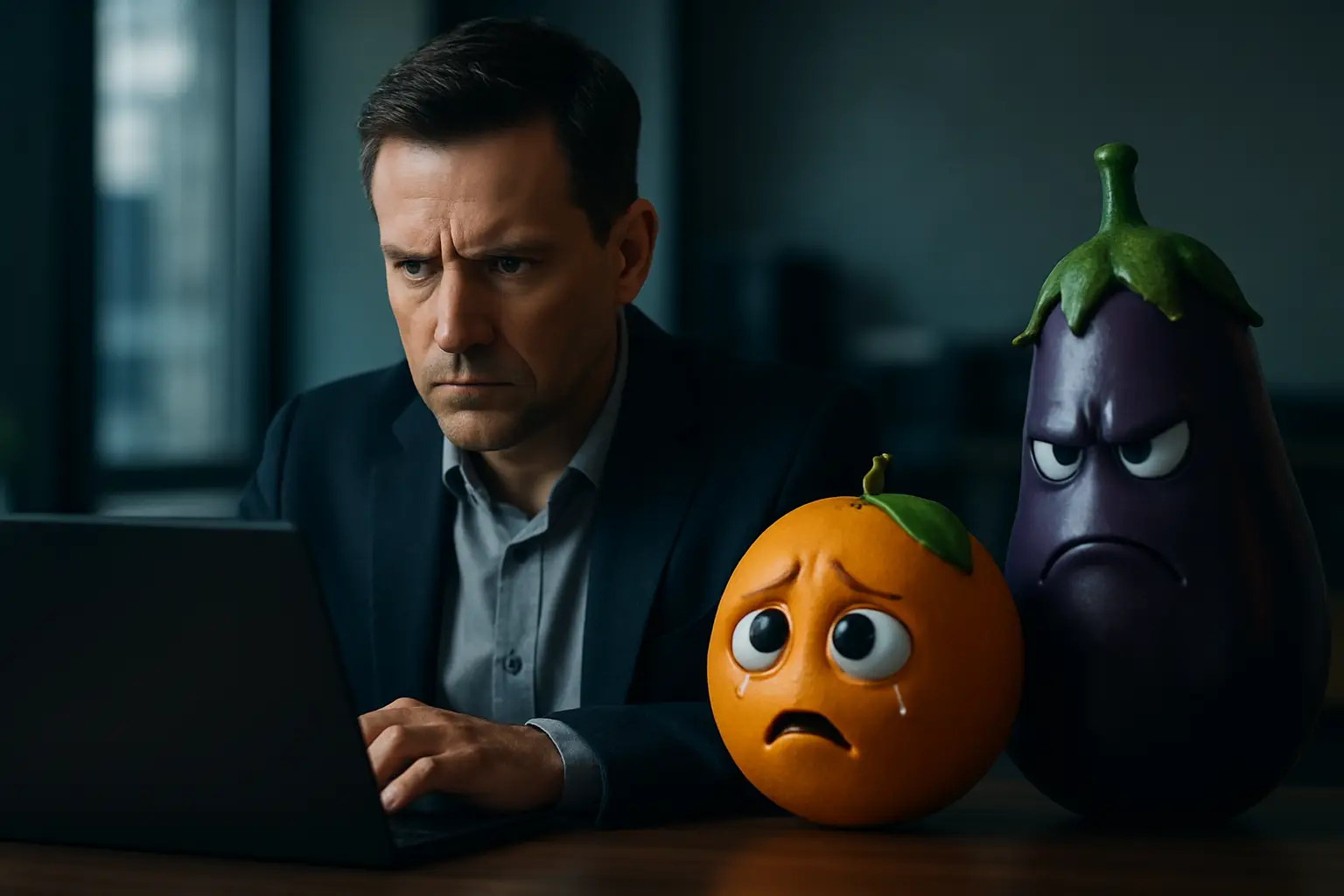
There’s Something Very Dark About a Lot of Those Viral AI-Generated Fruit Videos
A wave of cartoonish yet grim AI slop is flooding short-form feeds. Across TikTok and Instagram, AI-generated fruit videos render glossy, Pixar-like characters in melodramas of cheating, parental rejection, and body horror. The clips rack up millions of views and push viewers into multi-part arcs engineered for repeat consumption, a dynamic that matters for marketers and platforms weighing brand risk and ranking policy [1][2][4].
What Are ‘AI Slop’ or Fruit-Drama Videos? Quick Definitions and Examples
The trend coalesced around early 2026 with a viral cheating saga featuring a naive strawberry and a muscular eggplant, which spawned serialized spin-offs and copycats [1][4]. Creators have built entire sagas out of these character types, including Love Island parodies and soap operas that recycle plots across accounts and platforms [1][4]. Named creators, like @trombonechef, produce multi-part storylines that encourage binge viewing and ongoing engagement [1][4].
Typical arcs are bleak under the candy coating. Examples cited in coverage include a banana expelling his strawberry wife over minor transgressions, a father disowning a gay clementine son, and a strawberry’s children blended into a milkshake while she sings a lullaby [1][2][3]. Another branch features sentient pasta or meals screaming as they are cooked or eaten [3]. Commenters frequently label the content “AI slop,” toggling between ironic enjoyment and alarm [1][2][3].
Why These Clips Go Viral: Emotion, Serialization, and Algorithmic Incentives
Experts quoted in reporting link the success of these videos to algorithms that reward negative emotion, shock, and outrage. Humans often react more strongly to upsetting stimuli, and recommendation systems that optimize for engagement tend to push content that taps those emotions [1][3][4]. Multi-part arcs and recurring characters increase repeat views and session depth. Cliffhanger captions and pleas like “WAIT—PLEASE—” or self-aware lines such as “I wasn’t made to live” amplify watch time and comments, which feeds distribution [1][2][4].
The Dark Subtext: Misogyny, Homophobia, and Body-Horror Wrapped in Cute Aesthetics
Beneath the bright, toy-like design, many storylines lean on misogynistic punishment, homophobic rejection, racialized cues, and domestic cruelty. The tonal clash is part of the hook, building shock and irony while normalizing darker themes through a playful look [1][2][3][4]. Coverage connects the trend to earlier waves of disturbing, algorithm-optimized children’s videos, suggesting a broader shift toward cheap, high-engagement synthetic media that habituates audiences to increasingly dark content [1][3].
AI-Generated Fruit Videos and the Metrics Behind Bingeable Serials
Creators use recognizable branding, repeated casts, and Love Island framing to reduce production time and prime recognition across episodes and accounts. Cliffhangers and short runtimes make it easy to chain views. Dedicated fruit-drama accounts routinely hit eight-figure view counts, while individual uploads pull millions across platforms, reinforcing the feedback loop [1][4]. The low cost of producing AI-generated short videos supports rapid iteration and copycat growth, including brand and parody imitations that mirror the same beats [4].
Business Implications: Brand Safety, Ad Risk, and Reputation Exposure
For advertisers, adjacency to violent or discriminatory content is an obvious risk, especially when the visuals read as kid-friendly but the themes are not. The sheer scale of engagement, coupled with serialized arcs and lookalike accounts, increases the chance of unintentional placement near objectionable material [1][3][4]. Marketers should expect more viral AI food videos that weaponize shock and sadism because the incentives favor them [1][3][4].
- Tighten contextual targeting around fruit-drama terms and “AI slop videos,” including variants tied to Love Island parodies [1][4].
- Refresh negative keyword lists and blocklists regularly to catch serialized arcs and copycat naming conventions [1][4].
- Run small-sample placement audits before scaling spend in short-form feeds known to amplify shock content [1][3][4].
- Align crisis communications and creator contracts to address sudden adjacency events in serialized trends [4].
Guidance for Marketers and Platform Teams
- For marketers and comms leads: monitor emerging serialized memes and flag accounts that lean on body horror, homophobia, or misogynistic tropes, even when the visuals appear childlike [1][2][3][4].
- For trust and safety teams: track engagement spikes on cliffhanger serials and assess whether ranking systems over-index on negative-emotion signals [1][3][4].
For broader frameworks on evaluating synthetic media risks and playbooks for response, explore our AI tools and playbooks.
Platforms face a moderation and labeling challenge as these trends blur tone and audience expectations. For additional reference on platform safety approaches, see TikTok’s Safety Center (external).
Policy and Platform Response: Moderation, Labeling, and Future Regulation
Coverage highlights a moderation gap around synthetic media that looks kid-friendly while promoting cruel or discriminatory themes. Labeling, provenance signals, and ranking changes that down-weight shock-driven engagement could reduce exposure, but they require clear policies and enforcement that keep pace with low-cost production and copycats [1][3][4]. The echoes with past kids’ content controversies suggest a need for durable standards that address how algorithms reward negative emotion and serialized binge mechanics [1][3][4].
Conclusion and Further Reading
The paradox of sugary visuals and grim storytelling is fueling a new class of engagement-optimized shorts. As AI-generated fruit videos continue to spread, teams across marketing, trust and safety, and policy should prepare for more low-cost, high-volume serials designed to harvest outrage and sadness at scale [1][3][4].
Sources
[1] The Story Behind All Those Fruit and Vegetable AI Slop Videos
https://nymag.com/intelligencer/article/fruit-and-vegetable-ai-slop-videos-objecttalk-chatgpt.html
[2] Are we doomed? AI slop videos of cheating fruit are taking over …
https://www.yahoo.com/entertainment/articles/doomed-ai-slop-videos-cheating-140000333.html
[3] Disturbing AI Food Slop Is Strangling the Internet
https://futurism.com/artificial-intelligence/ai-food-slop-videos
[4] Bizarre AI-Generated Fruit ‘Love Island’ TikTok Videos …
https://www.forbes.com/sites/conormurray/2026/03/23/bizarre-ai-generated-fruit-love-island-tiktok-videos-drive-massive-engagement/
