
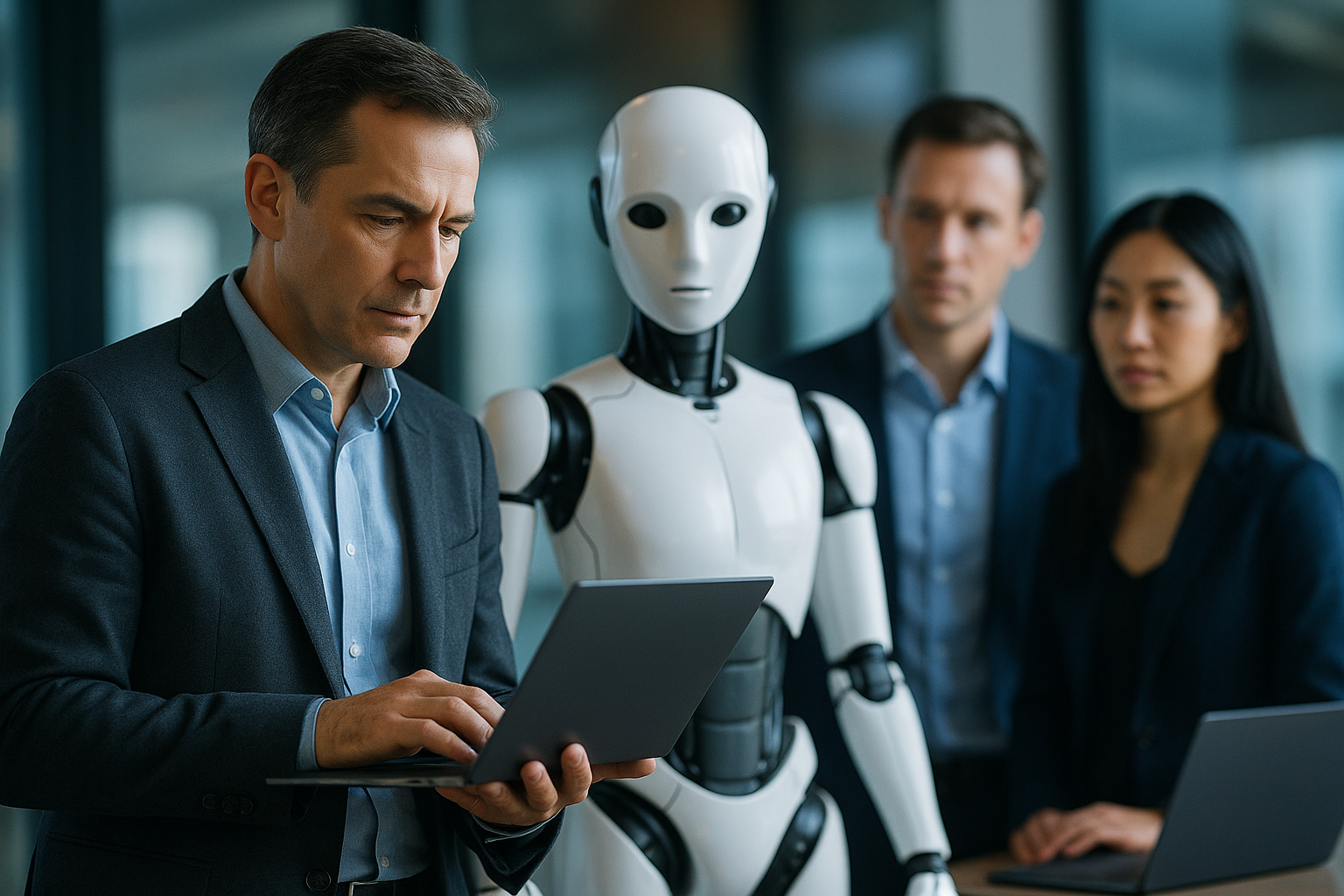
NVIDIA and Global Robotics Leaders Take the Physical AI Robotics Platform to the Real World
NVIDIA used CES 2026 to unveil new open physical AI models, software frameworks, and GPU-accelerated infrastructure aimed at moving embodied intelligence from the lab into production, supported by next‑generation robots from global partners. The effort centers on an expanded Isaac robotics stack, GR00T foundation models, and a direct integration with Hugging Face’s LeRobot, positioning a physical AI robotics platform that links tooling across the robot lifecycle for developers and enterprises [1][2].
Why “Physical AI” Matters for Business
NVIDIA frames this as part of a broader shift in which foundation models and generative AI extend from digital tasks into embodied systems that operate in real environments [1][2]. For operations leaders, the draw is adaptability. The company highlights models that enable generalist-specialist robots, which can learn a wide range of behaviors and then be rapidly tailored for specific applications in manufacturing, logistics, construction, consumer, and service settings [1][2].
What NVIDIA Announced at CES: Isaac, GR00T and GPU Infrastructure
The company is rolling out open physical AI models alongside updates to its Isaac robotics platform and GR00T foundation models, paired with GPU-accelerated infrastructure for large-scale training and inference [1][2]. NVIDIA positions this as an end-to-end stack that supports simulation, data generation, training, validation, and deployment for robots operating in unstructured environments [1][2].
NVIDIA also notes that many expectations about a potential “ChatGPT moment for robotics,” performance, adoption, and long-term impact are forward-looking, dependent on technical progress, market dynamics, and partner execution [2].
Hugging Face LeRobot Integration: Connecting Two Developer Ecosystems
A key part of the announcement is the direct integration of NVIDIA’s Isaac platform and GR00T with Hugging Face’s open-source LeRobot framework [1][2]. NVIDIA says the combined ecosystems connect about 2 million of its robotics developers with roughly 13 million AI builders on Hugging Face, expanding access to models, data, simulators, and tooling [1][2]. The goal is to shorten iteration loops from simulation to real-world trials and streamline sharing of components across projects [1][2].
A physical AI robotics platform for end-to-end workflows
The stack targets the entire robot lifecycle:
- Simulation and data generation: Use GPU-backed simulators and datasets to pretrain behaviors and test edge cases before touching hardware [1][2].
- Training and validation: Scale model training and evaluation with GPU accelerated robot training, using GR00T foundation models and Isaac tooling [1][2].
- Deployment: Move models into robots that handle manipulation, navigation, and human-robot interaction in unstructured environments [1][2].
This approach is designed for generalist-specialist robots that can be adapted quickly as tasks evolve, while leaning on shared infrastructure and open components [1][2].
Partner Use Cases Across Industries
Industry partners are adopting NVIDIA technologies to develop next-generation robots for real-world environments. Named collaborators include Boston Dynamics, Caterpillar, Franka Robotics, Humanoid, LG Electronics, and NEURA Robotics, spanning manufacturing, logistics, construction, consumer, and service domains [1][2]. Separate coverage points to broader industrial interest in scaling physical AI as ecosystem efforts expand [3].
The throughline is physical AI applied to adaptive manipulation, navigation, and interaction in settings that can be variable or unstructured, with GPU platforms and models providing the backbone for training and deployment at scale [1][2].
Adoption Considerations and Risks
Enterprises weighing this stack should note that much of the anticipated capability and impact remains forward-looking, with outcomes contingent on technical maturity, market conditions, and partner delivery [2]. Integration work will likely involve coordinating simulators, datasets, and training pipelines with operational constraints. Compute planning and governance are also critical, given the reliance on GPU infrastructure and the need to validate safety, reliability, and performance before broad deployment [1][2].
How to Evaluate This Stack for Your Organization
- Define priority tasks: Identify high-value workflows where generalist-specialist robots could reduce time to deploy in real environments [1][2].
- Align tooling: Map current pipelines to Isaac, GR00T foundation models, and Hugging Face LeRobot for model, data, and simulator access [1][2].
- Budget for infrastructure: Scope GPU capacity for simulation, training, and inference to match target scale and timelines [1][2].
- Start with a pilot: Use simulation-first validation and staged rollouts to de-risk deployment in unstructured settings [1][2].
- Monitor ecosystem traction: Track partner robots and industrial collaborations to benchmark maturity and vendor support [1][2][3].
For additional context on implementation approaches and playbooks, explore AI tools and playbooks.
Resources and Next Steps
- NVIDIA’s official announcement outlines the integration of Isaac and GR00T with LeRobot, new model releases, and partner robots shown at CES 2026 [1]. The investor version includes forward-looking statements and risk factors [2].
- Developers can follow the open-source robotics framework through Hugging Face’s LeRobot project page.
- For broader industry context on scaling industrial physical AI, see related partner coverage [3].
Sources
[1] NVIDIA Releases New Physical AI Models as Global Partners Unveil Next-Generation Robots
https://nvidianews.nvidia.com/news/nvidia-releases-new-physical-ai-models-as-global-partners-unveil-next-generation-robots
[2] NVIDIA Releases New Physical AI Models as Global Partners Unveil Next-Generation Robots (Investor Version)
https://investor.nvidia.com/news/press-release-details/2026/NVIDIA-Releases-New-Physical-AI-Models-as-Global-Partners-Unveil-Next-Generation-Robots/default.aspx
[3] ABB Robotics and Nvidia aim to scale industrial physical AI with …
https://finance.yahoo.com/news/abb-robotics-nvidia-aim-scale-112400486.html
