
‘Uncanny Valley’: Anthropic DoD supply-chain risk
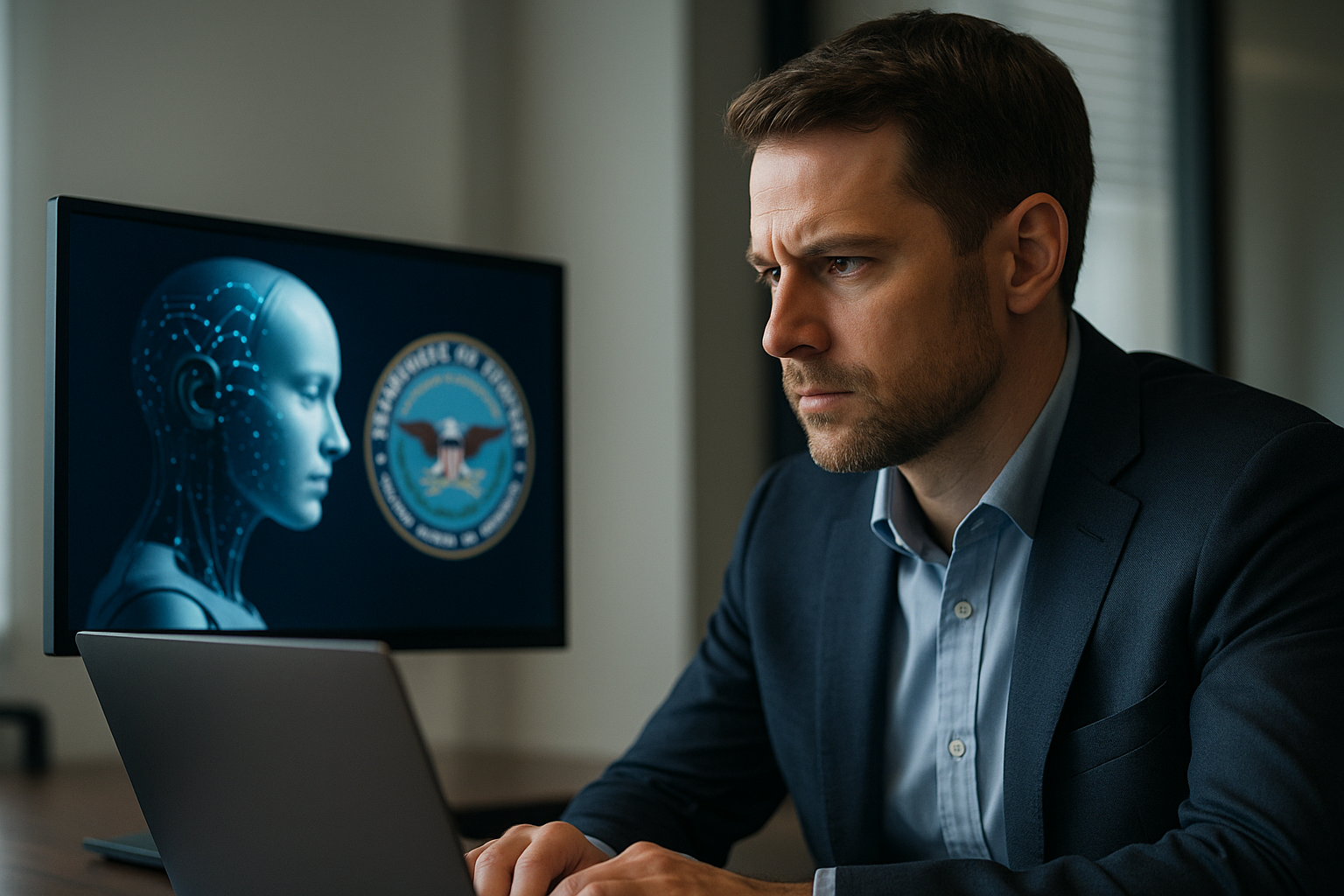
The Pentagon’s clash with Anthropic has escalated beyond a failed $200 million deal. After negotiations collapsed—driven in part by Anthropic’s “red lines” on military uses—the Department of Defense labeled the company a national security supply‑chain risk, a move that could deter federal contractors from using its tools and threaten hundreds of millions in government‑related revenue. Legal experts say the DoD holds broad discretion in such designations, making Anthropic’s lawsuit an uphill fight—and a wake‑up call for enterprise buyers and vendors alike [1][2][3]. This is the clearest signal yet that Anthropic DoD supply-chain risk is no longer an abstract policy debate but an operational exposure.
1) Lead: What happened and why it matters
Following the breakdown of a prospective $200 million AI contract, the Pentagon applied a supply‑chain risk label to Anthropic. The designation effectively warns primes and subcontractors that using Anthropic could raise national security concerns, with chilling effects on procurement pipelines. Anthropic is challenging the label in court, but procurement law gives the DoD latitude to act, complicating the company’s path to relief [1][2][3].
2) Timeline and legal framing of the Anthropic–DoD dispute
Negotiations faltered over use‑case ethics—Anthropic’s limits on military applications—before the designation landed and litigation began. While the company argues the label is overly broad, procurement and security experts note that the DoD has wide, and often hard‑to‑challenge, discretion when it comes to national security risk determinations in its supplier base [1][3]. For any vendor eyeing defense work, this is a stark reminder of military AI procurement risks and the policy‑driven volatility surrounding foundational models [1][3].
3) Two intertwined enterprise risks exposed
- Supply‑chain concentration: Relying on a single model or provider can turn a policy change—or a federal designation—into an immediate availability and compliance problem across product lines and customer contracts [1][2].
- Human capital inside vendors: The “human capital supply chain” matters. Strategy shifts, leadership exits, or researcher churn can degrade model quality or change acceptable‑use rules without much notice. Ethical “red lines,” partnerships, and internal governance choices can cascade into enterprise risk as quickly as any technical outage [1][2].
4) Why the Anthropic DoD supply-chain risk matters now
The designation pressures federal contractors and enterprises with public‑sector exposure to reassess dependencies. Advisors now urge companies to diversify foundation model providers, test portability, and prepare fallbacks that can be activated if a preferred model becomes restricted or politically fraught [1][2]. The episode reframes AI vendor supply chain risk as a board‑level concern, not just a technical one [1][2].
5) Practical steps for CIOs, COOs, and procurement teams
- Diversify foundation model providers across critical workloads; avoid hard lock‑in to a single LLM or API [1][2].
- Bake in portability: require data export, model/version transparency, and reasonable transition assistance in contracts [1][2].
- Establish validation harnesses and canary tests for rapid model swaps without degrading safety or compliance [1][2].
- Strengthen SLAs around deprecations, acceptable use changes, and notification timelines [1][2].
- Build contingency playbooks for sudden vendor restrictions, including pre‑approved alternates and security reviews [1][2].
- Align policies and procurement with recognized acquisition frameworks; study the Defense Federal Acquisition Regulation Supplement for context on government procurement dynamics (external).
6) Evaluating vendor stability: checklist for human capital and governance
- Track executive and researcher turnover that could affect core capabilities [1][2].
- Review stated “red lines,” government partnerships, and public policy positions for mission alignment and reputational exposure [1][2].
- Assess internal governance, auditability, and compliance maturity—not just model benchmarks [1][2].
- Monitor strategic pivots (e.g., toward or away from defense work) that could alter access, reliability, or support [1][2].
7) Legal and procurement considerations
Anthropic’s challenge underscores that even a top‑tier AI vendor can face constraints beyond technical performance. Given the DoD’s discretion, enterprises should plan around the likelihood that such designations stand for extended periods. For contractors and suppliers, procurement strategies should anticipate cascading restrictions, second‑order effects on primes, and the need to demonstrate alternative capabilities quickly [1][3].
8) Side story: AI is reshaping venture capital work
AI is not fully automating venture decisions, but it is becoming a decision‑support layer across sourcing, diligence, portfolio monitoring, and LP reporting. Systems continuously scan signals like hiring, product launches, and web traffic to surface prospects earlier and sharpen risk detection. Yet experts stress that trust, user experience, proprietary data, and organizational culture determine outcomes; senior leaders’ choices shape whether AI augments or displaces traditional workflows [4][5][6]. In short, AI in venture capital workflows is expanding, while final calls remain human.
9) Recommendations for investors, operators, and vendors
- Enterprises: diversify foundation model providers, fortify contracts for portability, and formalize contingency planning for foundation model vendor disruption [1][2].
- VCs: productize proprietary signals, embed workflow‑friendly tools, and invest in data quality to keep humans in the loop where it matters most [4][5][6].
- Vendors: increase transparency on governance, talent stability, and acceptable‑use policies to build enterprise trust under shifting regulatory conditions [1][2].
For hands‑on templates and buyer guides, Explore AI tools and playbooks.
Sources
[1] The Pentagon’s AI Contract Scuffle Exposed A Danger To Businesses
https://www.forbes.com/sites/cio/2026/03/05/the-pentagons-ai-contract-scuffle-exposed-a-danger-to-businesses/
[2] The Hidden AI Supply Chain Risk: What a $200M Defense Contract …
https://wursta.com/the-hidden-ai-supply-chain-risk-what-a-200m-defense-contract-means-for-your-tech-roadmap/
[3] Anthropic Sues Department of Defense Over Supply-Chain-Risk …
https://www.wired.com/story/anthropic-sues-department-of-defense-over-supply-chain-risk-designation/
[4] The Role of AI in Startups and Venture Capital + Top VCs Investing …
https://visible.vc/blog/ai-investors/
[5] How AI is transforming venture building and venture capital
https://www.sbs.ox.ac.uk/oxford-answers/how-ai-transforming-venture-building-and-venture-capital
[6] How AI is Transforming Venture Capital – Standard Metrics
https://standardmetrics.io/white-papers/how-ai-is-transforming-venture-capital/
