
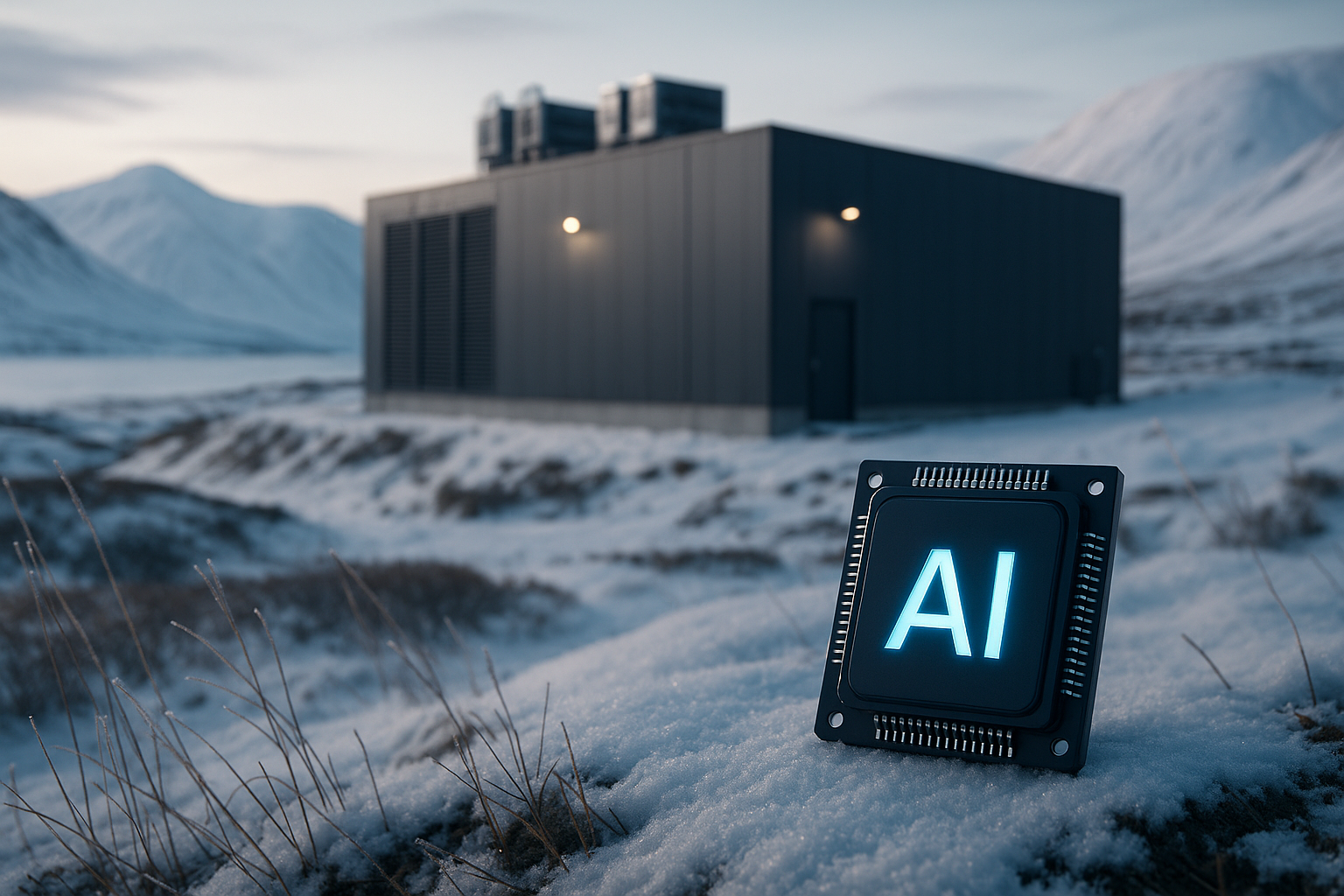
Arctic Edge: Why Nordic AI data centers are moving north
Rising AI workloads and electricity demand are pushing site selectors toward regions with cheap, low‑carbon power and cold climates. That calculus is bringing attention to Nordic AI data centers as developers seek durable cost and sustainability advantages that can scale with high‑density compute. Early movers are already building, and the choices they make now will shape costs, grid impacts, and local economies for a decade or more [1][2][3][4].
What Makes the Arctic Edge Attractive for AI?
Nordic and Arctic‑adjacent regions combine abundant renewables, low average power prices, and naturally cold air that supports efficient, free‑air or hybrid cooling—key levers for high‑density AI clusters. Power mixes span hydro and geothermal in places like Norway and Iceland, with wind and biomass contributing in Denmark and Finland. Political stability and long‑term grid planning further strengthen the value proposition for renewable-powered data centers [3][4][5][6].
- Cold-climate data center cooling can cut mechanical load and improve PUE by leveraging ambient temperatures.
- Near‑100% renewable electricity is available in some Nordic grids, notably hydro and geothermal‑rich systems.
- Regional planners are proactively reserving and routing capacity to industrial loads, including data centers [4].
Inside Nordic AI data centers: power, cooling, and costs
A leading example sits just below the Arctic Circle: Nscale’s Glomfjord AI data center in northern Norway. The facility is powered entirely by renewables and is designed around high‑efficiency, high‑density AI infrastructure. It’s promoted as compatible with local development priorities, highlighting how siting can align with regional energy profiles and economic goals [1][3]. For operators, the model underscores how power purchase strategy, interconnection, and cooling design intersect to define total cost of ownership.
Case Study: Nscale’s Glomfjord AI Data Center
- 100% renewable power supply with hydro‑backed availability [1].
- High‑density AI compute footprint optimized for cold‑climate operations [1].
- Messaging centered on regional fit: low‑carbon electricity, community compatibility, and industrial heritage [1][3].
Grid Capacity and the Electricity Rush: Regional Risks
Even if data centers remain a modest share of global electricity growth, their spatial concentration can strain local grids—some regions have paused projects after demand outpaced upgrade capacity [2][4]. Europe’s data centers consumed about 96 TWh in 2024 and could reach roughly 236 TWh by 2035, intensifying the need for coordinated investment and siting [4]. In Norway, TSO Statnett is planning for data center electricity use to triple by 2030, with long‑range scenarios extending to mid‑century—signals that interconnection queues and reinforcement timelines will be pivotal for new builds. These Statnett data centre projections are an essential input to any business case [4].
Signals to watch when evaluating sites:
- Substation capacity, lead times for grid reinforcements, and firm vs. interruptible supply [4].
- Local moratorium risk in areas where demand has outpaced grid upgrades [2][4].
- Queue positions and curtailment rules that affect SLA and reliability [4].
When Renewables Alone Aren’t Enough: Competitiveness and Ecosystems
Global players are scouring the map—from Johor, Malaysia, to the high North—in search of cheap, reliable energy; some investments still lean on fossil‑heavy power mixes where renewables or grid capacity are limited [2]. Analysts caution that long‑term competitiveness will hinge on anchoring facilities within broader innovation ecosystems—blending renewable development, digital infrastructure, and local economic benefits—rather than hosting commodity server farms that can migrate when energy conditions change [2][5][6]. For operators, that means weighing partnerships, workforce pipelines, and adjacent industries alongside megawatts and TCO.
For broader perspective on energy trends, see the International Energy Agency’s overview of data centres and networks (external) via the International Energy Agency.
Operational and Commercial Considerations for Businesses
Before committing AI workloads to northern Norway, Sweden, Finland, Iceland, or Arctic‑adjacent Canada, teams should pressure‑test assumptions across power, cooling, and timelines:
- Power contracts and guarantees: renewable content, pricing structure, and duration aligned to AI scaling plans [4][6].
- Interconnection and grid upgrades: confirm capacity, queue status, and reinforcement schedules to avoid delays or curtailment [4].
- Cooling and density: validate that site design and climate enable target rack densities and energy efficiency [1][6].
- Regulatory expectations and land use: understand local approvals, community expectations, and industrial zoning [3][4].
- Long‑term ecosystem fit: assess talent access, connectivity, and potential for co‑location with complementary industries [2][5][6].
To support planning and procurement workflows, you can also explore AI tools and playbooks.
Decision Framework: Is an Arctic/Nordic Site Right for Your AI Workloads?
Use this quick filter to qualify opportunities in Nordic AI data centers:
- If sustainability is a core KPI and your workload benefits from cold‑air efficiencies, prioritize renewable‑backed hubs with proven grid headroom [1][4][6].
- If time‑to‑power is critical, favor regions with transparent interconnection timelines and staged capacity delivery [4].
- If long‑term resilience matters, look beyond tariffs to ecosystem depth—R&D links, workforce, and policy stability [2][5][6].
The Bottom Line
The Arctic edge offers a compelling mix of low‑carbon power, efficient cooling, and proactive planning that can sharpen AI economics. But with rapid load growth and uneven grid headroom, success depends on disciplined site diligence and ecosystem strategy—aligning renewable supply, interconnection certainty, and durable local partnerships for sustainable AI infrastructure [1][2][3][4][5][6].
Sources
[1] Glomfjord AI Data Centre – Nscale
https://www.nscale.com/product/glomfjord
[2] Big Tech Will Scour the Globe in Its Search for Cheap Energy – WIRED
https://www.wired.com/story/big-tech-data-centers-cheap-energy/
[3] Laying Foundations for Arctic and Northern Data Centers
https://www.arcticandnorth.ru/upload/iblock/847/126_146.pdf
[4] Grids for data centres – Ember
https://ember-energy.org/latest-insights/grids-for-data-centres-ambitious-grid-planning-can-win-europes-ai-race/grids-for-data-centres/
[5] The Nordic Blueprint for Building A.I. Infrastructure at Scale – Observer
https://observer.com/2026/01/nordic-model-ai-data-centers-sustainability/
[6] Meeting AI’s Demands: Strategies for Data Centers in the Nordics
https://www.genesiscloud.com/blog/ai-data-centers-nordics
