
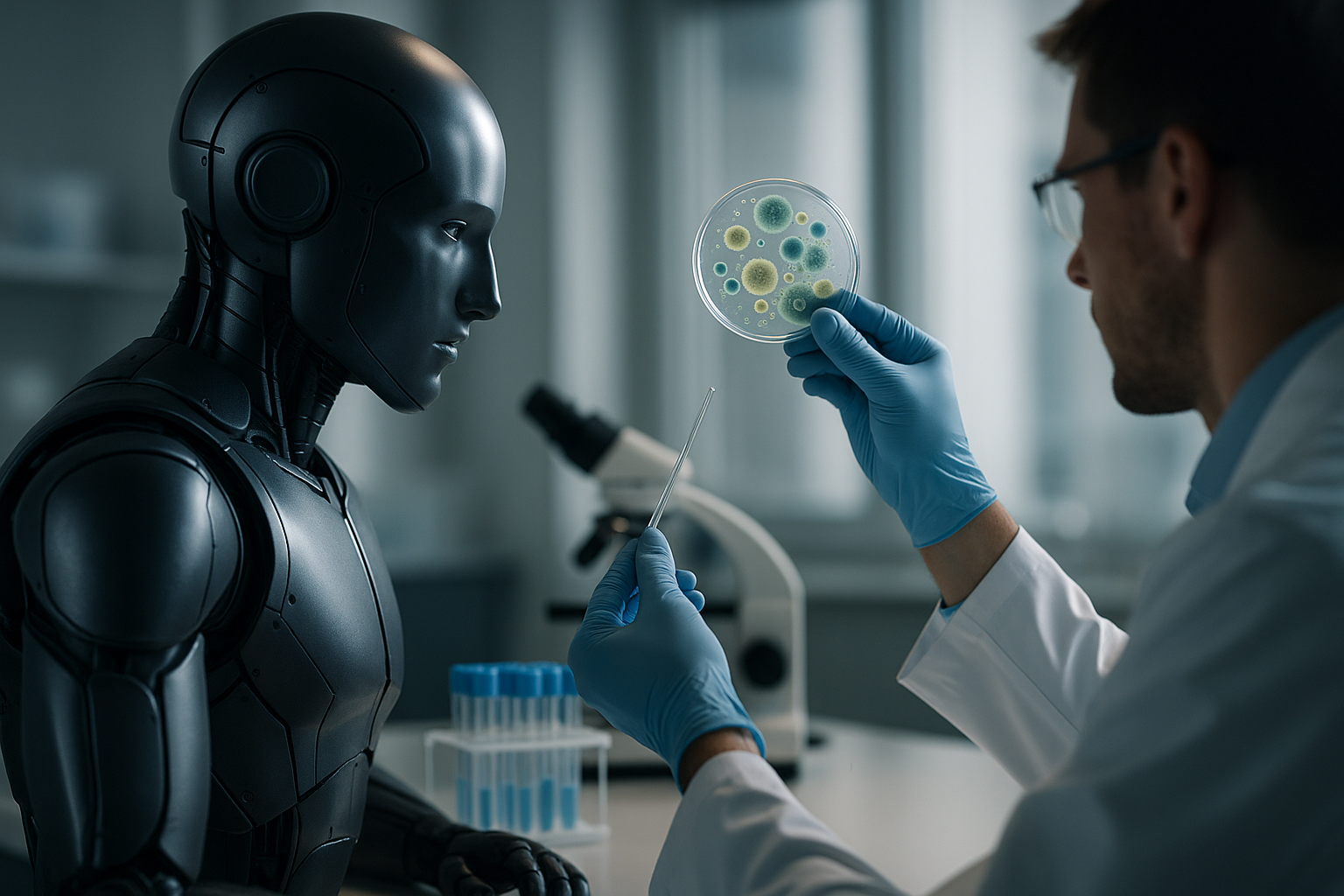
How AI and Synthetic Biology Enable Programmable Biologics for Antimicrobial Resistance
Antimicrobial resistance is escalating globally and hits low- and middle-income countries hardest, where limited diagnostics push clinicians toward broad-spectrum empiric treatments. A new effort led by MIT professor James J. Collins—funded by Jameel Research—aims to shift the paradigm with programmable biologics for antimicrobial resistance, pairing synthetic biology with generative AI to deliver targeted therapies and faster diagnostics that support stewardship [2][1].
What are programmable biologics and minibinders?
Instead of killing bacteria wholesale, the approach designs small, AI-generated proteins—often called minibinders—that latch onto specific bacterial toxins or essential proteins to neutralize pathogens with high precision. These targeted agents are intended to minimize collateral damage to the microbiome and reduce selective pressure that drives resistance, differentiating them from traditional broad-spectrum antibiotics [2].
How generative AI accelerates protein design
Generative AI protein design expands early-stage discovery by searching vast protein spaces and proposing candidates optimized for potency, selectivity, and resistance avoidance. Machine learning models help triage large design spaces, prioritize minibinder antibacterial therapeutics, and iterate toward better-fit molecules faster than conventional screens. This AI-driven drug discovery for AMR integrates modeling into the front end of R&D to raise the odds of finding viable, pathogen-specific binders while cutting experimental cycles [2][3].
Engineering microbes as delivery vehicles
Delivery is as critical as design. Engineered microbes for drug delivery can be programmed with synthetic biology circuits that control where, when, and how much of a therapeutic is produced. By localizing production and enabling context-dependent activation, these biological carriers could concentrate treatment at infection sites while limiting systemic exposure—an approach that may further lower resistance selection and protect the microbiome [2].
Why programmable biologics for antimicrobial resistance matter
- Precision: Minibinders are designed to disable defined bacterial targets, improving on-target efficacy and reducing off-target effects [2].
- Stewardship: When paired with diagnostics, targeted biologics can reserve broad-spectrum agents for when they are unequivocally needed [2][3].
- Resistance management: Narrow, mechanism-specific actions may ease selective pressure compared with broad-spectrum antibiotics, potentially slowing resistance emergence [2].
These advantages position programmable biologics for antimicrobial resistance as a complementary modality that could enable more nuanced, data-driven care pathways.
AI-augmented rapid diagnostics and stewardship
The same toolkit applies to diagnostics. Rapid, AI-enabled AMR diagnostics are being advanced to identify pathogens and resistance markers at the point of care. Faster identification enables timely, targeted treatments—ideally with matched minibinders—while informing more judicious use of antibiotics. In settings with limited laboratory infrastructure, point-of-care detection can be decisive in guiding therapy choices and improving outcomes, reinforcing antimicrobial stewardship strategies [2][3].
For a broader context on global burden and policy framing, see the WHO overview (external).
Case highlight: the MIT–Jameel initiative
The MIT–Jameel project is a three-year, roughly $3 million collaboration in biological and medical engineering led by James J. Collins. The team is pursuing AI-generated minibinders against bacterial toxins or essential proteins, delivery via engineered microbes with programmable control, and rapid diagnostics to match therapies to targets. The initiative underscores translation, with an emphasis on tools deployable in resource-limited settings where AMR burden is greatest [2][1].
Commercial, regulatory, and deployment considerations
Real-world impact requires more than technical breakthroughs. Stakeholders must chart regulatory pathways for novel biologics, validate safety and efficacy of engineered microbes, and build manufacturing and distribution strategies suitable for low- and middle-income countries. Success will hinge on partnerships spanning academia, industry, and public health systems, along with sustained investment to bring prototypes into field-ready products [2][3].
For teams building capabilities in this space, you can also Explore AI tools and playbooks.
Business and investment opportunities
- Discovery platforms: Companies integrating AI-driven drug discovery for AMR with wet-lab validation to accelerate minibinder pipelines [3][2].
- Therapeutic delivery: Startups specializing in engineered microbes for drug delivery and control circuits to enhance precision [2].
- Diagnostics: Ventures developing AI-enabled AMR diagnostics that pair with targeted therapies to enable test-and-treat models [2][3].
Collectively, these models support a connected ecosystem where programmable biologics for antimicrobial resistance are informed by rapid diagnostics and continuous learning from deployment data.
Conclusion: Toward targeted, data-driven AMR management
By combining generative design, synthetic biology, and rapid diagnostics, the MIT–Jameel effort illustrates a shift from broad-spectrum antibiotics to precise, programmable interventions. If these approaches translate into deployable products—particularly in resource-constrained environments—they could improve outcomes, preserve microbiomes, and slow resistance. With coordinated investment, regulation, and health-system integration, programmable biologics for antimicrobial resistance can become a practical pillar of next-generation AMR stewardship [2][1][3].
Sources
[1] Jameel Research project at MIT tackles antimicrobial resistance
https://www.arabnews.com/node/2631270/corporate-and-sponsored-content
[2] Using synthetic biology and AI to address global antimicrobial resistance
https://news.mit.edu/2026/using-synthetic-biology-ai-address-global-antimicrobial-resistance-0211
[3] Mitigating antimicrobial resistance by innovative solutions in AI
https://www.nature.com/articles/s44259-025-00150-y
