
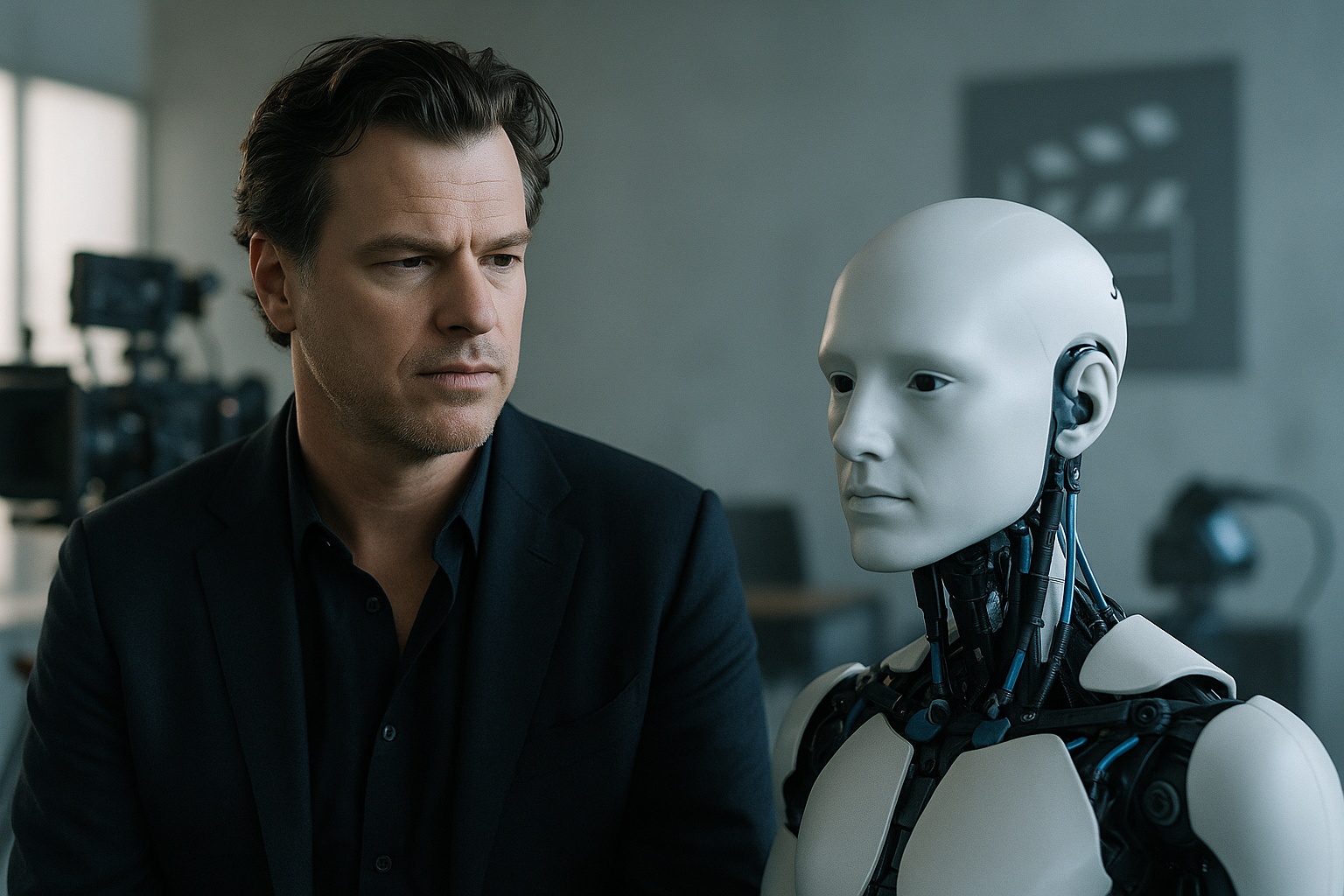
Jonathan Nolan on AI: Why AI in film production Is in a Frothy Moment
The film business is moving fast through what many describe as a frothy, hype-fueled phase—yet beneath the buzz, concrete shifts are taking hold. From development to delivery, AI in film production is emerging as an accelerant that reshapes timelines, budgets, and creative workflows, without fully replacing human craft [1][2][3].
How AI in film production is embedded across the pipeline
Studios and independent teams are piloting AI in development and pre-production for script ideation, scheduling, and planning—compressing early-stage cycles and enabling faster iteration [1][2][3]. In post, teams apply AI for VFX, remediation, and localization, enhancing speed and scale while relying on experienced supervisors to maintain quality and continuity [1][2][3]. Practitioners emphasize that high-quality outputs require substantial craft, iteration, and traditional production expertise; prompting alone is insufficient [1][2][3].
These trends point to maturing AI production workflows for studios that prioritize measurable gains—time savings, cost control, and rapid visualization—over wholesale automation [1][2][3]. For creative teams, AI-assisted scriptwriting and AI for VFX and post-production are becoming pragmatic add-ons rather than silver bullets [1][2][3].
Case studies: end-to-end automation and deepfake choices
Recent case studies illustrate both potential and limits. One fully AI-scripted and directed project demonstrates an end-to-end automated workflow, but with human supervision at key junctures to ensure coherence and quality [1][2]. In large franchises, deepfake and generative tools have enabled character reconstruction—opening new creative possibilities alongside ethical and legal questions about consent and ownership [1][2][3]. Independent productions show another path, using AI to optimize dialogue and refine scenes without surrendering creative control [1][2][3].
The commercialization curve is clear: boutique shops now monetize expertise in AI-generated imagery, video, trailers, and pitch visualizations, selling speed and optionality to agencies and studios [3][1]. Yet across these examples, results are uneven—underscoring that the most effective deployments pair AI with seasoned editorial judgment, data hygiene, and strong production fundamentals [1][2][3].
AI-driven marketing and distribution: prediction systems, safer bets
Marketing and distribution teams increasingly rely on algorithmic systems to predict which trailers, posters, and release windows will perform best—turning campaign planning into a data-driven optimization problem [1][2][3]. These AI-driven film marketing tools promise higher ROI and tighter targeting, but they also encourage risk aversion, nudging decision-makers toward data-proven formulas and away from unconventional storytelling [1][2][3]. As forecasting guides more decisions upstream, film markets can drift toward homogeneity—amplifying mainstream tastes while marginalizing niche voices [1][2].
Risks: bias, homogenization, labor disruption, opaque models
Scholars and practitioners warn about algorithmic bias and opacity that can entrench inequities and narrow the creative slate [1][2]. The risk profile extends to labor: workflow acceleration may redistribute tasks and reduce certain roles even as new oversight and data-curation jobs emerge [1][2]. Addressing these risks requires both technical mitigation (bias reduction, auditable pipelines, consent management) and broader media literacy so audiences and executives alike understand how algorithms shape what gets greenlit and promoted [1][2][3]. For broader governance frameworks, see the OECD AI Principles (external).
Practical takeaways for producers, marketers, and indie creators
- Start where value is measurable: pre-production scheduling, script ideation, VFX remediation, and localization often yield quick wins [1][2][3].
- Keep humans in the loop: pair models with experienced editors, VFX supervisors, and producers to uphold quality and continuity [1][2][3].
- For marketers: pilot algorithmic trailer/poster testing but track diversity and novelty metrics alongside CTR and ROAS to avoid sameness creep [1][2][3].
- For independents: use AI to iterate dialogue and previz, but lock story and tone with live table reads and editorial passes [1][2][3].
- Build capabilities: small boutiques can specialize in AI-generated trailers and pitch visuals, but must set expectations around iteration and human polish [3][1].
- Legal/ethics: treat deepfakes in Hollywood with strict consent, IP checks, and documentation; establish review gates before distribution [1][2][3].
For hands-on guidance and vendor landscapes, Explore AI tools and playbooks.
Checklist: evaluating AI tools and vendor claims
- Data and bias: What datasets power the model? Are there audits for representational bias and drift? [1][2]
- Human oversight: Who signs off at each stage? How are edits and remediations tracked? [1][2][3]
- IP and consent: Do contracts cover likeness, training data provenance, and localization rights? [1][2][3]
- KPIs: Define time-to-first-cut, cost per shot, localization turnaround, and campaign lift before the pilot [1][2][3]
- Interop and security: Can assets round-trip between editorial, VFX, and marketing stacks with version control? [1][2]
Conclusion: navigating the froth—balance speed with stewardship
This phase blends intense experimentation with uneven maturity. The opportunity is real—faster iteration, scalable effects, and sharper targeting—so long as leaders counterbalance with bias reduction, consent-first practices, and media literacy. Treat the algorithms as accelerants, not auteurs, and build processes that keep creative risk—and originality—alive [1][2][3].
Sources
[1] Exploring the Impact of AI on Film Production in 2024 – Medium
https://medium.com/@channelasaservice/exploring-the-impact-of-ai-on-film-production-in-2024-f02da745af00
[2] The Influence of AI on Modern Film Production – arXiv
https://arxiv.org/pdf/2504.19275
[3] Artificial Intelligence Is Changing Production Companies, Here’s How
https://lbbonline.com/news/artificial-intelligence-production-companies-2025-state-of-play
