
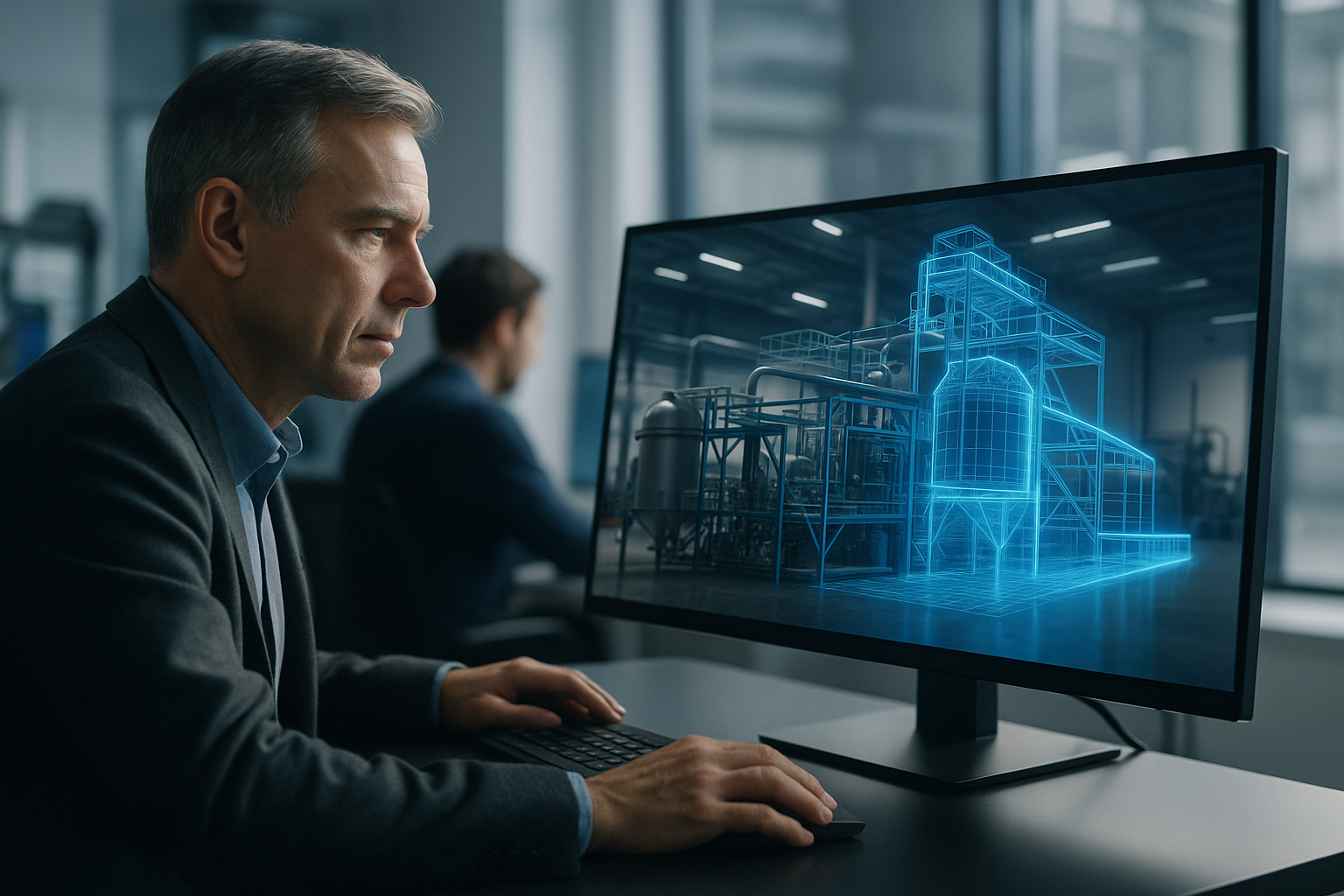
NVIDIA and Dassault Push Physical AI with an Industrial Virtual Twin Platform
NVIDIA and Dassault Systèmes used 3DEXPERIENCE World in Houston to unveil a strategic tie-up designed to bring industrial-scale AI and high-fidelity virtual twins into mainstream engineering and operations. At the core is a shared vision for “physical AI” and an industrial virtual twin platform that blends NVIDIA’s accelerated computing, AI, and Omniverse with Dassault’s 3DEXPERIENCE and deep domain models, positioning virtual twins as a trustworthy system of record for industry [1][2][3].
What Jensen Huang Means by “Physical AI” — And Why It Matters
NVIDIA CEO Jensen Huang described a major platform shift toward “physical AI,” where AI systems learn and operate within simulations that obey the laws of physics and reflect real industrial processes. The ambition: everything from products and factories to infrastructure and biological systems will be represented in continuously updated virtual twins to drive more reliable design, optimization, and operations [2]. Dassault Systèmes’ leadership framed this as the foundation for science-validated “industry world models” that move beyond disconnected, task-specific tools [1][2][3].
Inside the industrial virtual twin platform
The partnership brings together complementary layers. NVIDIA provides the accelerated computing and NVIDIA Omniverse for industry collaboration and simulation stack, while Dassault integrates 3DEXPERIENCE, long-standing engineering domain models, and decades of industrial know-how. The goal is to make validated, persistent virtual twins a core system of record that grounds AI in physics and real-world constraints across the product lifecycle [1][2][3].
For enterprises, the promise is a consistent environment where design, simulation, and operations draw from the same authoritative twin, reducing fragmentation and enabling higher-confidence decisions. Dassault’s 3DEXPERIENCE integration anchors the data and process backbone; Omniverse and accelerated computing supply the real-time simulation, generative workflows, and scalable AI infrastructure [1][2][3].
Core Use Cases: From Design to Operations
The companies highlight use cases spanning concept design, generative engineering, predictive maintenance, and factory optimization, with extensions into biology and materials science. By rooting models in validated physics and domain expertise, the virtual twins aim to support safer designs, faster iteration, and more reliable operational decisions—such as anticipating equipment failures or tuning production to minimize downtime [1][2][3].
- Generative engineering: co-designing components with simulation-aware AI.
- Predictive maintenance: forecasting failures and scheduling interventions in a live twin of the factory.
- Factory optimization: stress-testing throughput, layout, and scheduling virtually before changes hit the floor.
- Science-driven R&D: modeling across biology and materials with domain-grounded constraints [1][2][3].
Skilled Virtual Companions: AI Coworkers in the Twin
A notable element is the introduction of “skilled virtual companions” — AI assistants embedded directly in the twin who understand physics, constraints, and industry context. These companions are envisioned to help engineers, scientists, and operators with tasks from ideation and simulation setup to optimization and on-the-fly troubleshooting, all within the shared virtual environment rather than disconnected apps or generic chatbots [1][2][3].
Business and Technical Implications
Positioning virtual twins as a system of record could streamline how organizations design, validate, and run complex assets. By consolidating work into science-validated industry world models, teams can collaborate on a single, physics-based source of truth, potentially reducing rework and enabling more dependable AI-driven decisions in production settings [1][2][3].
Enterprises evaluating this stack will weigh how NVIDIA’s accelerated computing and Omniverse align with existing simulation and data flows, and how Dassault 3DEXPERIENCE integration can bridge PLM, engineering, and operations in practice. The shared message: trustworthy, scalable adoption of industrial AI depends on validated twins and persistent models, not isolated tools [1][2][3].
Trust, Validation, and Science-Backed Models
Dassault and NVIDIA emphasize that these industry world models must be science-validated, leveraging decades of engineering and industrial expertise. That validation is central to “physical AI,” where accuracy, safety, and compliance hinge on models that respect real-world physics and domain constraints. This approach aims to make virtual twins dependable enough to anchor decision-making across R&D, manufacturing, and operations [1][2][3]. For broader background on the vendor’s platform, see Dassault Systèmes (external) here.
How to Prepare
Leaders can start small by aligning pilot scopes to high-impact use cases—such as factory optimization or predictive maintenance—while ensuring data and simulation workflows map cleanly into the shared environment. As the ecosystem matures, the industrial virtual twin platform can expand to support end-to-end lifecycles, with skilled virtual companions accelerating daily work across teams [1][2][3]. For ongoing coverage of developments like this, visit See more AI news.
Conclusion: A Signal for the Generative Economy
Framed as foundational for the generative economy, the partnership’s bet is clear: virtual twins will become ubiquitous representations of the physical world, powering trustworthy, scalable industrial AI. With Omniverse, accelerated computing, and 3DEXPERIENCE at the core, NVIDIA and Dassault are positioning their stack to define how enterprises build, validate, and operate with industry world models in the years ahead [1][2][3].
Sources
[1] Nvidia and Dassault Systèmes to pioneer AI-fuelled virtual twins
https://eandt.theiet.org/2026/02/04/nvidia-and-dassault-systemes-pioneer-ai-fuelled-virtual-twins
[2] Everything Will Be Represented in a Virtual Twin, NVIDIA CEO …
https://blogs.nvidia.com/blog/huang-3dexperience-2026/
[3] Day Two of 3DEXPERIENCE World 2026: Catching up on the Action
https://blogs.solidworks.com/solidworksblog/2026/02/day-two-of-3dexperience-world-2026-catching-up-on-the-action.html
