
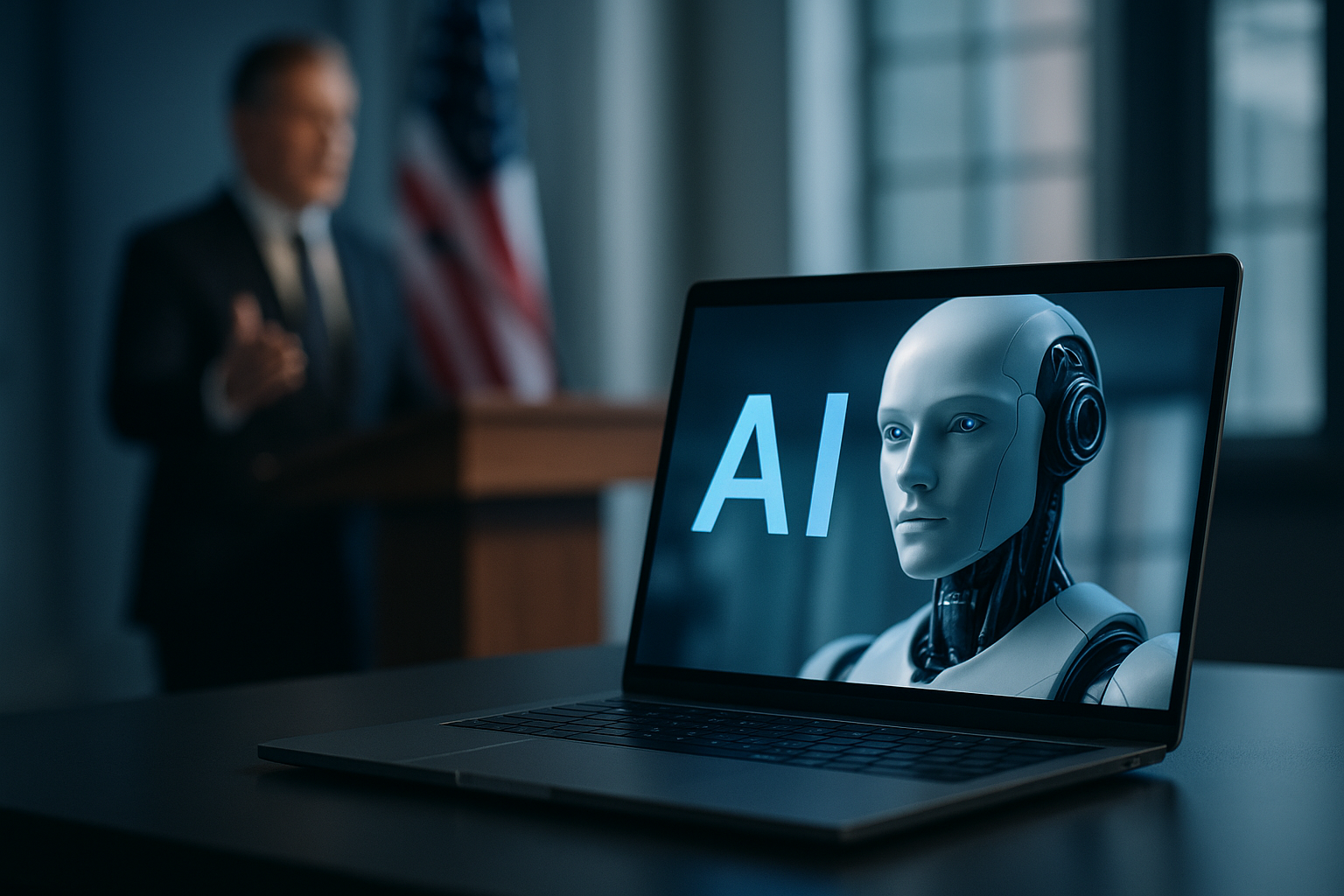
AI Political Advertising 2024: Davos Signals, Campaign Experiments, and ChatGPT’s Ad Pivot
Why the WIRED ‘Uncanny Valley’ Episode Matters for 2024
WIRED’s Uncanny Valley relaunch opens on a Davos backdrop where AI firms like Anthropic now sit alongside heads of state—and where Donald Trump–era spectacle, from policy to personal obsessions, continues to shape public discourse. The episode ties high-level geopolitics to street‑level realities—such as how immigration enforcement touches daily life—while zeroing in on AI political advertising 2024 and what it means for campaigns, marketers, and platforms. [1][2][3]
How Generative AI Is Being Used in Campaigns Today
Generative AI promises cheap, rapid production of tailored text, imagery, and synthetic video for political persuasion and fundraising. Campaigns and aligned groups are testing microtargeted content and creative variations to reach voters at scale. Early experiments in 2024, however, delivered fewer transformative effects than many predicted, as operatives continue to learn how to integrate these tools effectively into messaging and media plans. [1][5]
- What it enables: fast iteration, personalization, and lower production costs.
- What’s still unclear: sustained persuasion lift, authenticity trade‑offs, and operational best practices. [1][5]
The practical upside remains significant, but the early evidence suggests tactics and governance need time to mature for durable results in competitive races. [5]
Regulatory Landscape: Federal and State Rules on Synthetic Political Media
Policymakers are moving toward rules focused on disclosure for AI‑generated content and deepfakes rather than outright bans. At the federal level, Congress is weighing disclaimer requirements for synthetic media in political advertising, reflecting growing concern about transparency and voter deception. [6]
States are already acting. Washington, California, and Texas are among jurisdictions advancing or enforcing rules related to synthetic or deceptive political media, creating a patchwork that campaigns must navigate. Guidance from legal and civil society groups stresses clear labeling, disclaimers, and accountability mechanisms as core elements of compliance. [4]
For practitioners, the bottom line is simple: prepare for AI election regulation disclosure obligations, build labeling into creative workflows, and document provenance wherever possible. [4][6]
AI Political Advertising 2024: What to Watch Next
As the midterms approach, the operational questions grow sharper: which generative tactics align with campaign objectives, and how should teams validate performance claims? Expect more structured experiments, stricter QA, and closer collaboration between legal, data, and creative teams as rules and norms evolve. [4][5]
ChatGPT Ads: Business Model Shift and Distribution Risk
OpenAI’s decision to introduce ads into ChatGPT marks a notable business turn. Sam Altman once framed advertising as a last resort, but the product’s massive reach—and competitive pressure—make monetization hard to ignore. The move raises direct questions about ChatGPT ads implications during election season: Will new inventory become a vector for political or issue‑based messaging, and how will transparency, accuracy, and responsibility be handled in practice? [1]
For marketers, the AI monetization ChatGPT shift is both an opportunity and a risk. If political or advocacy content becomes permissible, the channel’s utility must be balanced with rigorous disclosure, source validation, and monitoring protocols. [1]
Geopolitics and Platform Power: Davos, Anthropic, and the New Elite Stage
Davos scenes show AI executives sharing the spotlight with political leaders, underscoring how AI now sits at the center of global economic and security debates. The WIRED framing connects elite conversations to on‑the‑ground dynamics—from Trump’s rhetoric and spectacle (including his Greenland fixation) to the everyday footprint of immigration enforcement—illustrating how technology, politics, and culture are increasingly intertwined. [1][2][3]
For brands and vendors, what Davos signals about AI firms and geopolitical influence isn’t abstract: reputation, policy exposure, and platform rules can shift quickly as debates move from conference panels to legislation and enforcement. For broader context, see the World Economic Forum Annual Meeting (external).
Practical Guidance for Marketers, Campaigns, and Businesses
- Build disclosures into creative: clear labels for synthetic media and easily visible disclaimers where required. [4][6]
- Verification workflows: document prompts, model versions, and human approvals to track provenance and accountability. [4]
- Media review and labeling: create checklists for detecting manipulated or synthetic content in inbound/third‑party assets. [4]
- Test responsibly: run small, controlled AI creative tests alongside traditional assets; validate lift with holdouts. [5]
- Escalation and response: plan for deepfake political ad rules and rapid takedowns, including legal and comms coordination. [4][6]
For additional toolkits and execution frameworks, explore AI tools and playbooks.
Case Studies & Early Experiments: What Worked, What Didn’t
Evidence from early cycles suggests generative AI is useful for speed and scale but hasn’t yet upended field realities. Authenticity, message discipline, and distribution still determine outcomes more than novelty alone. Campaigns that paired AI content with rigorous testing and compliance saw steadier returns than those chasing one‑off viral stunts. [5]
Meanwhile, debates over platform responsibility—from Davos stages to local communities—continue to shape expectations for disclosure and enforcement, especially as ChatGPT could emerge as a potent distribution channel. [1][4][6]
Conclusion: Strategic Takeaways and Next Steps
AI political advertising 2024 sits at the nexus of policy, platforms, and persuasion. The Smart Playbook: treat generative AI as an accelerant, not a silver bullet; operationalize disclosure and verification; and monitor the evolving rules at both state and federal levels. As OpenAI’s ad model takes shape, keep a close eye on inventory policies and safeguards before scaling spend. [1][4][6]
Sources
[1] ‘Uncanny Valley’: Donald Trump’s Davos Drama, AI Midterms, and …
https://www.wired.com/story/uncanny-valley-podcast-trump-davos-ice-ai-midterms-chatgpt-ads/
[2] Uncanny Valley | WIRED – Apple Podcasts
https://podcasts.apple.com/us/podcast/uncanny-valley-wired/id266391367
[3] Uncanny Valley – WIRED
https://www.wired.com/podcast/uncanny-valley/
[4] Generative AI in Political Advertising | Brennan Center for Justice
https://www.brennancenter.org/our-work/research-reports/generative-ai-political-advertising
[5] Generative AI’s Experimental Debut in U.S. Political Campaigns
https://cdt.org/wp-content/uploads/2025/11/2025-11-18-Campaigns-use-of-AI-Report-final-2.pdf
[6] Artificial Intelligence (AI) and Campaign Finance Policy
https://www.congress.gov/crs_external_products/IN/PDF/IN12222/IN12222.5.pdf
