
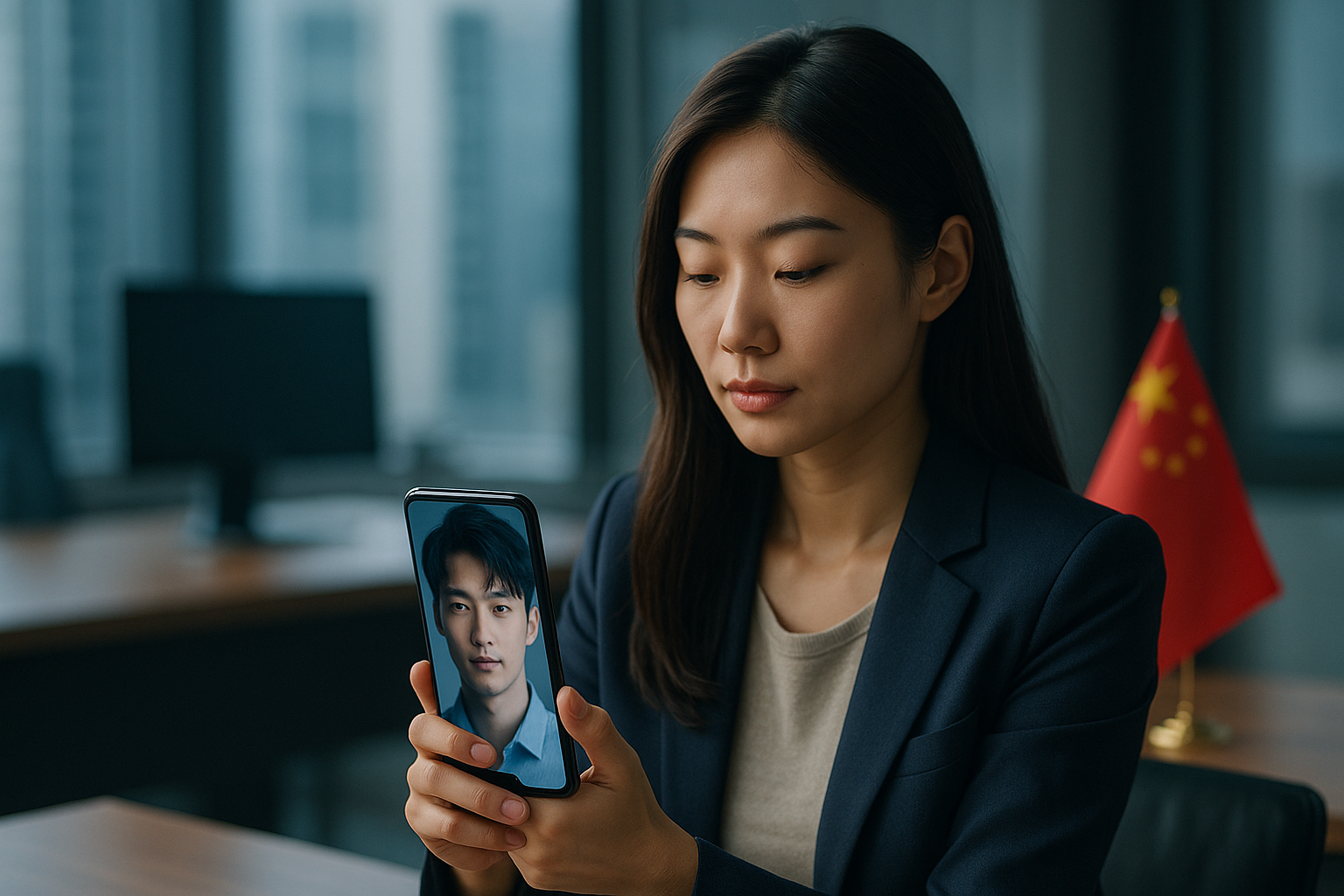
Inside the Chinese AI boyfriend market — monetization, users, regulation
China’s AI companion boom is evolving into a distinct sub-sector built around emotionally attentive male personas. The Chinese AI boyfriend market is drawing commercial and regulatory attention as platforms refine freemium monetization and users seek private emotional support channels in a high-pressure social context [1][2][3].
What Are AI Companions in China? Product Types and Features
Chinese apps typically start with chat-driven companions and layer on premium features such as richer long-term memory, personalized voices, enhanced intimacy modes, and faster response times. Multi-modal AI partners—combining chat, voice, and visuals—are the fastest-growing segment across East Asia, feeding broader fandom ecosystems beyond the core app experience [1][2].
Who Uses These Apps: Demographics and User Motivations
Domestic analysts describe the market as primarily female-oriented, with a core user band roughly 25–35 years old, though systematic user data remains sparse. Users in China and Taiwan report relying on AI partners for companionship when social stigma or family dynamics make it hard to share personal problems with real people, highlighting the emotional support value proposition for these services [1][2].
How Chinese AI Companions Make Money
Freemium is standard: core chatting is free, while deeper or more personalized experiences are paywalled. Common monetization levers include [1][2]:
- Paid long-term memory for better continuity over time
- Personalized voices and intimacy modes
- In-app currencies and digital gifts
- Collectible “cards” representing distinct AI characters
These card ecosystems also incentivize creators: card creators can earn around 2% of revenue, encouraging fan-driven content and engagement loops that resemble wider creator economies [1][2].
Technology Constraints and Product Choices
Limited compute resources for Chinese large language models help explain why some platforms charge for reduced latency and extended interaction depth. Paid tiers that accelerate responses or enable richer context windows are not just upsells; they reflect underlying infrastructure trade-offs. As multi-modal features (voice and visuals) expand, compute demands and performance expectations rise, reinforcing the logic for premium offerings tied to speed and depth [1][2].
Chinese AI Boyfriend Market: A Regional Contrast
A global scan of 110 romantic AI platforms shows more than half of companies are U.S.-based and tend to optimize for heterosexual male fantasies and AI “girlfriends,” while Chinese offerings more frequently center on AI “boyfriends” and emotionally attentive male personas. Roughly 10% of romantic AI firms are headquartered in China, underscoring a distinct cultural and product positioning compared with U.S. counterparts [1][2]. The Chinese AI boyfriend market thus differentiates on audience and tone, emphasizing emotional presence over explicit fantasy [1][2].
Fan Economies and Creator Incentives
Beyond subscriptions or one-off purchases, AI character cards and in-app currencies anchor participatory monetization. With creators able to share in card revenue, platforms tap into fandom dynamics that can extend into merchandise, memberships, and even offline events—broadening commercial opportunities around community and character IP [1][2]. For teams exploring this terrain, the near-term upside lies in curating sustainable creator incentives while keeping moderation and brand safety front and center [1][2].
Regulatory and Legal Risks: The Alien Chat Case
China is tightening oversight of sexual and emotional AI content. A landmark legal case involving the Shanghai-based Alien Chat app—accused of distributing pornographic content via AI-generated conversations—has moved forward in court, clarifying the risk landscape for companion-AI operators. The case signals how authorities are balancing rapid commercialization with controls on content, sexuality, and social stability—key factors for any platform operating in or localizing for China [3]. For broader governance context, see the OECD AI Principles.
Business Implications and Actionable Recommendations
- Build conservative content controls—especially around intimacy and sexual content—paired with clear appeal and enforcement processes [3].
- Be transparent about premium value: faster responses, deeper memory, and personalized voices should be positioned as performance and experience upgrades rather than opaque paywalls [1][2].
- Structure creator contracts and moderation workflows to support the card economy while managing reputational risk [1][2].
- Localize product messaging toward emotional support and privacy, reflecting user motivations in China and Taiwan [1][2].
To operationalize these playbooks across teams, Explore AI tools and playbooks.
Conclusion: Opportunities, Limits, and Watchlist
The Chinese AI boyfriend market is scaling on the strength of freemium design, creator-led cards, and multi-modal immersion, but success hinges on conservative compliance and transparent UX. Watch regulatory developments around intimacy features, adoption of voice/visuals, and fan-economy metrics that indicate durable engagement in a sensitive category [1][2][3].
Sources
[1] Why America Builds AI Girlfriends and China Makes AI Boyfriends
https://www.chinatalk.media/p/why-america-builds-ai-girlfriends
[2] Virtual Partners, Real Markets: The Rise of AI Companions …
https://www.asiatechlens.com/p/virtual-partners-real-markets-the
[3] China’s first AI companion app case enters second-stance …
https://www.globaltimes.cn/page/202601/1353192.shtml
